Uyen and her husband had undergone one intrauterine insemination (IUI) cycle and two in vitro fertilization (IVF) embryo transfers at a hospital in TP HCM, all of which failed to result in pregnancy.
They visited the Center for Assisted Reproduction, Tam Anh General Hospital TP HCM (IVF Tam Anh TP HCM) for examination. Tests showed Uyen's ovarian reserve was within normal limits (AMH 2,7 ng/mL), and both fallopian tubes were clear. Her husband's reproductive health was normal, but his frequent absence from home reduced the chances of natural conception.
Master, Doctor Tran Ngoc Ha Giang, from IVF Tam Anh TP HCM, stated that besides embryo quality, uterine pathologies also affect embryo implantation. Uyen was advised to continue IVF while also undergoing a uterine cavity examination.
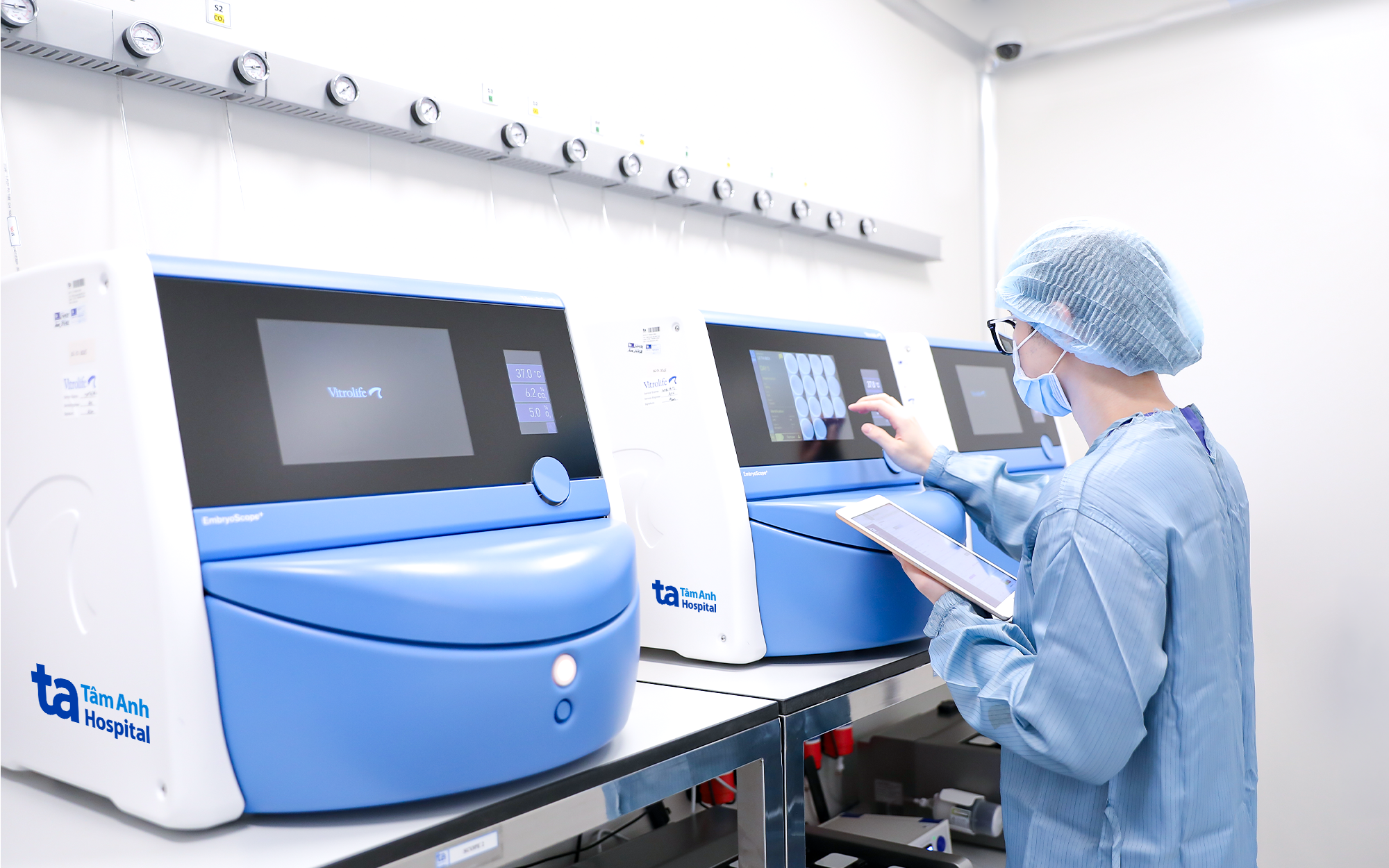 |
The time-lapse embryo culture system, integrated with artificial intelligence (AI), continuously monitors embryos without removal and helps select embryos with high implantation potential. *Photo: IVF Tam Anh* |
Uyen underwent egg retrieval, fertilization with her husband's sperm, and embryo culture in a continuous monitoring time-lapse system. This resulted in 5 top-quality day-5 embryos, which were cryopreserved awaiting the ideal transfer time.
Doctor Giang performed a hysteroscopy to visually inspect the implantation environment. She discovered that Uyen had adenomyosis accompanied by chronic endometritis. According to Doctor Giang, adenomyosis can alter the structure and function of the uterine muscle, reducing its ability to receive an embryo. Chronic inflammation also changes the endometrial environment, affecting embryo reception and implantation, leading to failed embryo transfers or miscarriage.
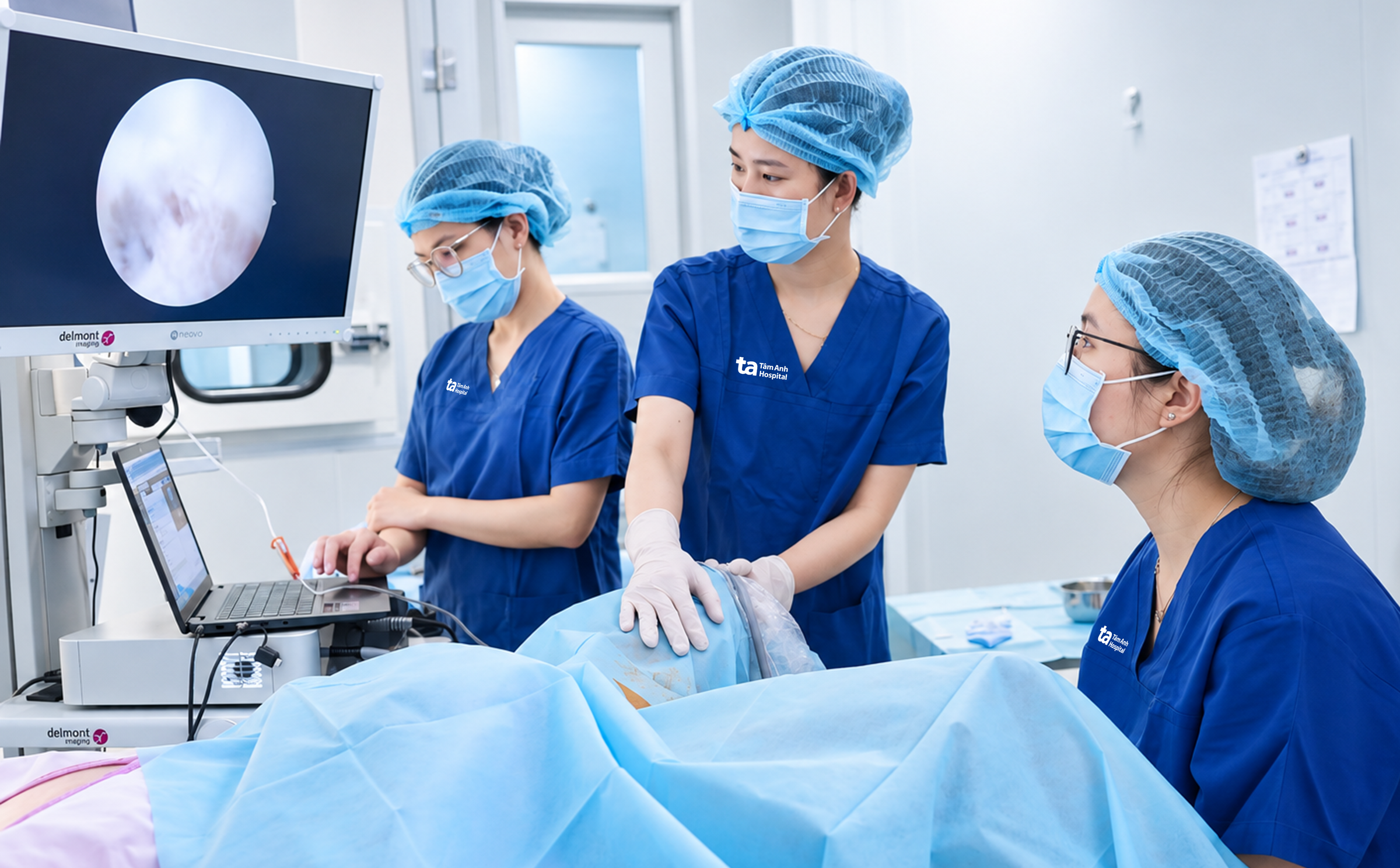 |
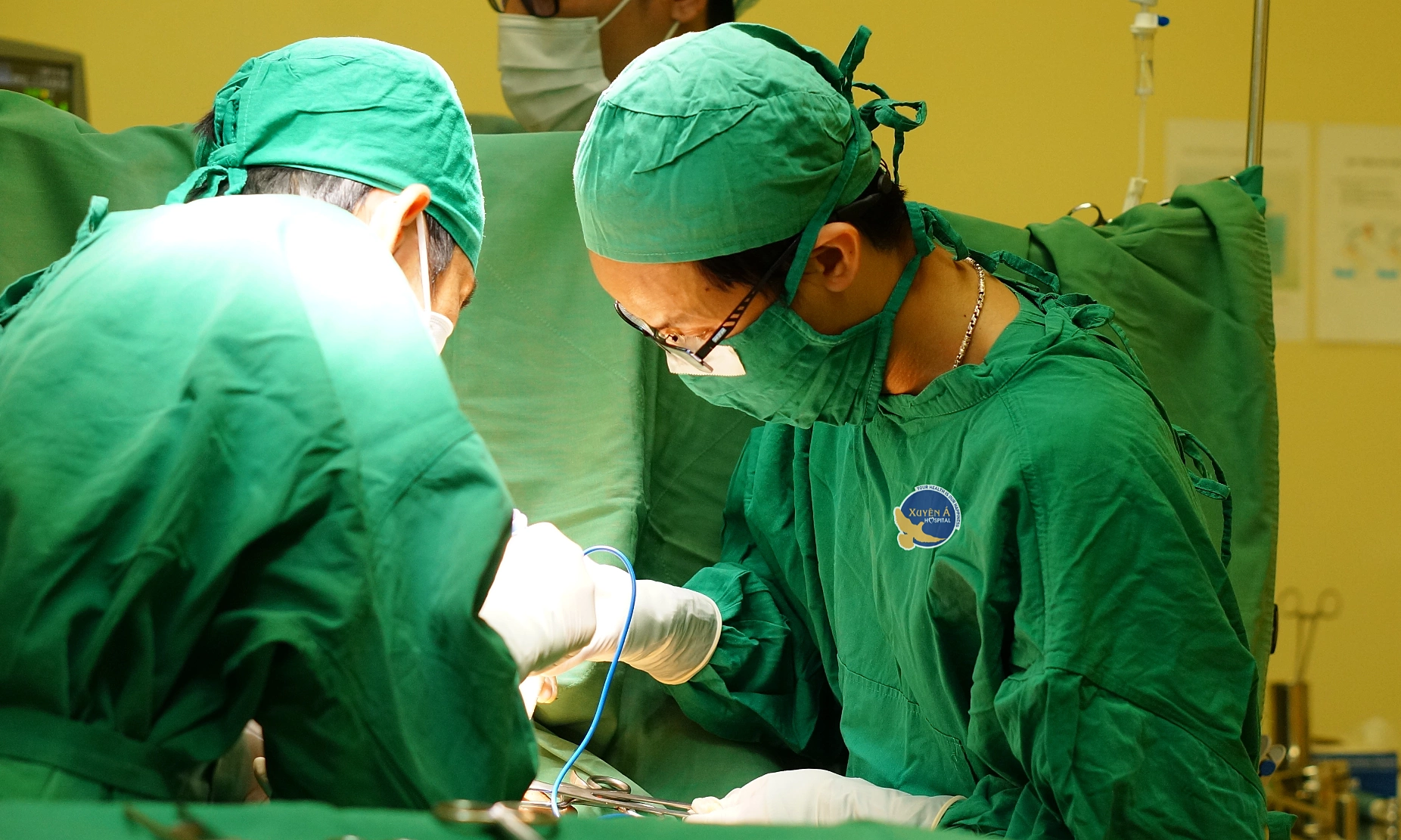
Doctor Giang (far right) performing hysteroscopy to investigate the cause of infertility for Uyen. *Photo: IVF Tam Anh* |
Doctor Giang treated Uyen for adenomyosis and chronic endometritis for 4 weeks. Once the endometrium was stable and reached an appropriate thickness, the doctor proceeded to transfer one top-quality day-5 embryo, helping Uyen become pregnant. Currently, the pregnancy is 10 weeks along and developing well. The couple also has 4 cryopreserved day-5 embryos for future pregnancies.
According to Doctor Giang, failed embryo transfers can be linked to many factors, from embryo quality and chromosomal abnormalities to endometrial conditions and uterine pathologies. In cases of repeated failures, patients need a comprehensive re-evaluation before another embryo transfer.
Women under 35 who have regular unprotected intercourse for 12 months without conception should seek infertility evaluation. Those with a history of endometriosis, pelvic surgery, or recurrent miscarriages should seek examination earlier to identify abnormalities affecting fertility, enabling effective treatment and optimizing the chance of having children.
By Nguyet Nhi
* Character names have been changed
| Readers can submit questions about infertility here for doctors to answer |