Frequent and prolonged headphone use, especially at high volumes, can pose serious risks to hearing health, according to medical experts. The continuous exposure to loud sounds can damage sensitive structures within the ear, potentially leading to irreversible hearing loss.
Dr. Truong Tan Phat, Head of the Ear, Nose, and Throat Unit at Tam Anh General Clinic, District 7, explains that excessively loud sounds directly impact the cochlea and auditory hair cells. These vital cells, responsible for transmitting sound from the ear to the brain, do not have the ability to regenerate once damaged. This damage often manifests as dull ear pain, tinnitus (ringing in the ears), and can progress to early hearing loss or even complete deafness.
Hearing can deteriorate significantly when ears are exposed to high sound levels. For instance, a sound level of 100 dB (decibel) for just 15 minutes, or continuous exposure above 85 dB for 8 hours, can cause damage. The safe listening threshold for human ears is below 80 dB. Beyond causing permanent damage to the hair cells, excessive sound levels also disrupt the crucial connection between these hair cells and nerve cells, thereby interrupting the natural process of sound transmission to the brain.
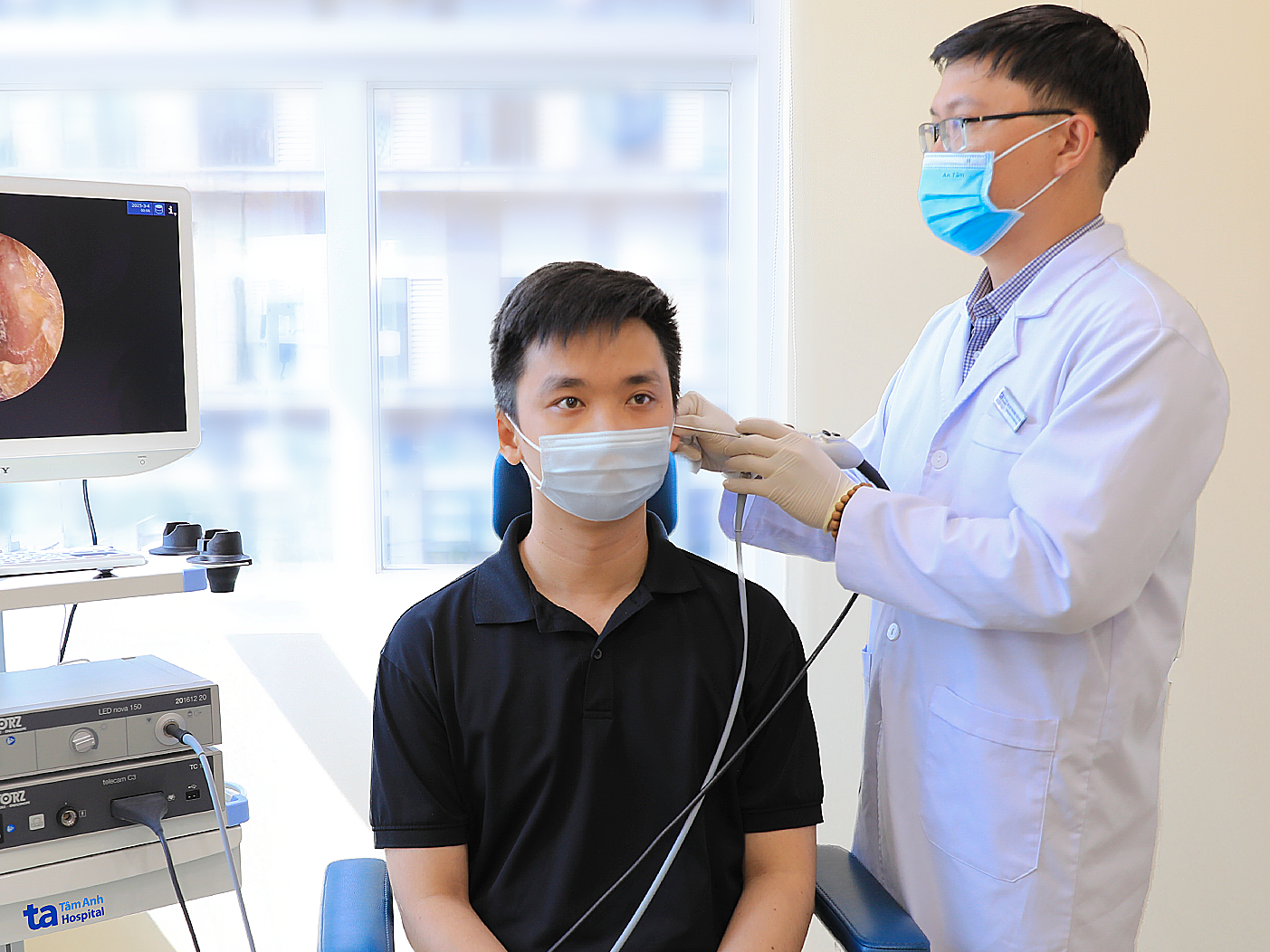 |
Doctor Phat performing an ear endoscopy on a patient. Illustration: Tam Anh General Clinic, District 7 |
Beyond the internal damage, prolonged high volume can also disrupt pressure within the ear and cause spasms in the small muscles of the middle ear. This often results in deep-seated ear pain, which may sometimes spread to the temples. Additionally, using headphones for extended periods without proper cleaning can lead to irritation or inflammation of the outer ear canal, causing symptoms such as gradually increasing ear pain, a burning sensation, and itchy earlobes.
To mitigate these risks and protect your hearing, Dr. Phat recommends several preventative measures:
- **Limit usage time:** Wear headphones for a maximum of one hour, then take a 5-10 minute break before resuming.
- **Adjust volume levels:** Set the volume to a mild level of 30-50 dB. A moderate level is around 60 dB, while anything above 70 dB is considered loud.
- **Utilize technology:** Install smartphone software designed to monitor and alert you about safe listening levels.
For individuals who work in environments with consistently high sound levels, such as karaoke rooms, music events, or industrial settings with loud machinery, using earplugs is advisable. Earplugs can effectively reduce sound exposure by 5 dB to 45 dB, significantly lowering the risk of damage. If you have already adjusted your listening habits but continue to experience persistent ear pain or discomfort, it is crucial to consult an ear, nose, and throat specialist for a thorough examination and appropriate treatment.
Master, Doctor, Level I Specialist Truong Tan Phat
Head of Ear, Nose, and Throat Unit
Tam Anh General Clinic, District 7
| Readers can submit questions about ear, nose, and throat conditions here for a doctor's response. |