For the woman working at a leading management consulting firm in Nashville, it was a pivotal step to realize her dream of motherhood without a husband. Despite holding a doctorate in biology, Terry had never considered the concept of "single mother by choice" until a book on in vitro fertilization (IVF) ignited a spark of hope, completely altering the life path she had once envisioned.
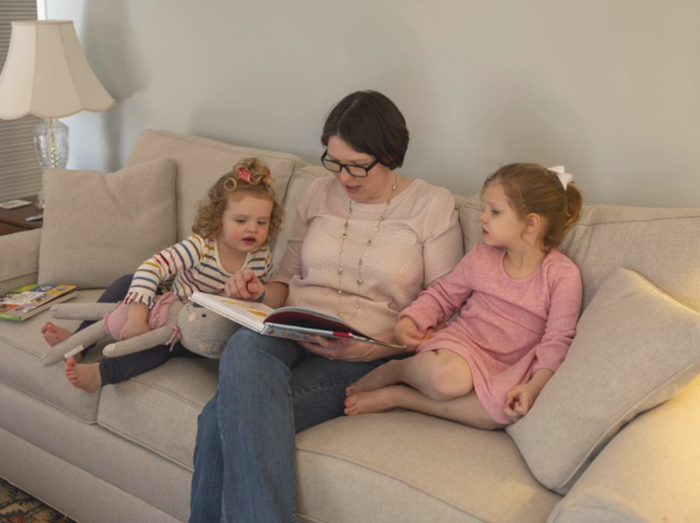 |
Terry reads to her two daughters. *Photo: NPR*
Terry is not alone in this journey. She represents a surging new demographic in the United States: educated, financially independent women who decide to have children alone as they pass 40 years old. According to data from the Centers for Disease Control and Prevention (CDC), the number of unmarried women giving birth in their 40s has soared by 250% over the past three decades. This phenomenon reflects a profound social shift, where finding a partner is no longer a prerequisite for starting a family.
This increase is not accidental. Rosanna Hertz, a sociologist at Wellesley University and author of the book "Single By Chance, Mothers by Choice", explains that modern women dedicate their 20s and 30s to pursuing education and careers. However, the paradox is that when they achieve stability and are ready for motherhood in their late 30s, the "market" for suitable marriage partners becomes scarce. Instead of waiting indefinitely, many, like Terry, activate "Plan B": using science to become mothers.
This process requires meticulous preparation, akin to a multimillion-dollar business project. With a scientist's mindset, Terry developed complex spreadsheets to screen donors based on race, height, medical history, and education. Fortune smiled upon her as she conceived successfully on her first attempt, welcoming Eleanor in 2021 and Margaret two years later. However, Terry is a rare exception. Medical studies indicate that the success rate of conception after one IVF cycle for women over 35 years old is often below 50%, and this figure declines sharply with each passing year.
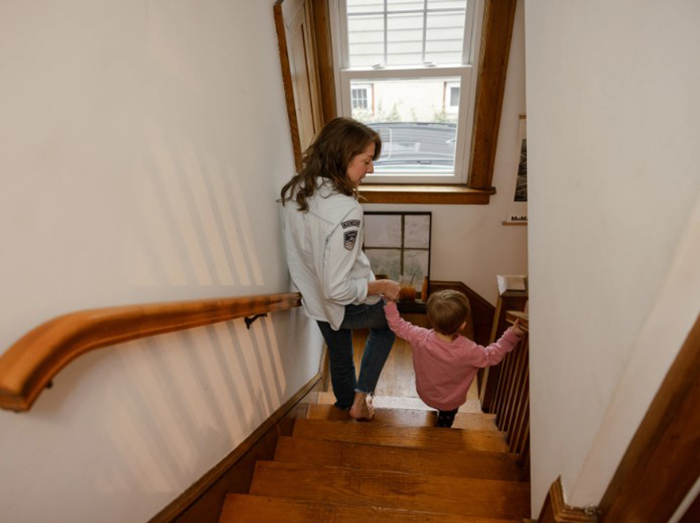 |
Snyder and her two-year-old daughter at home in New Jersey. *Photo: NPR*
Because the success rate is inversely proportional to age, IVF becomes a fierce race, not only biologically but also financially. Data from the US Department of Health and Human Services confirms that women with master's and doctorate degrees are the most frequent users of IVF. The reason is practical: the cost for each fertilization cycle ranges from 15,000 to over 30,000 USD (approximately 380 million to 760 million dong), not including incidental expenses.
Kate Snyder, a 48-year-old interior designer in New Jersey, is a typical example. She began her journey to motherhood at 40 years old after giving up hope of finding a partner. This former Google employee faced a difficult economic challenge as insurance only covered a small portion. This financial barrier has, in effect, made the dream of single motherhood through IVF a privilege of the middle and upper classes.
Even after overcoming financial pressure, these "older" mothers still face physical hardships. Snyder admits to aching joints from carrying her two-year-old daughter, while Terry often experiences exhaustion due to a lack of childcare support. They must learn to accept that their own needs now always come after their children's, and they must mentally prepare for societal judgment. Naive yet hurtful questions like "Where's your dad?" or unnecessary pity from neighbors are daily realities they confront.
Nevertheless, this family model is redefining concepts of happiness and fulfillment. Since the first in vitro fertilization baby was born in the United States in 1981, this method has contributed nearly 100,000 births annually, opening doors for the LGBTQ+ community and single women. For Terry, Snyder, and thousands of other women, physical difficulties or society's scrutinizing gaze become meaningless the moment they hold their children.
Binh Minh (NPR)