Primary hyperhidrosis is a disorder of the autonomic nervous system, causing sweat glands to overproduce sweat without physical exertion or heat exposure. When conservative treatments, such as topical medications, iontophoresis, or botox injections, prove ineffective for severe cases, patients may consider endoscopic thoracic sympathectomy.
Doctors recommend surgery for individuals experiencing severe hyperhidrosis in their hands, armpits, or face, which significantly impacts their quality of life, work, and mental well-being. The procedure involves surgically removing or burning the sympathetic ganglion corresponding to the affected area, effectively interrupting signals that stimulate excessive sweat gland activity.
The optimal time for endoscopic thoracic sympathectomy is when a patient is an adult (over 18 years old), to avoid affecting body and nervous system development. This minimally invasive surgical procedure is highly safe and does not alter fundamental body structures or vital functions, thus having no impact on a patient's lifespan.
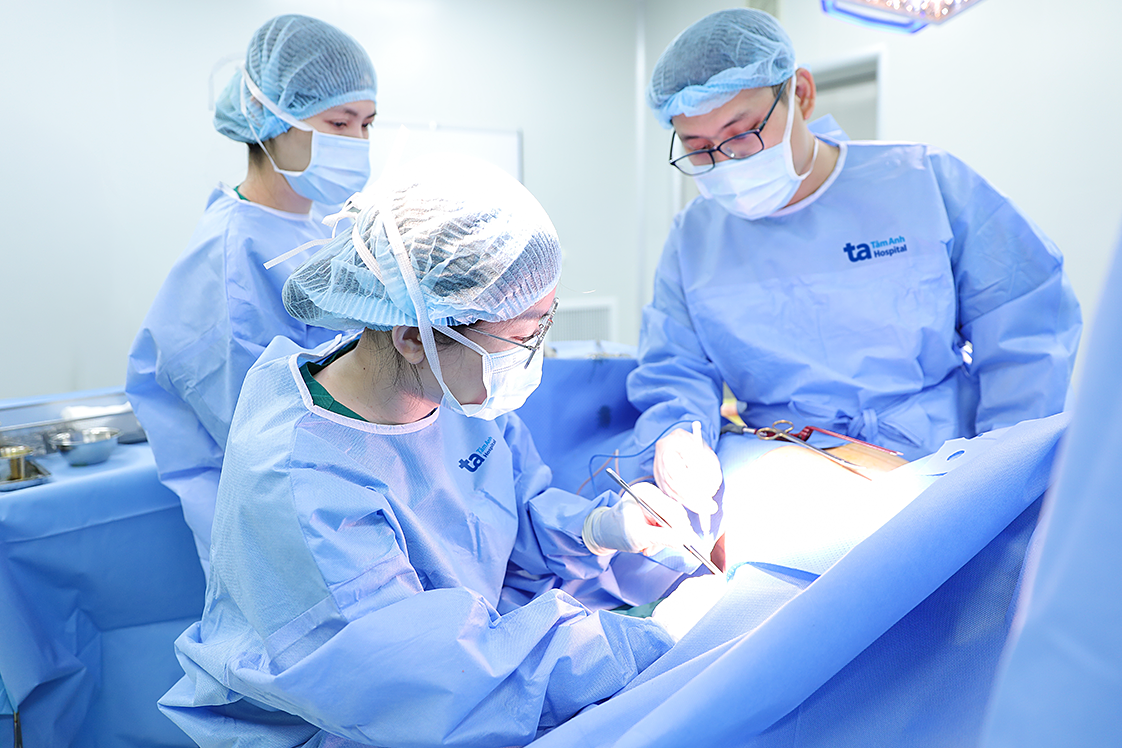 |
Doctor Hai prepares for sympathetic ganglionectomy to treat armpit hyperhidrosis. Illustration: Tam Anh General Hospital |
However, patients may experience some side effects post-surgery, such as compensatory sweating. This means the body increases sweat production in other areas like the back, abdomen, thighs, or groin to regulate body temperature. The degree of this compensatory sweating varies among individuals, and doctors thoroughly counsel patients before they decide on surgery.
Modern endoscopic technology, with its sharp imaging, enables surgeons to perform operations quickly, resulting in less pain and faster recovery for patients, who can often be discharged on the same day.
If your sweating significantly impacts daily life and does not respond to medical treatments, you should visit hospitals with a Thoracic and Vascular Surgery department. A doctor will then examine you and assess your autonomic nervous system. The doctor will conduct necessary clinical evaluations and review your medical history to determine if you are a suitable candidate for surgery.
Post-surgery, patients must maintain good personal hygiene, keep the incision dry and clean, wear breathable clothing, and avoid strenuous activity or heavy lifting for the first one to two weeks to allow the incision to stabilize. Adhering to follow-up appointments is crucial to minimize complications. For compensatory sweating, patients should drink sufficient water and maintain a healthy lifestyle to help their body gradually adapt to the new thermoregulation mechanism.
M.Sc., Dr. Phan Vu Hong Hai, First Degree Specialist
Thoracic and Vascular Surgery Center
Tam Anh General Hospital, TP HCM
| Readers can submit questions about neurological conditions here for a doctor's response. |