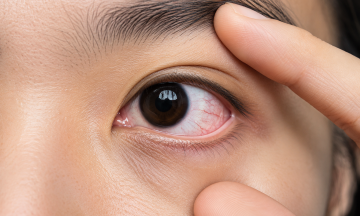
The initial scar was about 1.5 cm long, positioned close to the lip – an area of continuous movement during smiling and speaking. Doctors decided against stitching due to the risk of contraction affecting both aesthetics and function. After the wound dried and the scab fell off, the scar tissue gradually thickened, reddened, and expanded to about 3 cm.
Dr. Vu Thi Thuy Trang, from the Department of Dermatology - Aesthetic Dermatology at Tam Anh General Hospital, Ho Chi Minh City, stated that the keloid was still active, indicating ongoing collagen proliferation. This condition can appear a few weeks to several months after an injury. If not controlled early, the scar tends to become thicker, harder, and more difficult to treat.
Thuy has a predisposition to keloids, meaning her skin tends to overreact after injury. This increases the risk of prolonged scar development and recurrence after treatment.
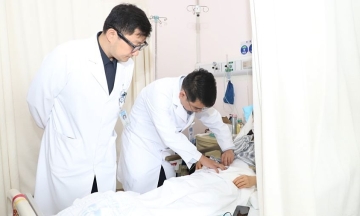
Doctors prescribed a combination of 6D laser therapy and triamcinolone injections. The Er:YAG laser helps resurface the skin and improve scar structure, while the Nd:YAG laser targets redness, increased blood flow, and the collagen remodeling process.
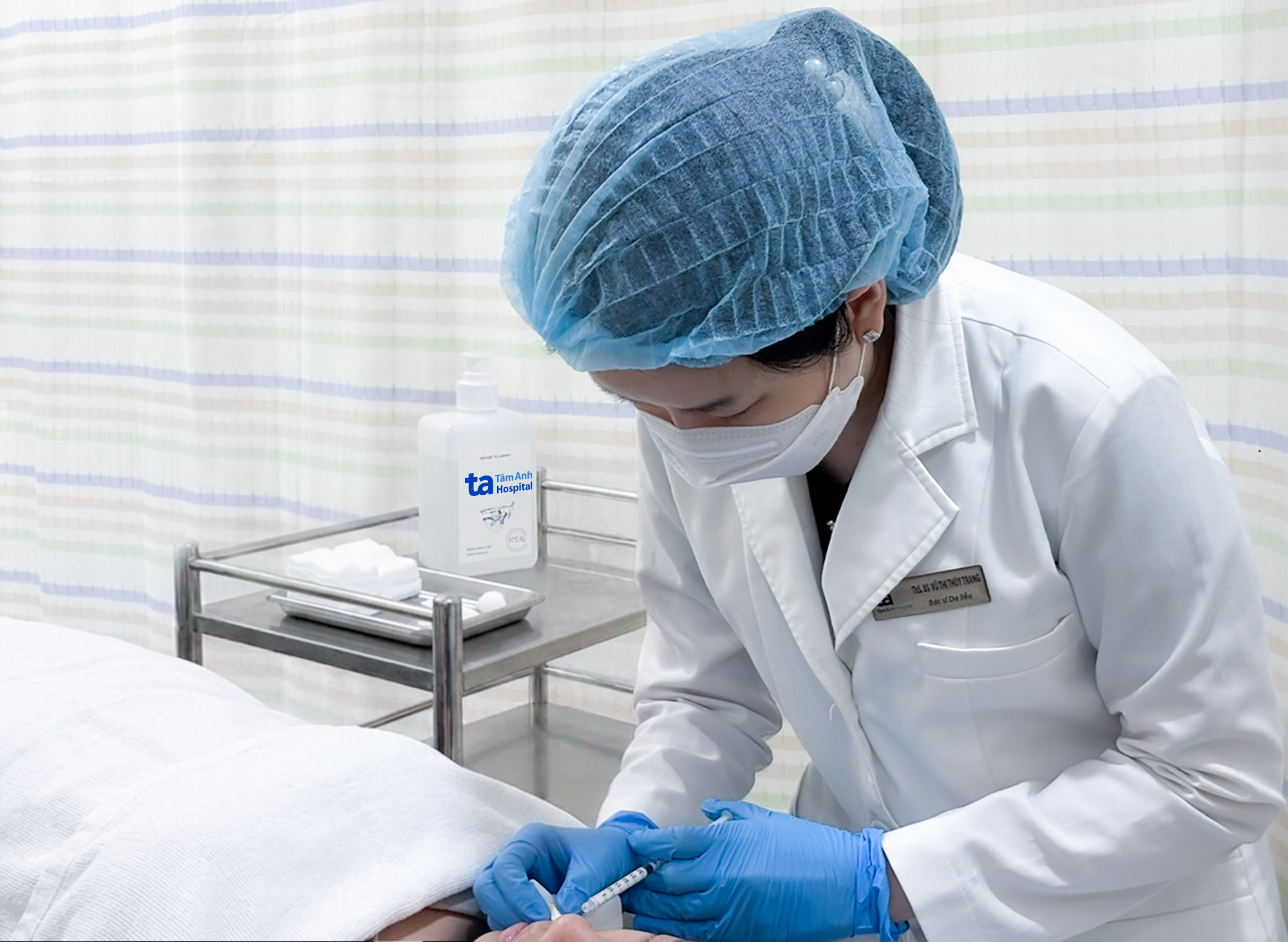 |
Doctors inject triamcinolone to flatten the keloid scar. Photo: Tam Anh General Hospital. |
Doctors inject triamcinolone to flatten the keloid scar. Photo: Tam Anh General Hospital.
After three laser sessions, each spaced one month apart, Thuy's scar significantly flattened, became less red, and softer. She then continued treatment with triamcinolone injections. Currently, the scar is notably flat, and Thuy is undergoing further treatment to improve pigmentation, aiming for the skin to resemble its natural color.
Patients must avoid sun exposure after treatment, limit strong impacts to the scar area, and refrain from massaging or applying medication without consulting a doctor. The skin might experience slight redness or tingling for a few days. Patients need to attend follow-up appointments so doctors can adjust injection doses and laser energy appropriately, minimizing the risk of skin indentation or pigmentation disorders.
Dr. Trang noted that individuals with open wounds on their face should closely monitor the healing process. If a scar thickens, becomes very red, expands, or itches persistently, they should visit a hospital with a Dermatology - Aesthetic Dermatology department for early examination and appropriate intervention. Keloid scars do not disappear on their own over time. The initial 3-6 months after injury are considered the "golden time" for keloid scar control.
Minh Huong
*Character's name has been changed