X-ray results at Tam Anh General Clinic, District 7, revealed Mrs. Mai's left knee had severe osteoarthritis, with almost no cartilage remaining. This long-standing condition caused bone ends to rub together, creating large defects on the tibial surface, severe joint deformity, significant hyperextension and varus (bow-leggedness), leading to instability, severe pain, and inability to walk.
Master, Doctor, Level 1 Specialist Ho Van Duy An, from the Orthopedic Trauma Department, stated that conservative treatment was no longer effective for Mrs. Mai, and surgery was the most appropriate method to alleviate pain and restore her mobility. Mrs. Mai underwent nearly two months of internal medicine treatment to stabilize her blood pressure and diabetes, reducing the risk of infection and ensuring a safer surgery.
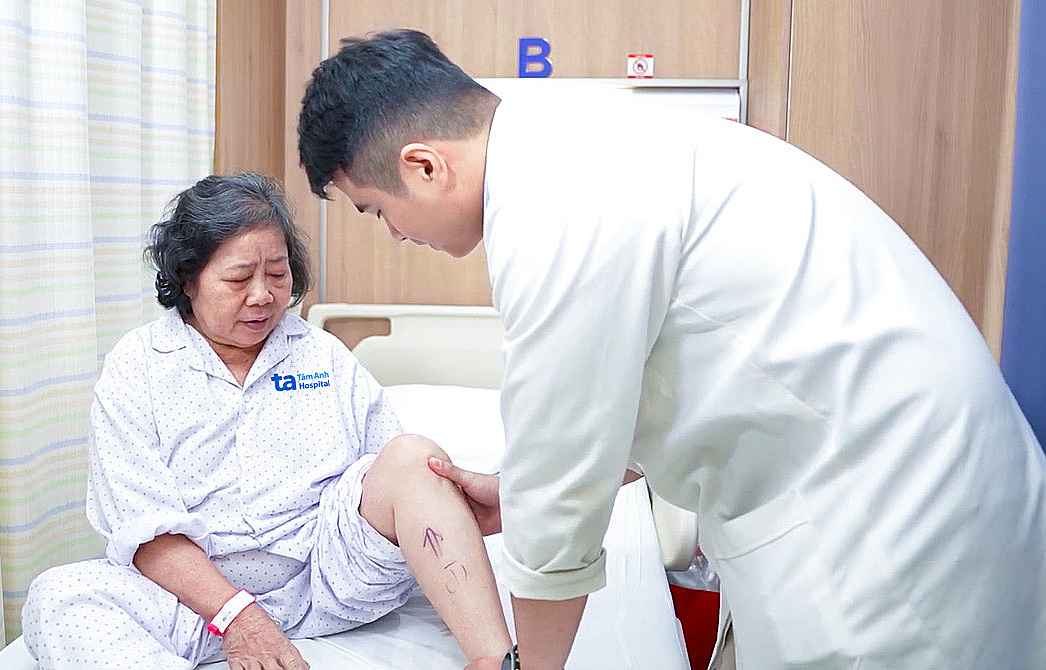 |
Doctor An examining Mrs. Mai's knee joint function before surgery. Photo: Tam Anh General Hospital
Doctors performed Mrs. Mai's knee replacement using a non-tourniquet surgical technique, which involves active hemostasis. This approach reduces infection risk, preserves thigh muscle strength post-surgery, thereby decreasing post-operative knee pain and swelling, and accelerating recovery. The surgeon made a precise incision in the middle of Mrs. Mai's left knee, opened the joint, and removed the damaged components. They then made cuts, reshaped the bone, and inserted a suitably sized artificial joint, checking its accuracy and stability.
On the first day after surgery, Mrs. Mai could practice walking with a supportive frame. Her health recovered well, internal medical indicators stabilized, and the incision dried quickly. Mrs. Mai was discharged three days later. She needs to undergo physical therapy and regular follow-up appointments for monitoring. Doctors predict that after about 4 weeks, Mrs. Mai will be able to move and live normally.
 |
Doctor An (right) performing knee replacement surgery for Mrs. Mai. Photo: Tam Anh General Hospital
Doctor An stated that knee osteoarthritis is a common and incurable musculoskeletal disease. When detecting unusual warning signs in the knee joint, such as pain, difficulty walking, or a crackling sound during movement, patients should seek timely medical examination to avoid complications that reduce mobility.
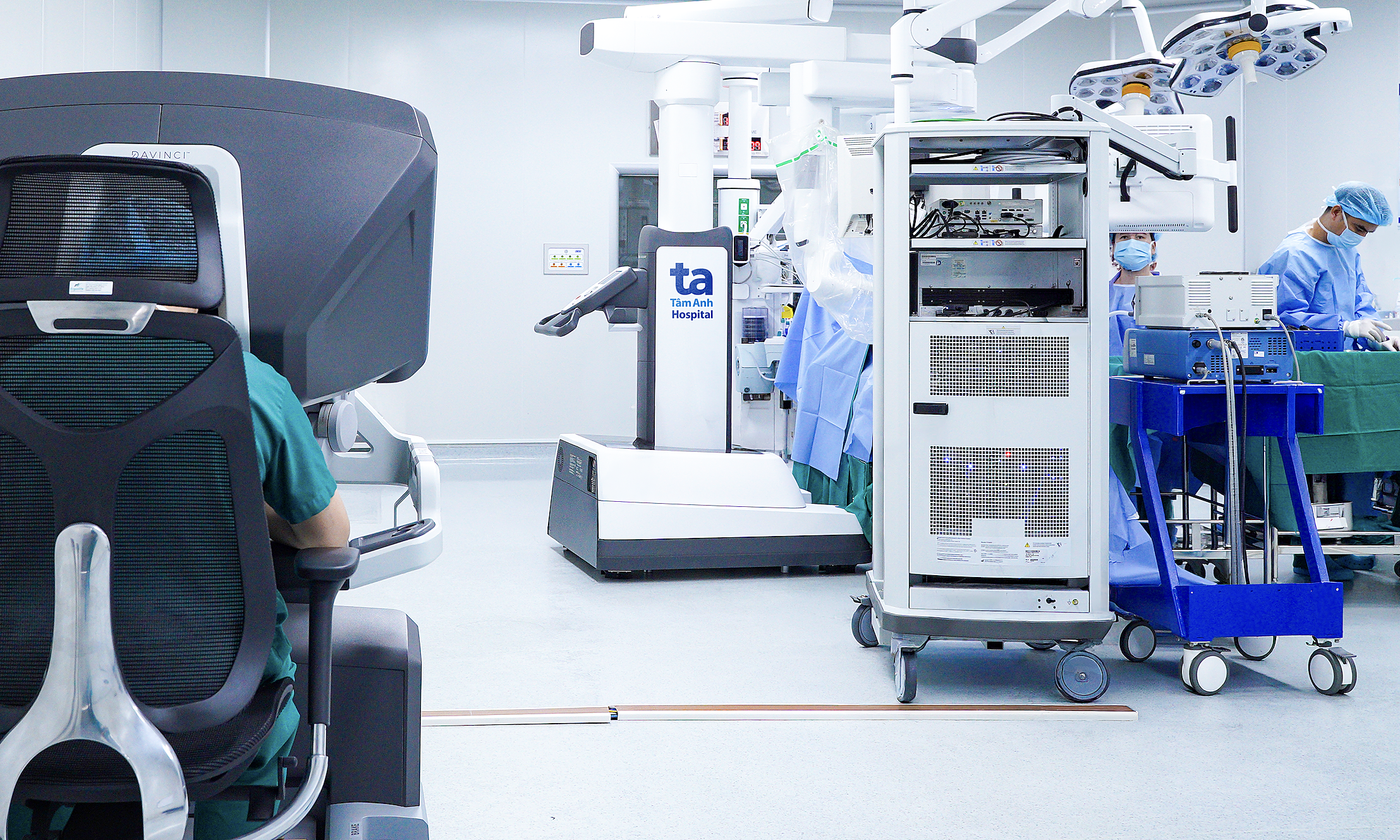
In the early stages, patients typically receive conservative treatment with oral medication or injections and physical therapy. When the disease is severe, causing significant pain and affecting motor function, doctors may recommend artificial joint replacement surgery. With robotic assistance, knee joint treatment becomes safer and highly accurate. Artificial knee joints have a structure and limb axis similar to natural knee joints, helping patients walk almost as they did before the disease, rapidly restoring movement, and allowing discharge after 2-3 days.
Phi Hong