On 23/2, Doctor Nguyen Pham Tien Dat, Head of Obstetrics Department A2 at Hanoi Obstetrics and Gynecology Hospital, stated that the woman believed she was infertile and consequently did not use contraception. She only discovered her pregnancy at 24 weeks during a general health check-up. The pregnancy became complicated when she experienced bleeding at 35 weeks, necessitating emergency hospitalization and a planned C-section at 37 weeks to ensure the safety of both mother and child.
The medical team successfully performed the surgery, safely delivering a baby boy weighing 3,7 kg on 22/2. The mother's vital signs are currently stable, and she remains under postpartum observation.
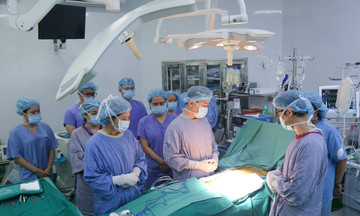
Doctors considered the surgery a significant challenge because the patient was admitted with a diagnosis of multiparity, placenta previa, and placenta accreta. Previous surgical scars from four prior births caused the anterior uterine wall to adhere tightly to the abdominal wall. The surgical team had to carefully detach adhesions and dissect tissue to lower the bladder, then make a transverse incision in a safe area of the uterine body to deliver the baby.
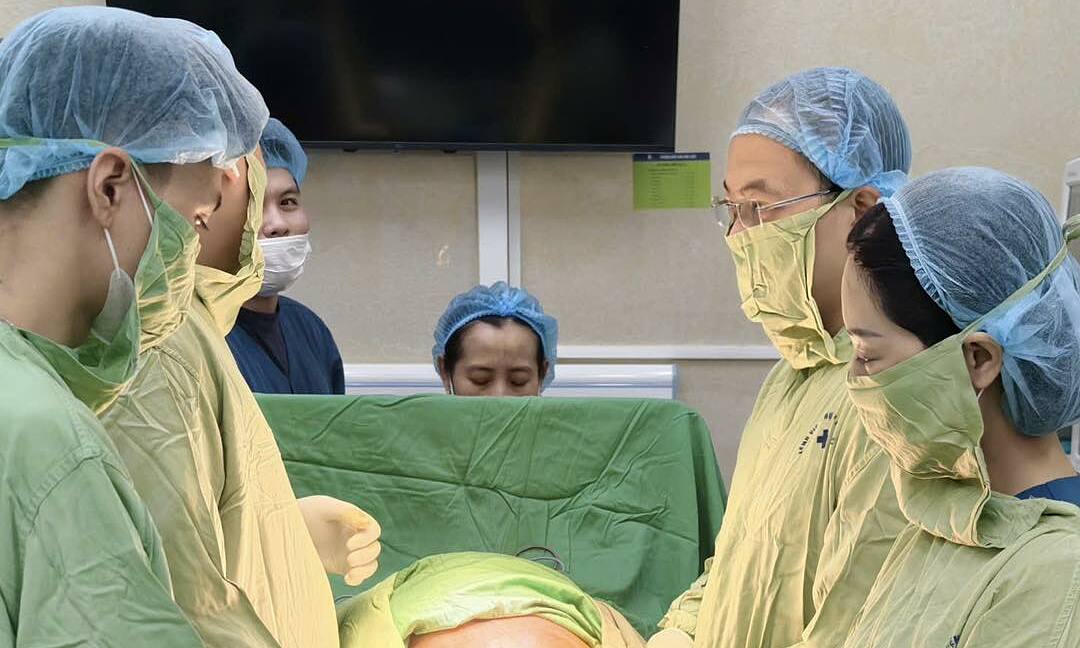 |
Doctors perform a C-section on the patient. Photo: Hospital provided.
During the surgery, doctors also discovered a large tumor in the left ovary. The surgical team decided to perform a subtotal hysterectomy and bilateral adnexectomy to remove the tumor, while also transfusing 700 ml of blood to compensate for the mother's blood loss.
Doctor Dat warned that late pregnancy detection causes mothers to miss crucial screening milestones, increasing the risk of fetal abnormalities, fetal malnutrition, or complications such as preterm birth and placental abruption. Specifically, women with a history of multiple C-sections, central placenta previa, or placenta accreta must strictly adhere to their prenatal check-up schedules and seek immediate hospitalization if any abnormal signs appear.
Thuy An