"Lung cancer can be effectively treated if detected early, with a 5-year survival rate potentially reaching 70-90%. Conversely, late detection leads to prolonged, costly treatment primarily aimed at controlling the disease," stated Associate Professor Do Hung Kien, Deputy Director of K Hospital. He made these remarks during the online television program 'Early Lung Cancer Screening – From Patient Stories to National Policy Needs', held in response to National Health Day on 7/4.
Associate Professor Kien reported that the healthcare system currently admits only about 20% of lung cancer patients at an early stage, making them eligible for surgery. The remaining patients have lost the opportunity for surgery due to advanced disease, with stage 4 accounting for 40-50% and stage three for 25-30%. Most individuals only seek medical attention when systemic symptoms such as shortness of breath, chest pain, or persistent cough appear, or when cancer cells have metastasized, causing bone pain or headaches.
The Deputy Director of K Hospital emphasized that early disease detection allows doctors to perform radical surgery, resulting in a 5-year survival rate of 70-90%. This also helps patients save costs, reduce hospital stays, and quickly return to their daily lives.
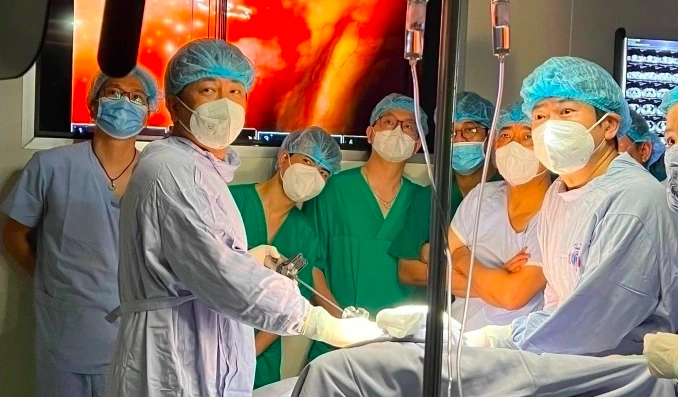 |
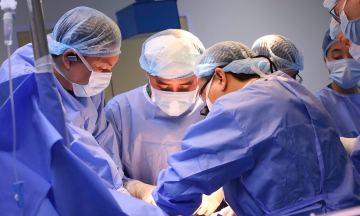
Doctors at K Hospital perform lung cancer surgery. Photo: Ha Tran. |
Doctors at K Hospital perform lung cancer surgery. Photo: Ha Tran.
Conversely, when a tumor progresses to stage two, the survival rate decreases to 50-60%. For stage three, it drops to 10-36%, and for the final stage, it is only 10%. Treating advanced cases requires doctors to coordinate multi-modal approaches over a long period, placing significant pressure on the entire healthcare system. This treatment primarily aims at disease control rather than complete cure. Doctors can treat two to three times more early-stage patients in the same timeframe compared to those who present late.
Doctor Le Thai Ha, Deputy Director of the Department of Preventive Medicine (Ministry of Health), explained that the reason for late detection is a lack of regular screening habits among the public. Currently, patients are primarily identified through workplace health check-ups or entirely by chance.
Experts predict that lung cancer cases in Vietnam will continue to rise due to persistently high smoking rates and air pollution levels. Drawing from the successful community screening programs in Japan and Malaysia, experts propose that Vietnam's healthcare sector should promptly establish a national lung cancer screening program, coupled with a cost-support mechanism, to address the root of the problem.
The medical community currently uses low-dose CT scans to detect early signs of lung cancer, even before symptoms appear. However, cost barriers prevent this technique from being widely adopted. Doctors recommend that high-risk groups, including individuals over 50 years old, long-term smokers, those living in polluted environments, or people with chronic lung disease, should proactively seek regular medical screenings.
Le Nga