My and Vu, married for 7 years, faced a challenging path to parenthood due to their long-distance relationship and a severe male infertility diagnosis. My resided in Vietnam while Vu lived in the US, limiting their time together to just a few weeks annually. This infrequent contact, combined with Vu's medical condition, drastically reduced their chances of natural conception.
Upon seeking treatment, Doctor Giang Huynh Nhu, Director of the Center for Reproductive Support at Tam Anh General Hospital TP HCM (IVF Tam Anh), found My's ovarian reserve to be average. However, Vu was diagnosed with grade two varicocele, and his sperm analysis revealed an extremely low count of only 1 million/ml with 1% motility. For healthy males, sperm density typically exceeds 16 million/ml, and motility is above 30%.
Doctor Duong Quang Huy, Head of the Andrology Unit, explained that couples usually need to maintain sexual intercourse 2-3 times per week for natural conception. Given My and Vu's situation, the probability of natural conception was minimal due to the low chance of egg and sperm meeting. Furthermore, even with the opportunity, Vu's sperm quality was insufficient for a natural pregnancy.
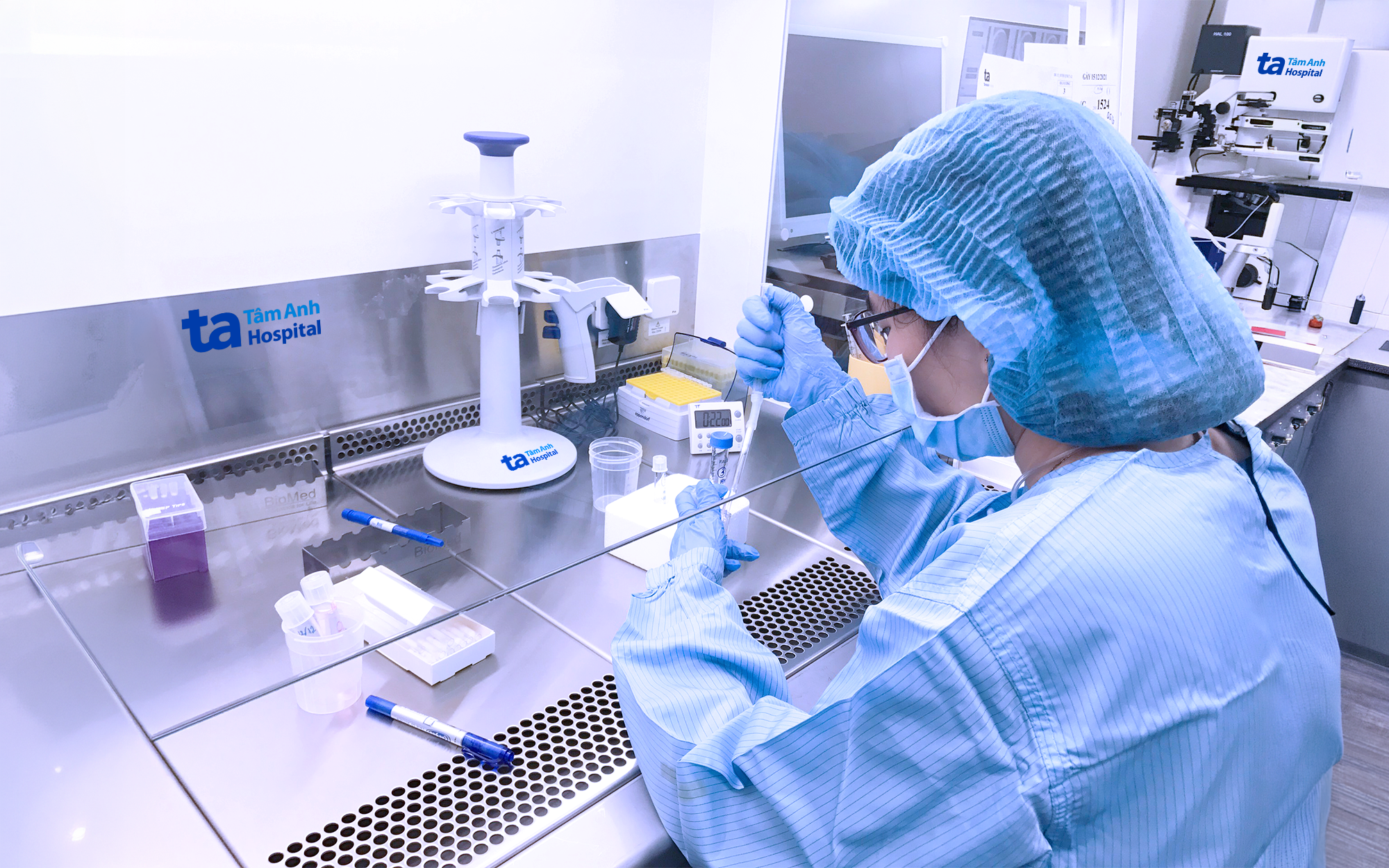 |
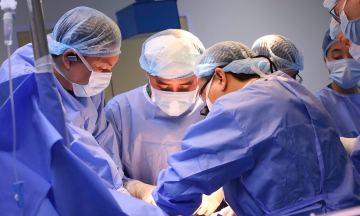
Embryologists wash and select sperm for in vitro fertilization. Photo: IVF Tam Anh TP HCM
Due to Vu's limited time abroad, waiting 6-12 months for testicular recovery after varicocele surgery was not feasible. The medical team opted to collect a semen sample to select the best sperm for injection into My's oocytes. Embryologists carefully washed and selected dozens of healthy sperm, which were then cryopreserved for in vitro fertilization (IVF).
Doctor Nhu proceeded with ovarian stimulation for My, successfully retrieving 7 oocytes and creating 5 day-5 embryos. My conceived on her first embryo transfer, and her daughter was born weighing 3.1 kg.
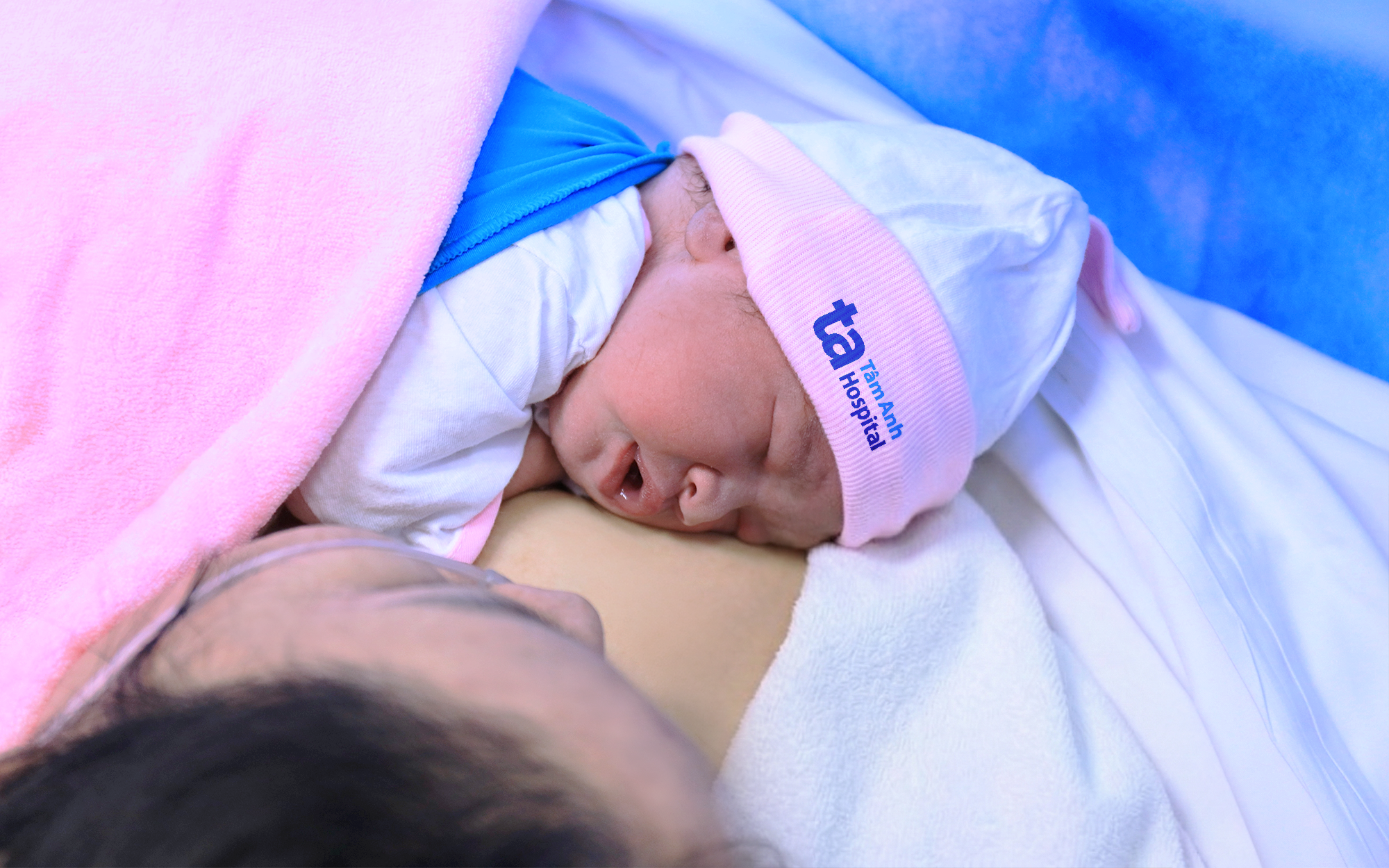 |
My's daughter had skin-to-skin contact with her mother immediately after birth. Photo: Tam Anh General Hospital
Doctor Huy noted that many long-distance couples often mistakenly assume that not having children is normal and consequently delay seeking reproductive health check-ups. In reality, even for couples who have regular intercourse, the chance of natural conception during each menstrual cycle is only about 15-30%.
Ovarian reserve in women gradually declines each year. For men, conditions like varicocele, if not detected early, can significantly reduce sperm quality, leading to immotile sperm or severe DNA fragmentation. Additionally, age is directly proportional to the risk of chromosomal abnormalities, increasing the likelihood of miscarriage, stillbirth, or congenital defects.
At IVF Tam Anh TP HCM, many couples seek medical attention only after several years of infertility, necessitating intervention with assisted reproductive techniques. Therefore, couples living apart or those planning to delay childbearing should proactively undergo reproductive health check-ups after 6-12 months. Early detection allows for timely intervention, simpler treatment, and a higher success rate.
Nguyet Nhi
*Names have been changed