Myopia is a common refractive error that makes it difficult for individuals to see distant objects clearly. This condition often emerges during school age and tends to worsen over time. According to Doctor Luong Thi Anh Thu, from the High-Tech Eye Center, Tam Anh General Hospital Hanoi, as myopia progresses, the eyeball can elongate. This alters eye structures, particularly the retina and posterior tissues, thereby increasing the risk of visual complications.
Retinal detachment
In individuals with severe myopia, the elongated eyeball stretches and thins the retina, making it susceptible to degeneration or tears. When a tear occurs, fluid from within the eye can seep behind the retina, causing it to separate from the eyeball wall, leading to retinal detachment. This is a serious complication that can result in permanent vision loss if not detected and treated promptly. Warning signs may include seeing flashes of light, floaters, or dark areas in one's field of vision.
Glaucoma
Severe myopia raises the risk of glaucoma, a condition where high pressure inside the eye damages the optic nerve. This disease often progresses silently with few obvious symptoms in its early stages but can lead to irreversible vision loss if left untreated. Regular eye examinations are important for the early detection of glaucoma.
Early cataracts
People with severe myopia are at a higher risk of developing cataracts earlier than those with normal vision. When the eye's natural lens clouds, light cannot pass through completely, causing images to appear blurry with reduced contrast and color. This condition gradually worsens over time and may require surgical intervention if it significantly impacts vision.
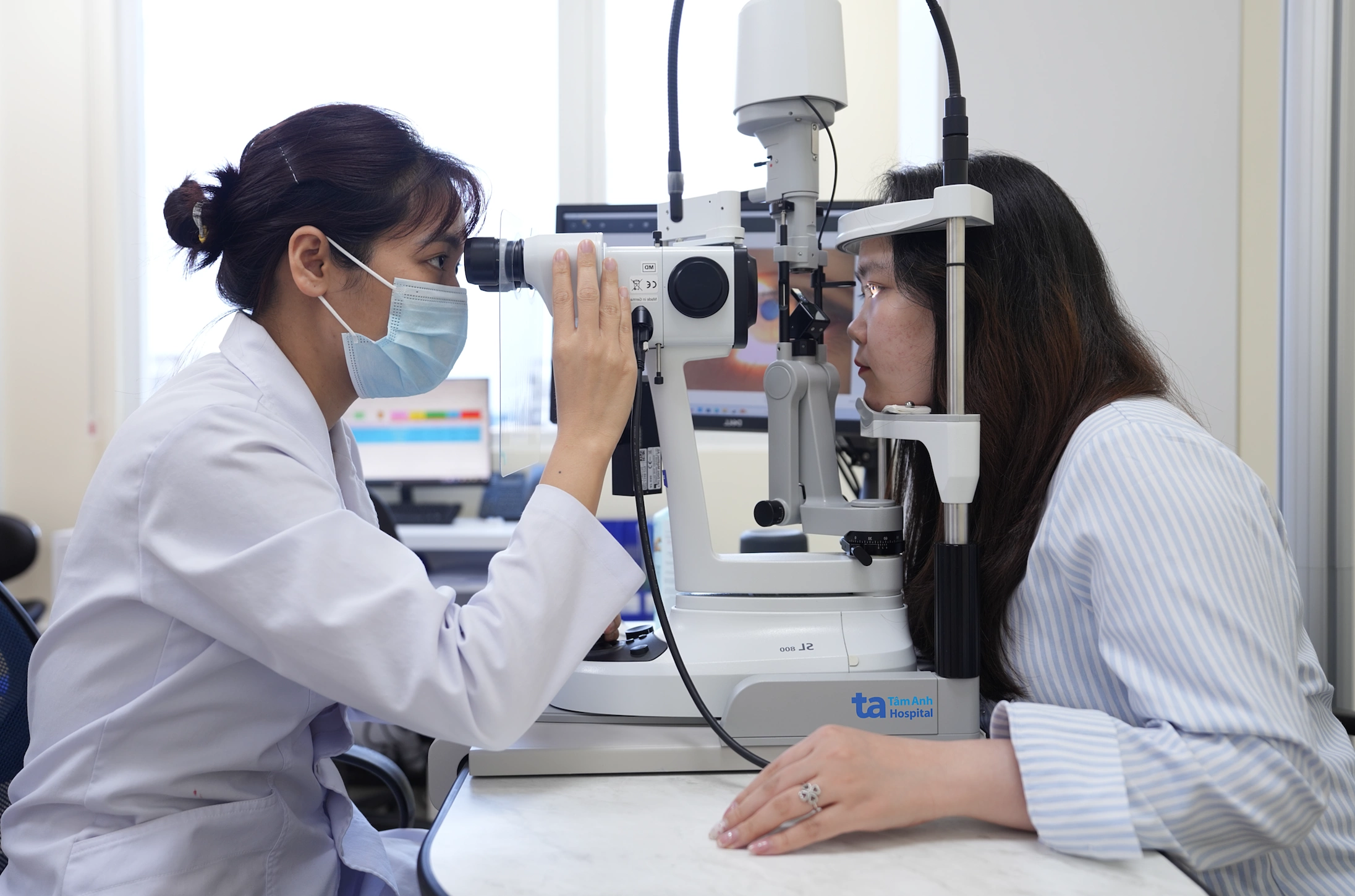 |
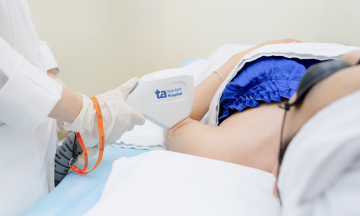
Doctor Thu examines a woman's eye. Photo: Tam Anh General Hospital. |
Reduced quality of life
Severe myopia significantly impairs distance vision, directly affecting daily learning, work, and activities. Individuals may struggle to read whiteboards, identify road signs, drive, or participate in outdoor activities. Persistent poor vision can also lead to increased reliance on glasses or assistive devices, reducing life flexibility and impacting work performance.
Persistent eye strain and headaches
For individuals with severe myopia, especially when not wearing glasses or wearing incorrect prescriptions, the eyes must continuously strain to focus. This prolonged visual stress can cause eye fatigue, dry eyes, headaches, or a feeling of pressure in the forehead and eye sockets. In the long term, this reduces concentration and academic or work performance.
Doctor Thu advises individuals with myopia, particularly severe cases, to undergo regular eye examinations. This helps monitor disease progression and facilitates the early detection of complications. Additionally, wearing the correct prescription glasses, limiting prolonged near vision habits, maintaining appropriate distances for studying and working, and ensuring adequate lighting help protect long-term vision.
Thu Giang
| Readers can submit questions about ophthalmological diseases here for doctors to answer. |