Yen, 21, suffered a complete anterior cruciate ligament rupture after a minor motorcycle fall, leading to significant knee pain. While she had no abrasions, she could not walk independently, her knee collapsing every time she stood up or sat down. An MRI scan at Tam Anh General Hospital, TP HCM, unexpectedly revealed a complete ligament rupture and meniscus damage.
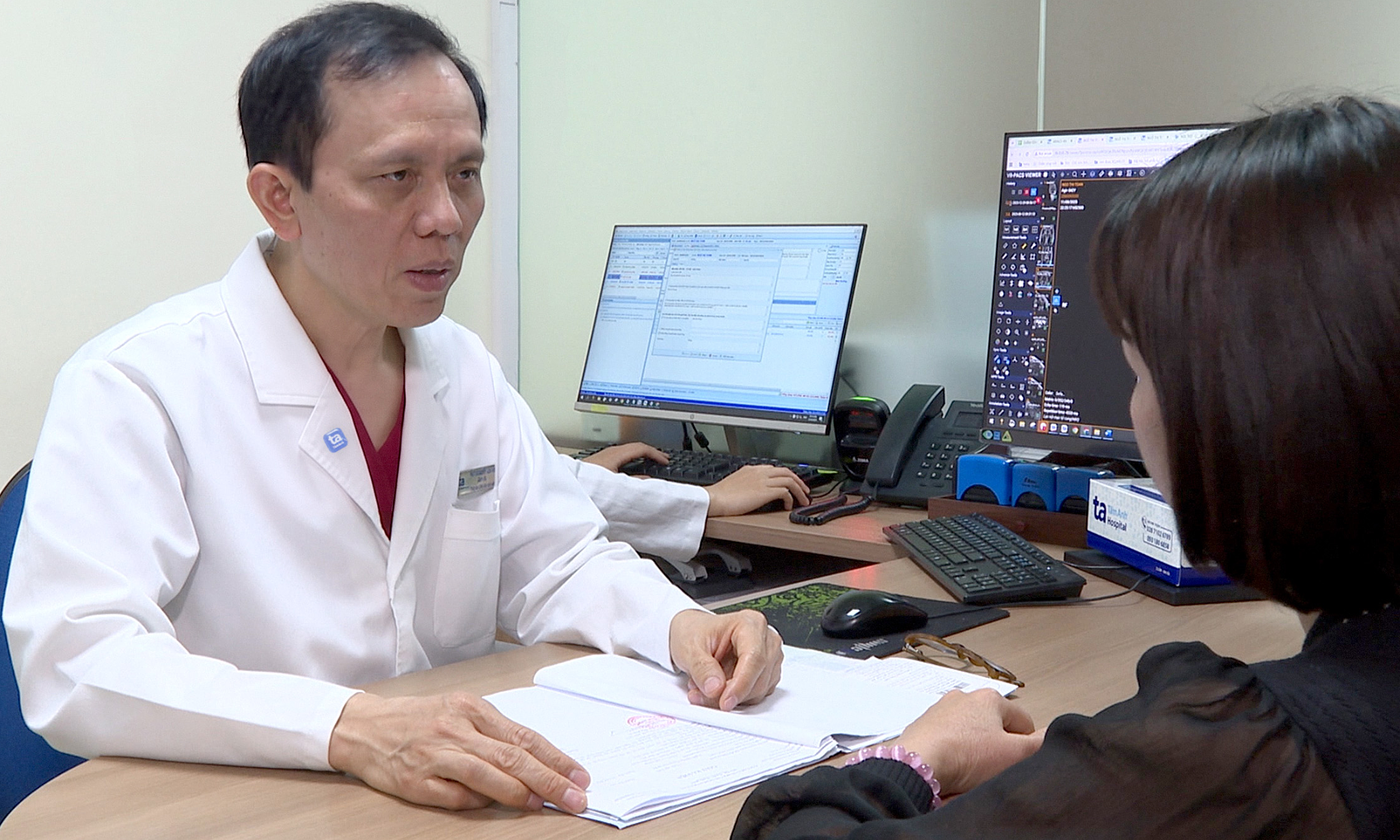
Doctor Tran Anh Vu, Head of Sports Medicine and Endoscopy, explained how such injuries occur. When a motorcycle falls or brakes suddenly, the body instinctively braces one leg against the road. The entire body weight shifts onto that leg, with the knee slightly bent or extended. At this moment, the upper body and thigh bone continue to move forward or twist sideways in the direction of the falling vehicle. This causes the knee to twist suddenly and excessively, leading to an anterior cruciate ligament tear.
 |
Doctor Vu reconstructs the ligament using endoscopic technique for the patient. *Photo: Tam Anh General Hospital*. |
Without surgical intervention, Yen would face long-term complications. While she could still walk, she would experience significant pain, especially with sudden changes in direction. Over time, a ruptured ligament leads to knee instability, thigh muscle atrophy, and difficulty recovering. It can also result in secondary injuries such as meniscus tears, osteoarthritis, and posterior cruciate ligament tears.
Yen underwent endoscopic reconstruction using a high-tech artificial ligament. During the procedure, doctors made a small incision on the skin and drilled a tibial tunnel from within the body. The artificial device was then guided through this tunnel to the ruptured ligament's location and secured with titanium screws. Simultaneously, doctors trimmed and repaired the meniscus damage. All procedures were performed inside the body and monitored via an endoscopic screen, minimizing invasiveness, reducing patient pain, blood loss, and infection risk.
According to Doctor Vu, the artificial ligament used for Yen consists of approximately 3,000 polyethylene terephthalate fibers, boasting a strength of 3,000-3,500 newtons. This type of ligament eliminates the need to harvest tendons from other sites to replace the anterior cruciate ligament, thereby reducing pain and shortening recovery time. Once implanted, the artificial ligament acts as a "scaffold," facilitating the attachment of fibrous tissue, bone cells, and collagen, gradually forming a complete ligament.
The patient also received immediate collagen supplementation during surgery through direct injection into the knee joint and ligament. This method reduces post-operative swelling and inflammation, providing nutrients to nourish and strengthen the new ligament.
On the first day post-surgery, Yen began muscle stimulation exercises, could walk with crutches, and was discharged after one day. Early mobilization and weight-bearing helped her quickly regain quadriceps strength. At a follow-up appointment two weeks later, Yen could walk independently, climb stairs, and her knee had recovered well, allowing 90-degree flexion and full extension.
 |
Yen undergoing physical therapy two weeks after surgery. *Photo: Tam Anh General Hospital*. |
Doctor Vu stated that besides sports injuries, traffic accidents are a common cause of ligament ruptures. Patients should seek early medical attention, especially if symptoms include pain, joint swelling or bruising, a feeling of joint looseness, or hearing a "pop" sound at the time of injury. Timely treatment ensures quick recovery and prevents complications.
Phi Hong
| Readers can submit questions about musculoskeletal diseases here for doctors to answer |