On november 28, doctor of first degree specialization Ho Ngoc Bao, from the emergency department at Tam Anh District 7 General Clinic, examined the patient. He noted two lacerations, 7 cm and 5 cm long, on the front of the patient's left forearm, with bleeding and detached soft tissue. On the back of the forearm, there were two lacerations exposing tendons, along with bruised tissue and oozing blood. The hand also showed multiple scratches and swelling.
Doctors treated the wounds to prevent infection and complications, debrided them, and then closed them with 16 stitches. The patient received tetanus antitoxin and vaccine.
Thai stated that he had been raising the approximately 7 kg iguana as a pet at home, caring for it daily. "This time, it might have thought it was being attacked while we were playing, so it lunged and bit me," the patient explained.
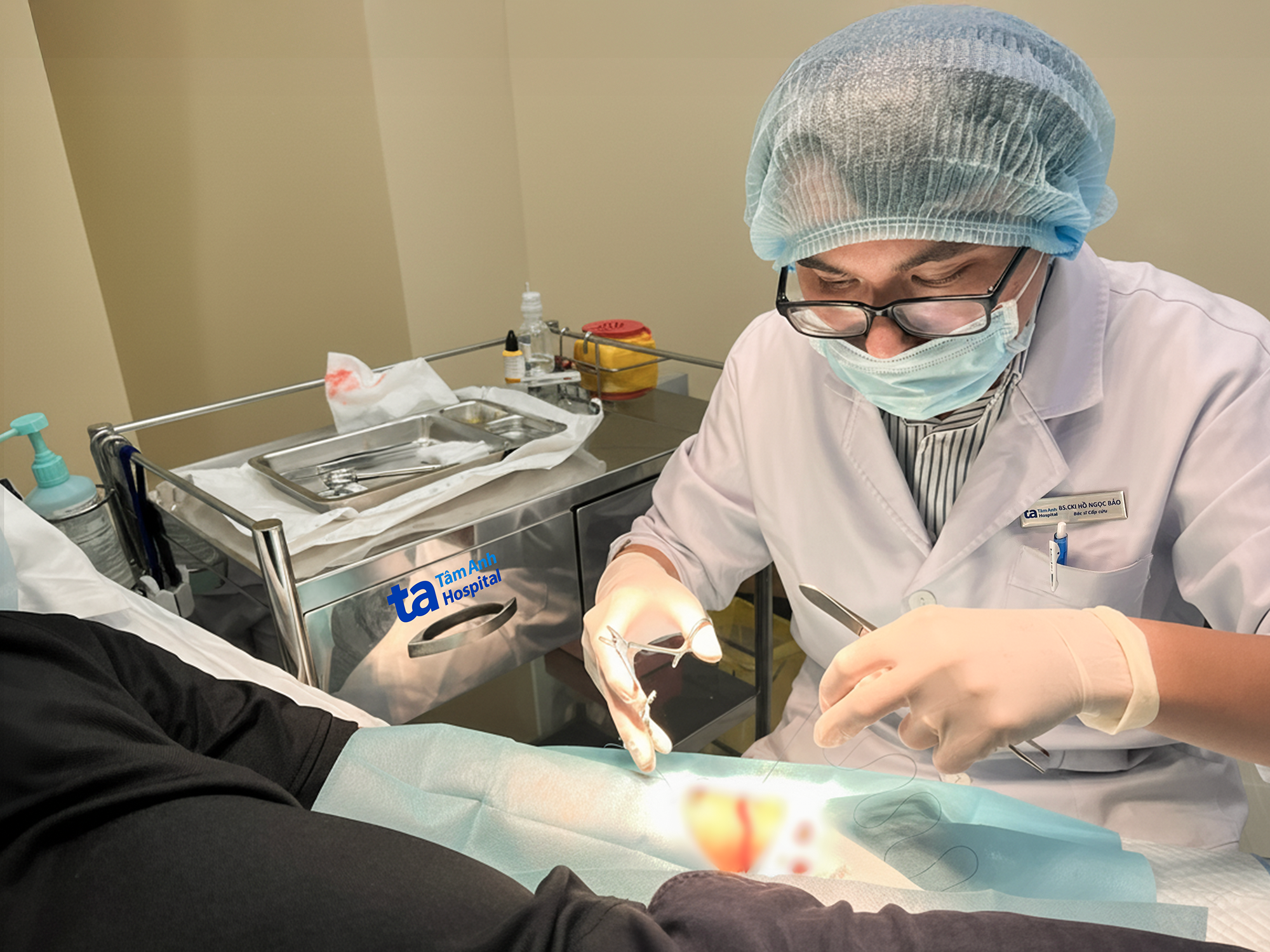 |
Doctor Bao treating complex forearm wounds for Thai. Photo: Tam Anh General Hospital
According to doctor Bao, animal bites, especially from reptiles, are prone to infection because the animal's mouth contains many bacteria. For treatment, patients should use antibiotics, pain relievers, and anti-inflammatory medication. Wounds require proper care, kept dry and clean, with dressing changes at a medical facility. Patients should not attempt to wash, remove stitches, or apply leaves themselves.
If any unusual signs appear, such as redness, increased pain, discharge, fever, or limb numbness and weakness, patients must seek immediate medical attention. Pet owners should get preventive vaccines, understand their pet's characteristics, and maintain a clean environment to reduce risks.
Doctor Huynh Tran An Khuong, a medical specialist at the VNVC Vaccination System, stated that iguanas do not carry the rabies virus but can cause tetanus infection through bites. Wounds can also be exposed to tetanus pathogens present in external soil and sand environments. Therefore, proper first aid is crucial: thoroughly wash the wound under running water, disinfect with hydrogen peroxide, wash again with soap, dry, and get a tetanus shot as soon as possible. Depending on the condition, doctors may also prescribe tetanus antitoxin.
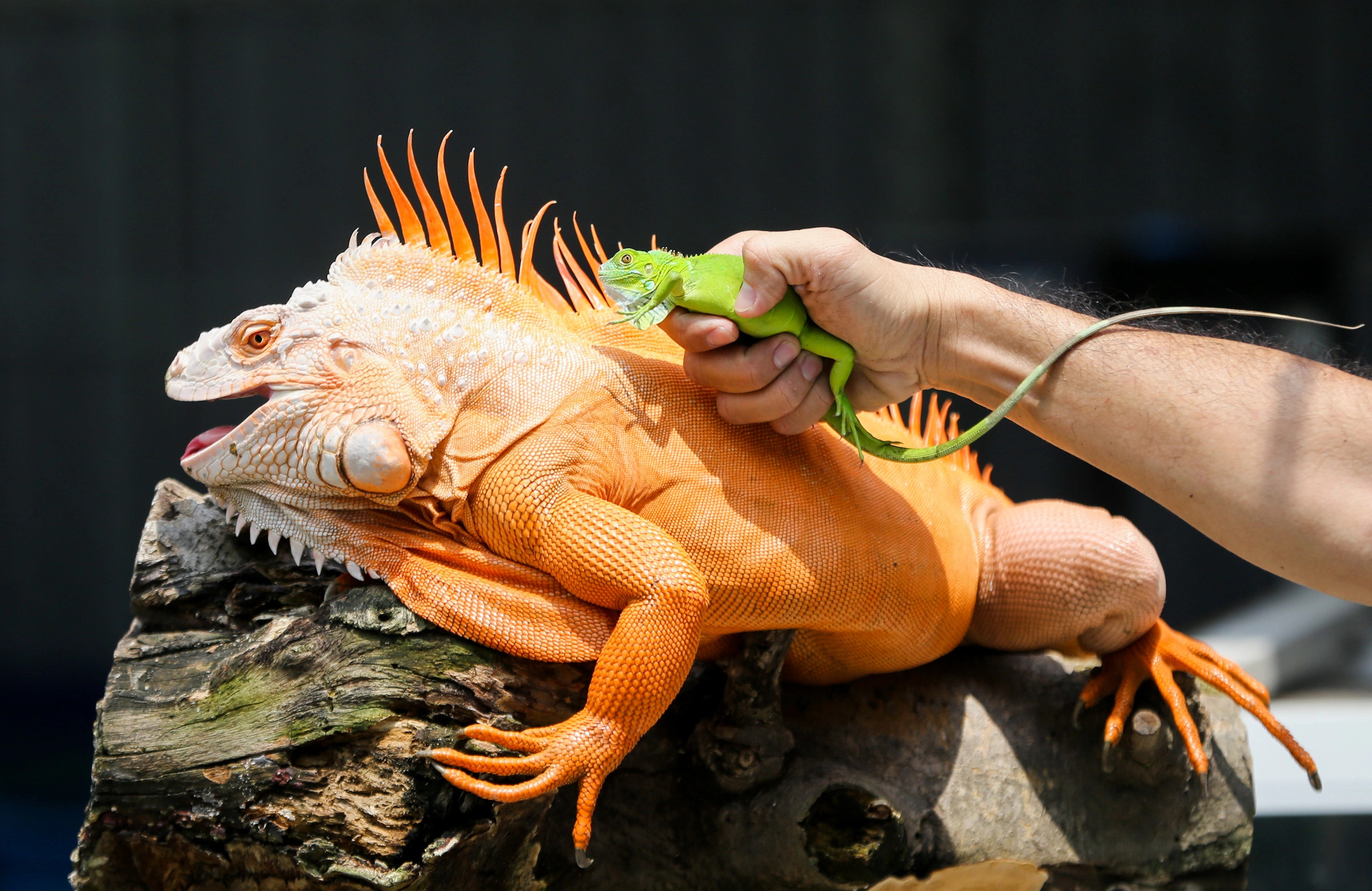 |
An iguana kept as a pet in Ho Chi Minh City. Illustration: Quynh Tran
Individuals who are unvaccinated or have an unclear vaccination history will be prescribed three doses of a tetanus-containing vaccine, with a booster shot after 10 years or sooner if a severe wound occurs. People can proactively get preventive tetanus vaccinations. If fully vaccinated, only one additional dose is needed for a severe wound, and tetanus antitoxin is not required.
Doctor Khuong added that pet owners, especially those with certain warm-blooded mammals like dogs, cats, and rabbits, can receive preventive rabies vaccines before being bitten or scratched. The schedule involves three doses on days 0, 7, and 21 or 28. This proactively protects pet owners; if bitten or scratched, they only need two additional vaccine doses instead of five, as per the standard protocol, and no rabies antitoxin is required.
The iguana (scientific name Iguana iguana) is a large reptile native to the tropical regions of Mexico, Central America, South America, and the Caribbean. This species is kept as a pet due to its unique appearance and generally docile, herbivorous nature. Despite its somewhat fierce appearance, the animal is considered gentle and can be domesticated.
In Vietnam, keeping iguanas as pets requires registration with authorities and proper licensing.
Nhat Thanh
*The patient's name has been changed.