Ho Chi Minh City recorded 940 cases of hand, foot, and mouth disease (HFMD) last week, an increase of 42.7% compared to the average of the previous four weeks. This brings the total number of cases since the beginning of the year to over 9,100. Surveillance data indicates that the EV71 virus strain currently accounts for 56% of samples. The emergence of the C1 variant, known for its high virulence and ability to "evade immunity", means children who have previously contracted HFMD remain at risk of reinfection.
Dr. Vo Thanh Luan, Deputy Head of the Department of Intensive Care for Infectious Diseases at Children's Hospital 2, explained that the EV71 strain typically causes more severe illness than other strains. However, it is often overlooked because children develop very few or subtle rashes. Many cases arrive at the hospital in critical condition, experiencing respiratory failure and cardiogenic shock, without any clear red rash or mouth sores.
The virus often shows minimal skin lesions, instead directly attacking the central nervous system. This causes severe organ damage and rapid death, sometimes within just 12-24 hours. Most cases admitted late in critical condition present with few or subtle rashes, leading to delayed diagnosis.
According to Dr. Luan, once the disease begins to affect the nervous system, every minute of delay can jeopardize a child's life. Parents must take their child to the nearest medical facility immediately if they notice any of the following warning signs, even without a rash or mouth sores:
Sudden startled movements are a red flag. Children may jerk their bodies when falling asleep or even when awake. If this occurs two times in 30 minutes, it indicates a dangerous condition.
Additionally, parents should be vigilant if a child's fever lasts longer than 48 hours and does not respond to common fever-reducing medications. Other warning signs include: a child walking unsteadily, losing balance, trembling limbs, weak limbs, or an inability to sit upright; forceful or frequent vomiting throughout the day; persistent crying; lethargy; or restlessness.
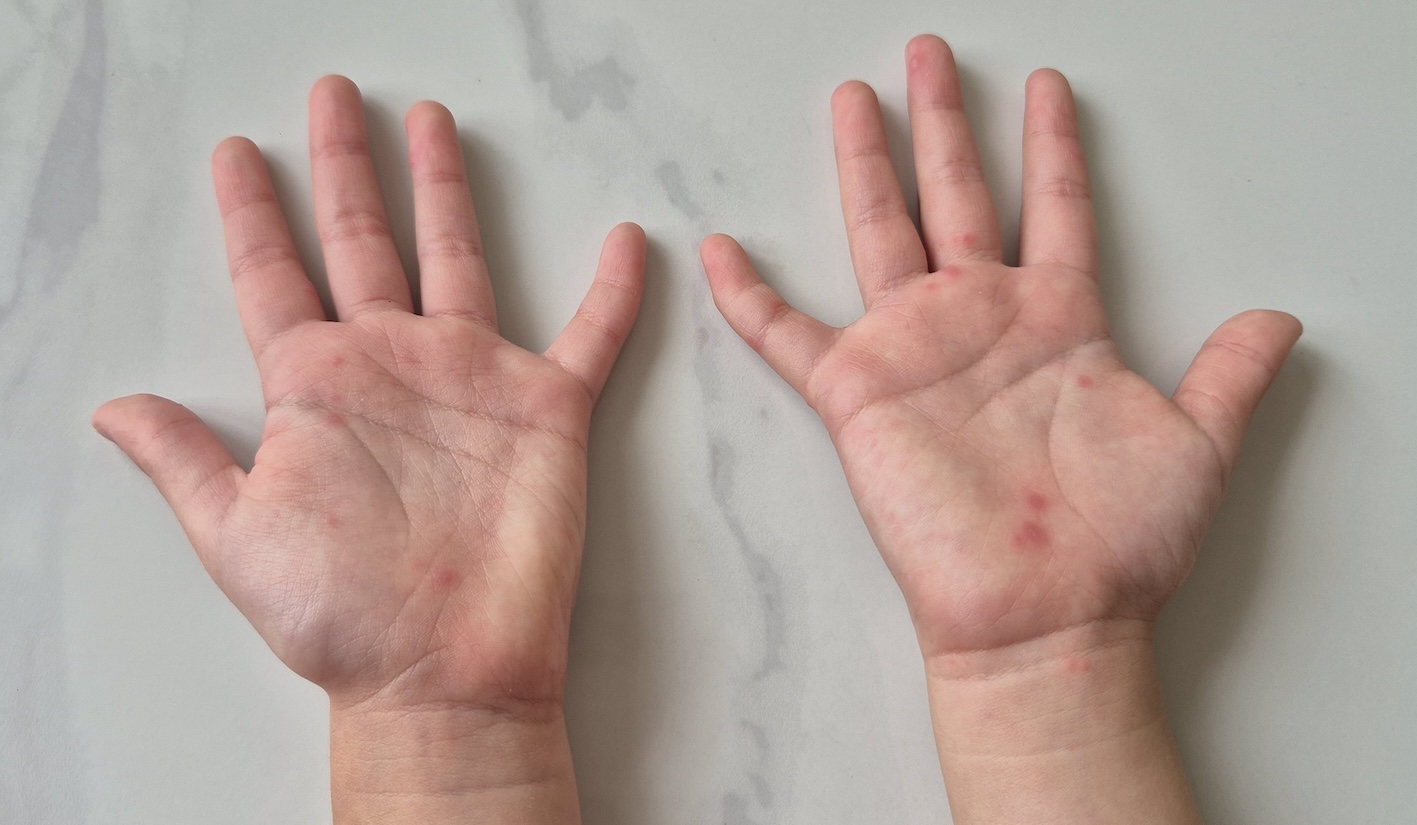 |
The hand of a child with hand, foot, and mouth disease. Photo: Le Phuong |
Currently, there is no specific treatment for hand, foot, and mouth disease. Treatment focuses on supportive care and intensive resuscitation, depending on the severity. Early detection in the initial stage offers children a good chance of recovery. Conversely, if there is a delay due to complacency, the EV71 virus can cause irreversible brain and cardiovascular damage. Children may enter a state of shock, multi-organ failure, and acute pulmonary edema, with a very high risk of death or severe, long-term neurological sequelae.
Hand, foot, and mouth disease spreads primarily through the digestive tract and direct contact with secretions from infected individuals. To protect children, parents should follow the "three cleans" principle recommended by the Ministry of Health: clean hands, clean food and drink, and a clean environment.
Wash hands frequently with soap for both children and caregivers. Cook food thoroughly, drink boiled water, and never share personal items or pre-chew food for children. Regularly disinfect contact surfaces and toys. Isolate sick children at home for at least the first 10-14 days of the illness.
"It is crucial to remember the dangerous signs, monitor children closely, and admit them to the hospital early upon noticing any warning signs, even if no rash or mouth sores are visible", Dr. Luan emphasized.
Le Phuong