Doctor Danh Thi My Hong, a first-degree specialist and Medical Manager at the VNVC Vaccination System, stated that recently, around 260 VNVC vaccination centers nationwide have seen a rise in students and young people receiving meningococcal vaccines. This trend stems from concerns after several localities reported consecutive cases, including among students. Ho Chi Minh City alone recorded six cases, all in adolescents; Phu Quoc, An Giang, reported two invasive meningococcal infection cases in grade 5 students, one of whom died.
Pham Duy, 19, from An Giang, a second-year aquaculture processing student in Ho Chi Minh City, received his meningococcal vaccination at a VNVC center. Sharing his reasons, Duy said he read that the disease affects adults, not just young children, prompting him to get vaccinated. The student added that living in a dormitory with limited space increases the risk of infection, so he is proactively taking preventive measures. Duy’s parents in his hometown also worried about him contracting the disease, as cases had appeared in both An Giang and Ho Chi Minh City, and advised him to get vaccinated.
"I see that the disease has a high mortality rate, sometimes within 24 hours, and initial symptoms are very difficult to recognize. I'm far from home, so I try to take good care of myself", Duy said.
Nguyen Loc, 22, from Vinh Long, a fourth-year medical student at a university in Ho Chi Minh City, also visited VNVC District 5 in late March to get vaccinated against meningococcal group B. Loc stated that after completing this regimen, she plans to continue with vaccines for meningococcal groups A, C, Y, W, and the dengue vaccine.
Loc's mother, a doctor, understands the benefits of vaccination and has ensured her daughter received many adult vaccines, including those for influenza, pneumococcal disease, measles-mumps-rubella, HPV, and hepatitis B. Beyond vaccination, Loc also focuses on other health protection measures, such as regular exercise and cooking her own meals to ensure hygiene and nutrition.
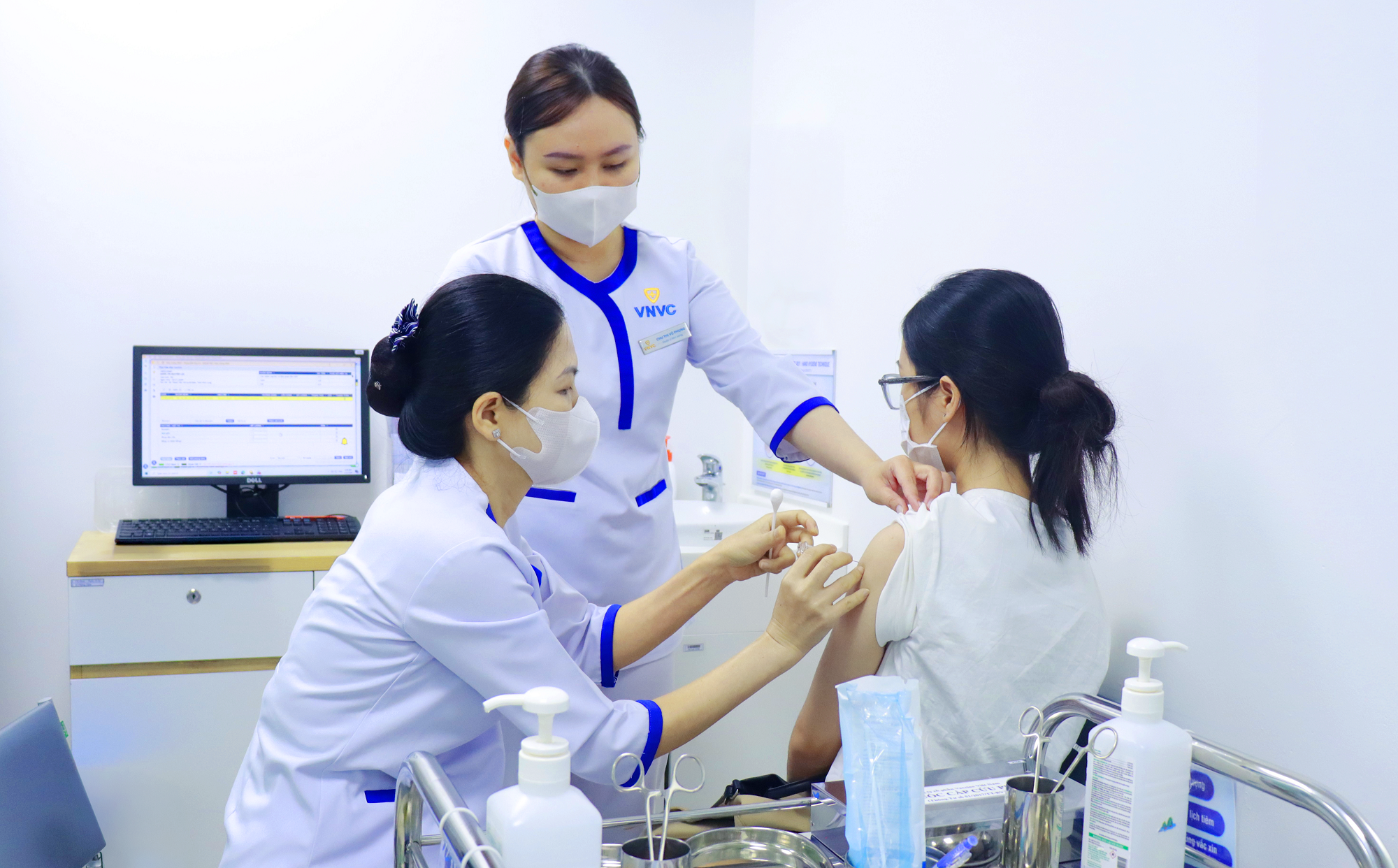 |
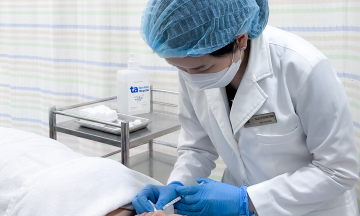
Nguyen Loc receives a meningococcal vaccine at VNVC. Photo: Hoang Duong |
Thao My, 20, from Quang Ngai, also received meningococcal and dengue vaccines. My recounted having dengue fever two times during middle school, requiring hospitalization. Prior to this, My had received all age-appropriate preventive vaccines, such as those for influenza, measles-mumps-rubella, chickenpox, HPV, and hepatitis B.
"My family are farmers, and our finances are not well off. If I get sick, my parents would have to come from our hometown to care for me, leaving their fields, garden, pigs, and chickens each time. I don't want my parents to worry", My said.
Observations at the VNVC Vaccination System show that in addition to vaccines protecting against five meningococcal serogroups, other vaccines for diseases easily spread in crowded environments—such as influenza, pneumococcal disease, hepatitis B, HPV, chickenpox, and measles-mumps-rubella—are also priorities for many young people.
According to Doctor Hong, students and young people often reside in dormitories or rented rooms and typically study or work in enclosed, crowded spaces. Furthermore, young adults frequently travel and gather for social interactions. These environments are conducive to the spread of viral and bacterial agents causing respiratory diseases. Some agents can even transmit when infected individuals show no or only mild symptoms. For example, in the community, around 10-20% of healthy individuals carry meningococcal bacteria, while 5-90% carry pneumococcal bacteria in their nasopharynx; people infected with the influenza virus can spread the pathogen one day before developing symptoms.
 |
Students are also at risk of contracting many infectious diseases. Photo: Vecteezy |
Frequent travel and living in various locations also make students susceptible to vector-borne diseases like dengue fever and Japanese encephalitis.
Therefore, early vaccination helps students and adolescents maintain long-term health, minimizing disruptions to their studies. Moreover, by being protected early, young people also contribute to reducing the risk of community transmission, particularly in dormitories, classrooms, and other enclosed spaces.
Tuan Kiet