Ms. Thuy's first daughter is nearly two years old, and her second child, a son, was born at the end of lunar December. "This year, our family celebrates Tet (Lunar New Year) with immense joy, having both a daughter and a son, all healthy thanks to medical advancements," Ms. Thuy shared.
Master of Science, Doctor Giang Huynh Nhu, Director of the Fertility Support Center, Tam Anh General Hospital System, Ho Chi Minh City, stated that Thuy's case was unique due to genetic tests revealing a chromosomal structural abnormality. This was the reason she conceived naturally but experienced two consecutive miscarriages.
"Ms. Thuy's ability to conceive and maintain a natural pregnancy would have been difficult without specialized medical intervention," Doctor Nhu said.
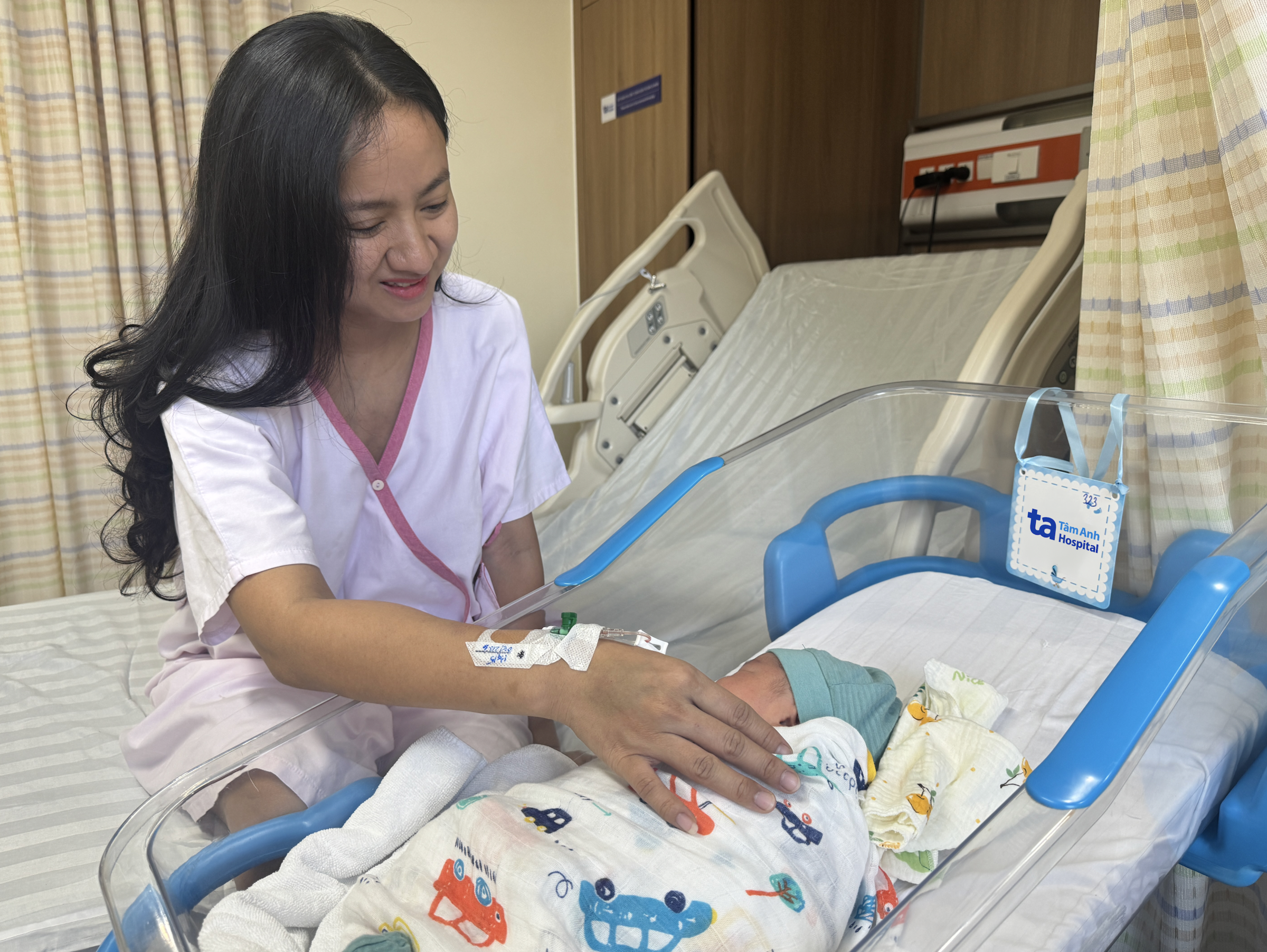 |
Ms. Thuy cares for her newborn son at the Obstetrics and Gynecology Center, Tam Anh General Hospital, Ho Chi Minh City. *Photo: Tue Diem* |
Specifically, Ms. Thuy has a chromosome structure of 45, XX, der(13;14)(q10;q10), known as a balanced robertsonian translocation between chromosomes 13 and 14, meaning these two chromosomes are partially fused. Individuals with this abnormality typically show no pathological symptoms because the total amount of genetic material is preserved. However, during pregnancy, chromosome division is prone to disruption, leading to embryos with extra or missing chromosomes, increasing the risk of recurrent early miscarriages or congenital disabilities in children. This is a common type of chromosomal structural abnormality in women with multiple miscarriages, accounting for only about 2,2% of the general population, Doctor Nhu explained.
Ms. Thuy and her husband were advised to undergo in vitro fertilization (IVF) combined with preimplantation genetic testing for structural rearrangements (PGT-SR). This technique allows for the examination of the embryo's chromosome set, enabling the selection of embryos without structural abnormalities or chromosomal aneuploidy before transfer to the uterus. After ovarian stimulation, egg retrieval, and embryo creation with sperm, the couple obtained 5 day-5 embryos, a more complete stage of embryo development, suitable for biopsy.
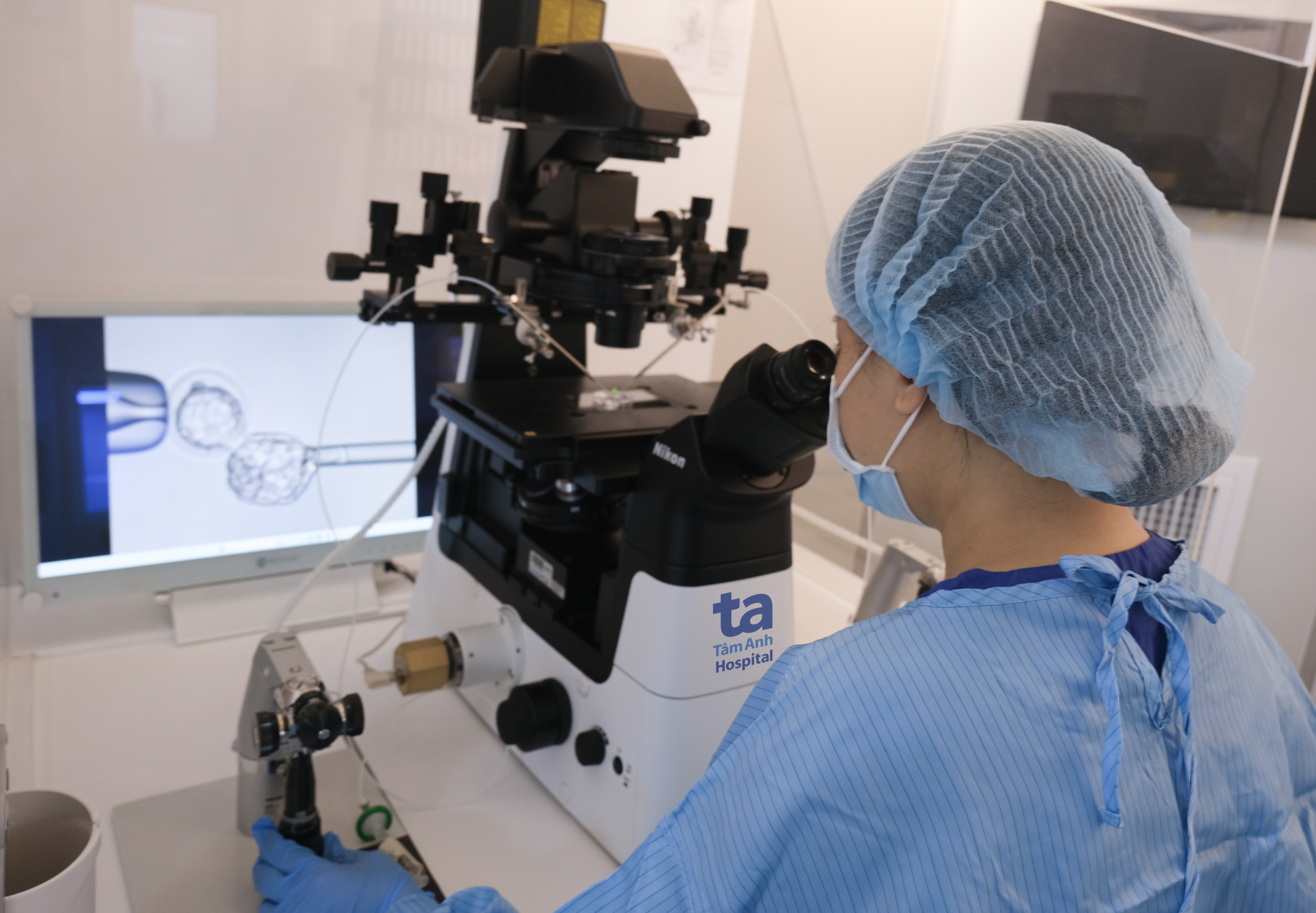 |
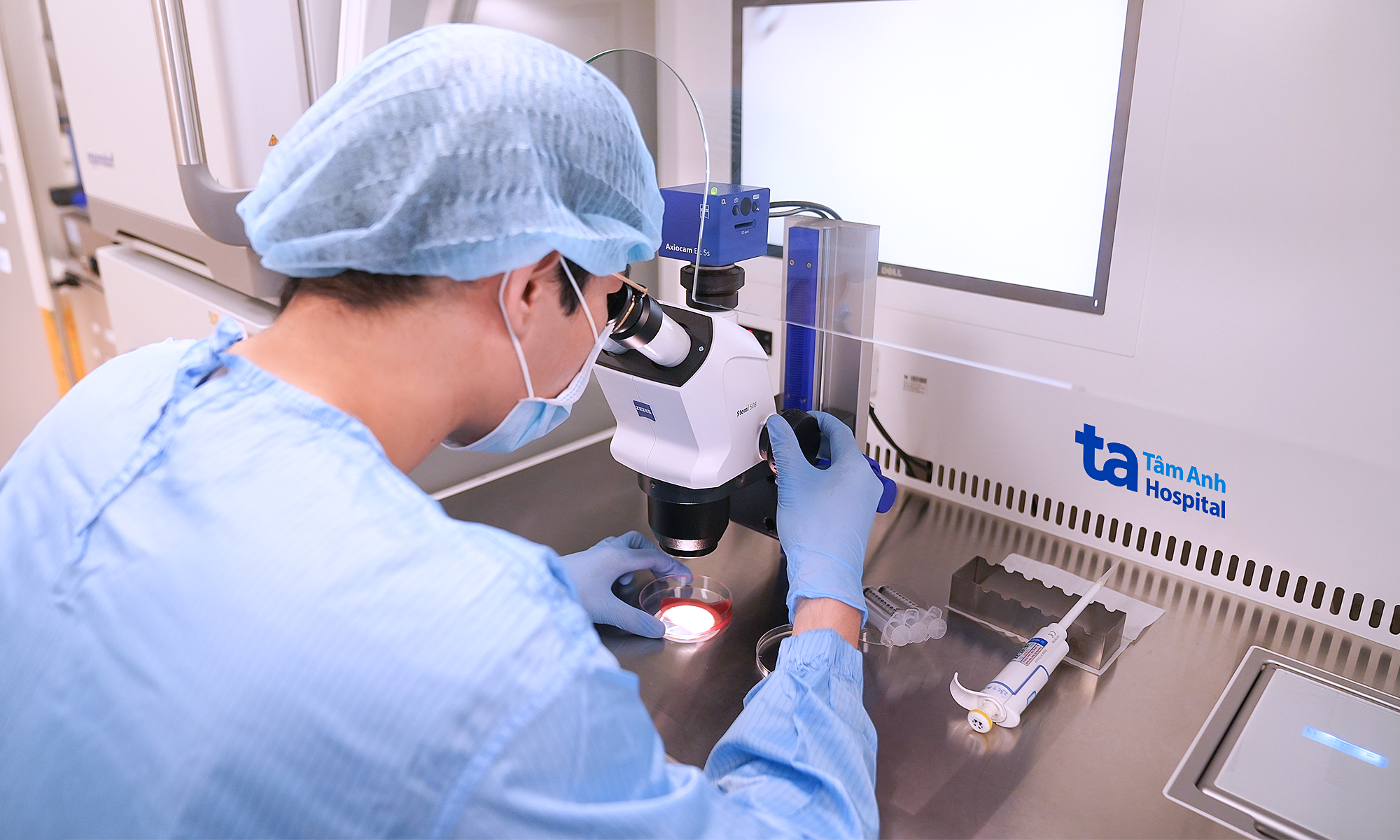
Ms. Thuy's embryos were biopsied in the ISO 5 Lab at IVF Tam Anh Ho Chi Minh City. *Photo: Phuong Trinh* |
Using an inverted microscope equipped with a micromanipulation system, an embryologist created a small opening in the outer membrane of the embryo, extracting some embryonic cells for genetic testing and analysis. The results showed that 4 embryos had a normal chromosome set, while one embryo had a chromosomal abnormality and had to be discarded. Embryos with unstable genetic structures, which carried a high risk of miscarriage or fetal loss, were excluded, while those with the potential to develop into healthy pregnancies were selected.
Doctor Nhu transferred one healthy embryo into the uterus, and Ms. Thuy conceived, giving birth to her first daughter in 2024. Once the baby was strong, she decided to return to Tam Anh General Hospital, Ho Chi Minh City, for another embryo transfer to have more children, but it was not initially successful. In mid-last year, Doctor Nhu performed another embryo transfer, and the pregnancy implanted and developed steadily from the early weeks.
In both pregnancies, Ms. Thuy developed gestational diabetes and required insulin treatment. Doctors from the Obstetrics and Gynecology Center and the Endocrinology Department closely monitored her, controlling risks for both mother and fetus. The baby boy was born healthy, weighing 3,8 kg.
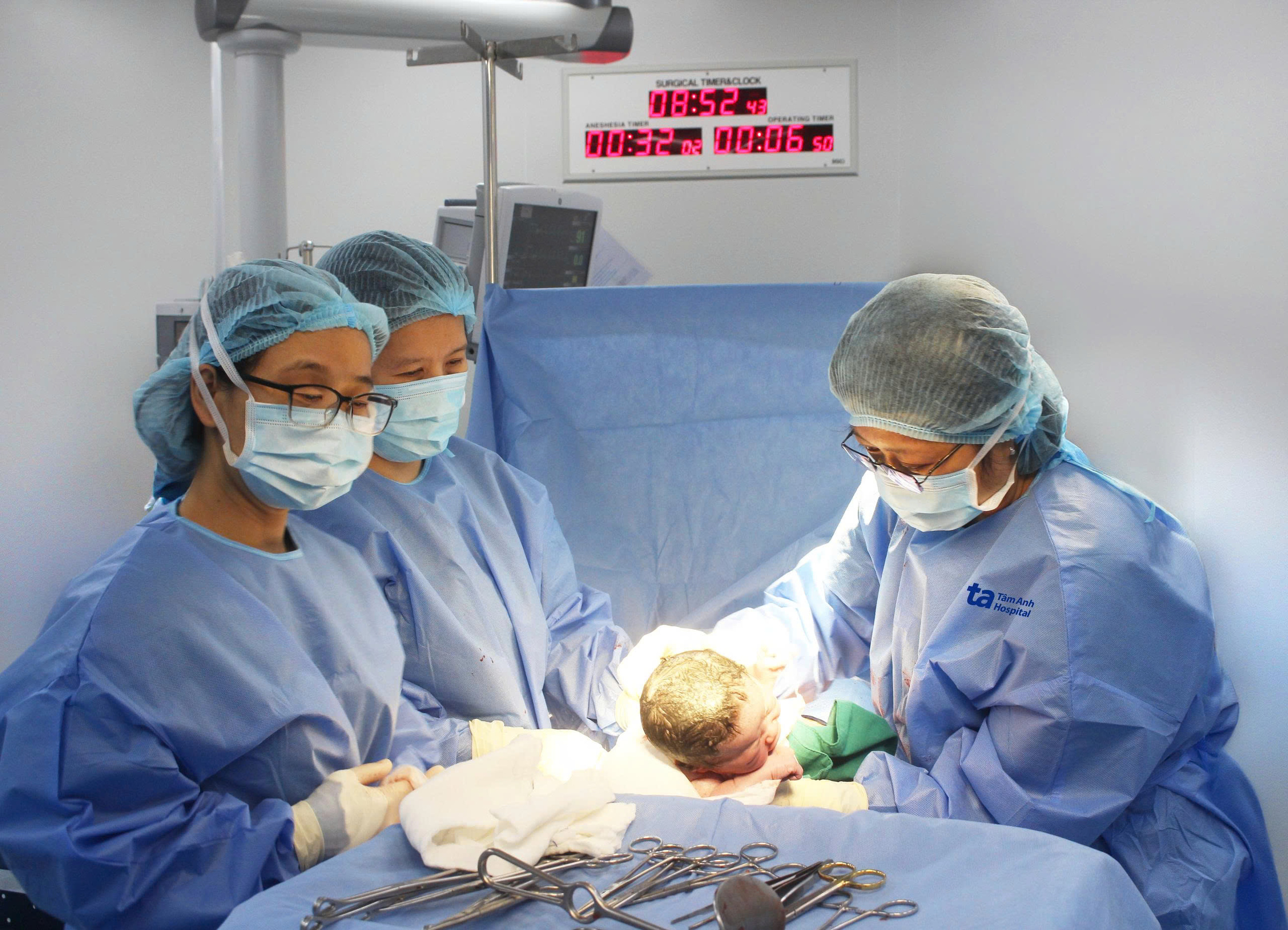 |
Doctor Nguyen Thi Yen Thu (right) performed a C-section, ensuring Ms. Thuy's son was born safely. *Photo: Tam Anh General Hospital* |
Master of Science Ma Pham Que Mai, a genetic counselor at IVF Tam Anh Ho Chi Minh City, stated that gene screening or preimplantation genetic testing is increasingly applied in reproductive assistance. This technique is crucial for couples with a history of recurrent miscarriages, multiple failed embryo transfers, chromosomal abnormalities, or gene mutations, offering the chance to have healthy children and reducing the risk of miscarriage, fetal loss, and congenital disabilities.
At IVF Tam Anh Ho Chi Minh City, day-5 embryo culture technology combined with embryo biopsy techniques allows for screening over 7.000 genetic conditions that can cause congenital disabilities and defects, including thalassemia, spinal muscular atrophy, hereditary polycystic kidney disease, and cystic fibrosis. According to the unit's statistics, the IVF success rate in this group reaches nearly 70%.
Tue Diem