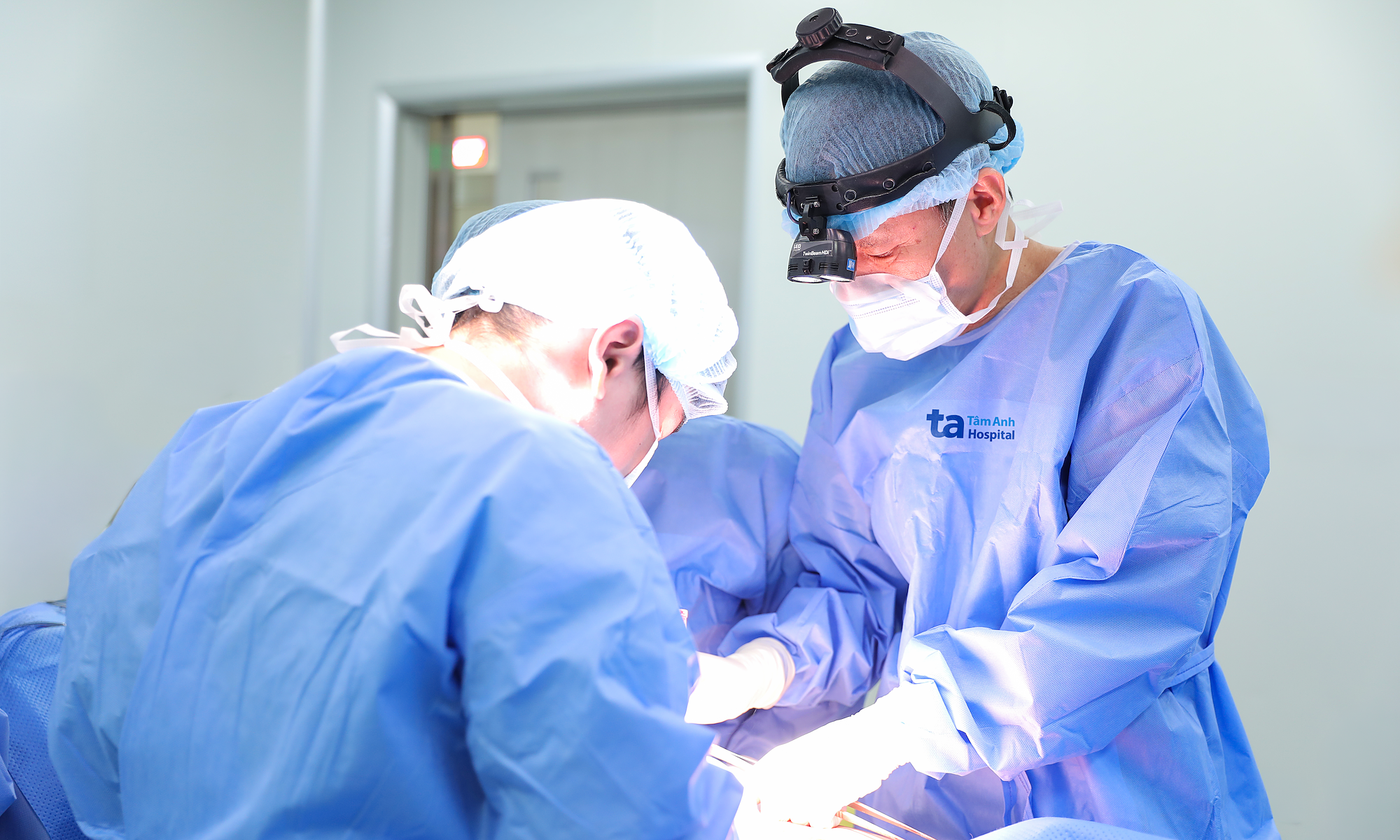
Associate Professor, Doctor Vu Huu Vinh, Director of the Thoracic and Vascular Surgery Center, reported that the patient had a tumor nearly 5 cm in the upper left lung, suspected to be lung cancer. The tumor showed signs of malignancy, rapid growth, and early invasion. Doctors recommended surgery because the tumor could invade deeper, and delaying would mean missing the "golden window" for radical treatment.
Ms. Van had a history of high blood pressure and required pre-operative hospitalization for monitoring. The medical team consulted and decided to perform surgery using the Da Vinci Xi robot, aiming to remove the entire tumor, dissect precisely, preserve healthy lung tissue, and promote rapid post-operative recovery.
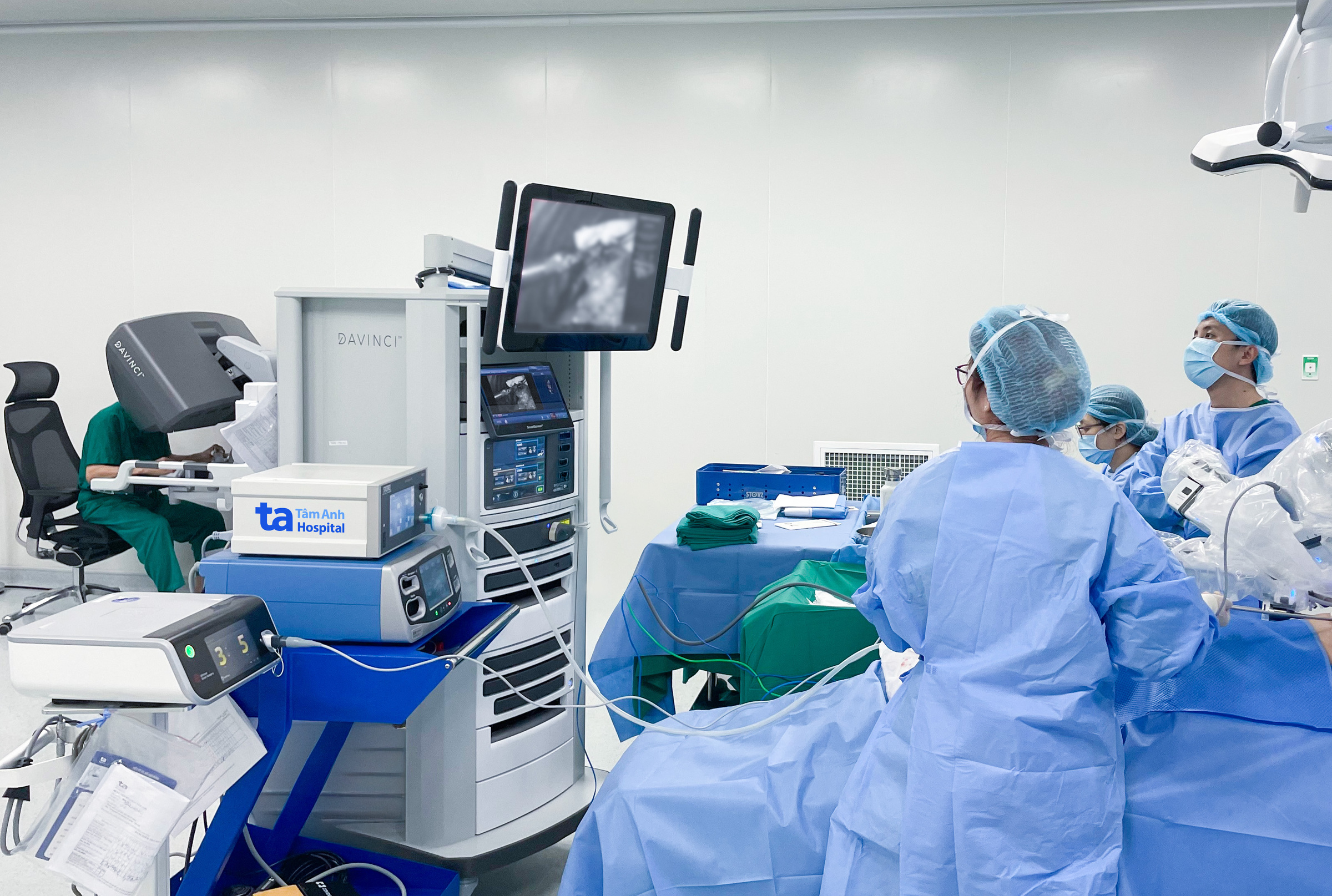 |
Associate Professor Vinh (far left) controls the Da Vinci Xi robot to perform lung tumor resection for Ms. Van. Photo: Tam Anh General Hospital
The Da Vinci Xi robot assisted doctors in taking samples for intraoperative frozen section biopsy to determine the nature of the tumor (benign or malignant) during the surgery. The sample was rapidly frozen at -20 to -50 degrees Celsius and examined under a microscope. After 40 minutes, the results confirmed a malignant tumor, stage 2A.
The surgical team dissected the entire tumor from the patient's lung, minimizing damage to healthy lung tissue. One day after surgery, Ms. Van was able to walk lightly and was discharged after four days. Compared to traditional surgery, this method shortens hospital stay by three to five times, according to Associate Professor Vinh. After Tet, she will continue with supplementary radiation and chemotherapy to maintain treatment effectiveness.
According to Globocan 2022, lung cancer is a common malignant disease and a leading cause of death in Vietnam, with approximately 25,000 new cases and nearly 23,000 deaths.
To control the disease, Associate Professor Vinh advises everyone to undergo regular health check-ups for early detection of abnormalities and timely treatment. If lung cancer is treated radically from stage one, the five-year survival rate is 80-90%. Conversely, if detected late at stage 3 or 4, this rate drops to only 10-20%, even with the most advanced treatment methods.
Bao Anh
*Patient's name has been changed
| Readers can ask questions about cancer here for doctors to answer. |