This Tet, Nhi, 46, does not need dialysis as she did six years ago; she only requires a pre-Tet health check-up. While waiting for her turn, she called home to check if her daughter was awake, reminding her husband to change diapers and prepare breakfast. She hoped for "healthy kidneys" to enjoy a peaceful Tet.
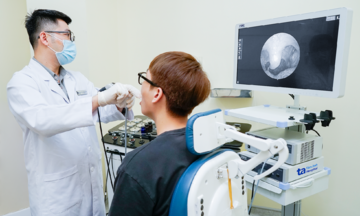
The clinic was busy on this late 12th lunar month morning. Specialist doctor level two Ta Phuong Dung, Associate Director of the Urology - Nephrology - Andrology Center at Tam Anh General Hospital Ho Chi Minh City (HCMC), extended her working hours to check the health of all kidney patients before the Tet holiday. Among them were many women, like Nhi, who were pregnant or had given birth years after their kidney transplants.
"Your kidney is stable. You just need to reduce your medication dosage and come back for a follow-up in five weeks. You can enjoy a long spring outing with your family," doctor Dung said. After nearly a decade living with kidney disease, Nhi was overjoyed to hear that her transplanted kidney function was stable, her medication dosage reduced, and her follow-up appointments were further apart. This also meant a very low risk of rejection, offering hope that she could gradually return to her familiar rhythm of life and celebrate many more complete spring seasons with her daughter. Despite this, for the transplanted kidney to function well, she still needs to limit sweets, fatty foods, eat moderate protein, and maintain a balanced lifestyle – a way of cherishing and preserving the "gift of life" she was fortunate to receive.
Nhi's journey began in 2016 when a general health check-up revealed stage three kidney failure. After two years of internal medicine treatment, the disease rapidly progressed to end-stage kidney failure. Her life became confined to a strict schedule of dialysis, dietary restrictions, and limited movement. She recalled many years of having to spend New Year's Eve at the hospital for dialysis, feeling exhausted and only hoping to have enough strength to get through the first few days of the year without hospitalization.
Witnessing their younger sister's struggle with dialysis, Nhi's two older sisters also sought medical checks, and were diagnosed with kidney failure due to diabetes and high blood pressure, respectively. Nhi's kidney failure had an unknown cause, making her condition harder to treat and its progression unpredictable. That year, the Tet atmosphere for the entire family was somber as they continuously received news of multiple family members needing kidney treatment. "As long as there's life, there's hope; I just patiently waited day by day," she said.
Fortunately, three years later, Nhi underwent a successful kidney transplant. "I was reborn," Nhi said. However, it took many more years for her health to truly stabilize before she dared to think about adding children's laughter to her family. Two years ago, with close monitoring from doctor Dung, she successfully conceived and gave birth. Her daughter is now 17 months old.
Managing Nhi's pregnancy, specialist doctor level two Nguyen Ba My Nhi, Director of the Obstetrics and Gynecology Center, stated that all health information for mother and baby, such as kidney function, medication regimen, blood pressure, and fetal changes, was regularly exchanged between the Obstetrics and Nephrology teams. From this, doctors planned Nhi's healthcare tailored to each stage of her pregnancy.
 |
Nhi at her follow-up appointment, showing her daughter's photo to doctor Dung. Photo: Tue Diem |
Sitting next to Nhi was Minh (name changed), 29, from Tay Ninh. She suffered from kidney failure since childhood, requiring peritoneal dialysis, and received a kidney transplant 10 years ago. "The disease was silent, with no intense pain, just prolonged fatigue, so it wasn't detected early," she recounted.
During her years living with kidney failure, Tet was incomplete for Minh and many other kidney patients. Without the joy of unrestricted celebrations or eating, Tet for kidney patients meant carefully managing their peritoneal dialysis schedule to avoid complications and hospitalization. She had to maintain an almost absolutely bland diet, reduce meat and fish, and avoid pickled foods and processed items. Even her daily water intake was precisely calculated – a measured rhythm of life, far from the vibrant, festive atmosphere typically seen during spring. "For me, those were dull Tets," Minh recalled.
After many years battling kidney failure, the spring of 2016 became a special milestone for Minh when she received a kidney transplant, opening a new, healthier chapter. Yet, for several more Tets, it was just the couple at home, with no children's laughter. They tried to avoid all social gatherings.
In late 2024, after reading an article on VnExpress about Nhi's successful pregnancy and birth journey after a kidney transplant, Minh visited Tam Anh General Hospital HCMC. Doctor Dung assessed Minh's case as more severe than Nhi's, as her kidney failure was due to dyslipidemia, affecting multiple organs, making pregnancy difficult and high-risk, with two previous miscarriages. Doctor Dung and the Nephrology and Dialysis team applied a new drug regimen, balancing the preservation of the transplanted kidney with fetal safety, helping Minh become a mother.
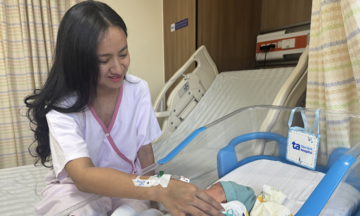
Three months later, Minh conceived naturally. Doctor Dung connected with the Obstetrics and Gynecology Center to coordinate Minh's prenatal care. Minh's monitoring process was more meticulous, requiring more specialized medications. Fortunately, the baby was born safely in mid-January. After birth, doctor Dung continued close monitoring as Minh's kidney was in the recovery phase.
Nhi and Minh are two of six pregnant women who successfully gave birth after kidney transplants, monitored by doctor Dung throughout their journey – from before conception, during pregnancy, and postpartum – at Tam Anh General Hospital HCMC. After over 30 years of organ transplantation, the Ministry of Health has recorded over 9,000 kidney transplant cases nationwide, but currently there are no specific statistics on the number of women who successfully became pregnant and gave birth after kidney transplantation in Vietnam.
 |
Nhi's family preparing for a spring outing at the beginning of the year. Photo: Character provided |
Organ transplant recipients like Nhi and Minh must take immunosuppressants for life to prevent their bodies from rejecting the new kidney. Pregnancy carries many potential risks, as these medications can cause miscarriage, premature birth, and birth defects. Doctor Dung has witnessed many pregnant women experience kidney dysfunction, leading to osteoporosis, high blood pressure, and diabetes. "Women after kidney transplant must absolutely not have an unexpected pregnancy; clear planning and medication changes before conception are essential for fetal safety," doctor Dung emphasized.
This Tet, Nhi's family will enjoy a spring outing on the second day of Tet. Minh, still in postpartum recovery, is personally preparing her son's one-month celebration. Celebrating Tet for the first time as a mother, she is busier and works harder, but is "much happier." She starts her day by breastfeeding, changing diapers, and playing with her son. When he sleeps, she and her husband take the opportunity to decorate their home and prepare a simple Tet meal. "I once thought I couldn't be a mother after losing children; now with this baby, this Tet feels truly complete," she said, looking at her little one dozing in her arms.
Tue Diem
| Readers can send questions about obstetrics and gynecology here for doctors to answer |