The technology that helped create Covid-19 vaccines in record time is now expanding into cancer treatment. mRNA-based therapies are yielding long-lasting results in melanoma and showing initial promise in pancreatic and brain cancers, diseases previously considered very difficult for the immune system to recognize and attack.
These advancements come as cancer vaccines are considered one of the fastest-growing research areas in oncology. At the American Society of Clinical Oncology conference in Chicago this month, over 130 studies related to this approach were presented.
Promising research
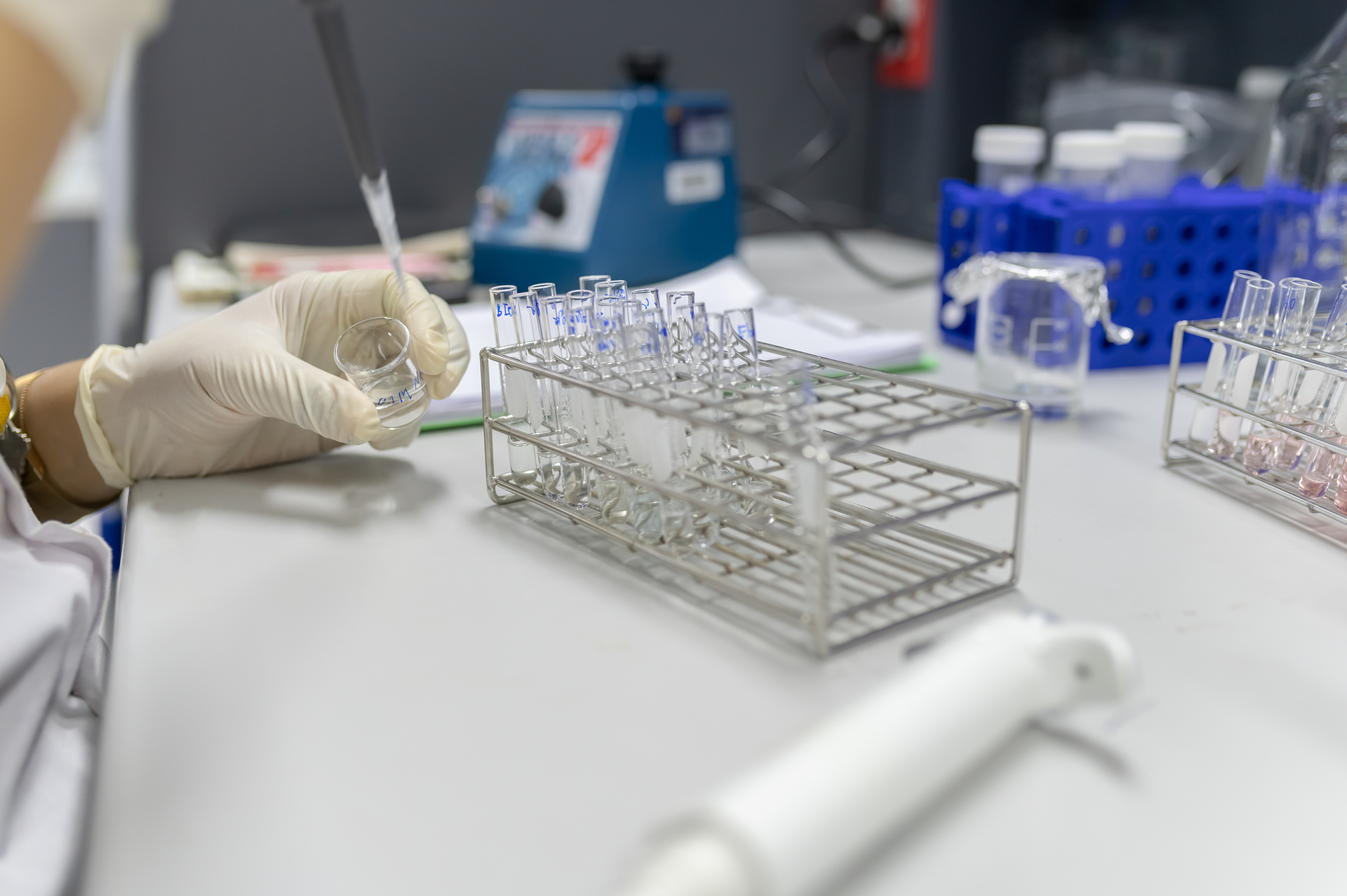 |
Vaccine research lab. Illustration: Vecteezy. |
Notably, Moderna and Merck's program involves testing a combination therapy: a powerful immunotherapy drug with a personalized mRNA cancer vaccine. Results indicate this therapy helped control melanoma for 5 years in some patients, a significant milestone in efforts to create tailored vaccines that train the immune system to fight tumors.
Moderna and Merck are currently testing mRNA-based therapies in 9 large and medium-scale studies, including those for lung, kidney, bladder, and pancreatic cancers. The two companies may also announce early results from a large-scale confirmatory trial in melanoma this year.
Furthermore, many initial studies at universities and medical centers have been advanced into deeper research programs by major pharmaceutical companies like Roche and BioNTech. Market research firm Vision Research Reports forecasts that the personalized cancer vaccine market, primarily driven by mRNA technology, could reach USD 8,5 billion annually by 2034.
For infectious diseases, vaccines can teach the immune system to recognize and attack viruses, thereby creating long-lasting protection. According to Eliav Barr, chief medical officer at Merck, this principle can now be applied to cancer. This represents a major advance.
From initial discovery to breakthrough direction
About 10 years ago, Dr. Vinod Balachandran at Memorial Sloan Kettering Cancer Center was among the first scientists to realize that mRNA could be used to treat even the most dangerous types of cancer.
He observed a rare phenomenon: some patients survived pancreatic cancer, a disease once thought to be almost "invisible" to the immune system. Subsequent studies showed that in these patients, the immune system could recognize and attack tumors. The question then became how to make this rare occurrence more common.
Balachandran proposed that mRNA, with its advantage of rapid design, could be used to create individualized vaccines for each patient. These vaccines would be based on mutations found only in the patient's tumor after surgery.
In December 2019, a phase 1 trial began with 16 patients. The regimen included chemotherapy, Roche's immunotherapy drug Tecentriq, and BioNTech's personalized mRNA vaccine. This vaccine was designed to target mutated proteins within each individual's tumor.
At the American Association for Cancer Research conference in April, Balachandran reported that among the 8 pancreatic cancer patients who had an immune response to the vaccine, 7 remained alive after a follow-up period of up to 6 years. A global phase 2 trial involving 260 patients is currently underway to validate these results.
"If mRNA truly is the ultimate technology to create a clinically significant immune response, it will be a breakthrough," said Dr. Robert Vonderheide, director of the Abramson Cancer Center at Penn Medicine and incoming president of the American Association for Cancer Research.
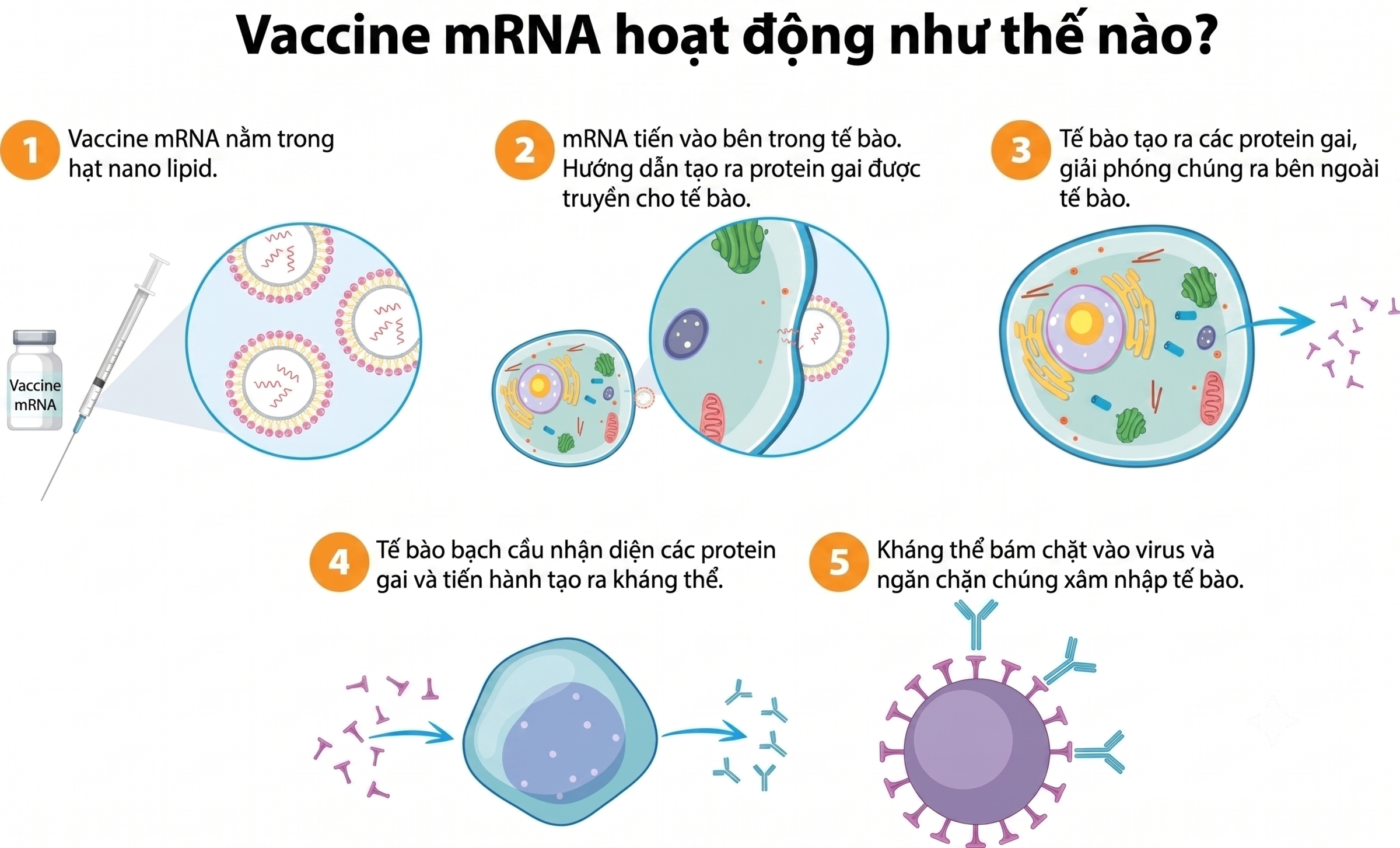 |
Illustration of how mRNA vaccines work, localized from Vecteezy. |
The role of mRNA
Dr. Sayour likens mRNA to the body's "software," which can be reprogrammed to perform various tasks, such as creating proteins that help the immune system learn to attack pathogens or cancer cells.
Another research direction is being developed at Mount Sinai, where Brian Brown, director of the Icahn Genomics Institute, is developing methods to design lipid nanoparticles, or "fat bubbles," used to deliver mRNA into cells, controlling their destination within the body.
A study published in Nature Biotechnology in April showed that mRNA can be amplified or "dialed down" to boost immune responses or reduce adverse reactions. This could lead to more potent cancer therapies or open new avenues for treating autoimmune diseases.
Sayour also designed a vaccine using multiple clusters of lipid nanoparticles, rather than a single particle like the Covid-19 vaccine. This vaccine is administered intravenously with the goal of rapidly activating the immune system to fight glioblastoma, a fast-growing form of brain cancer with a 5-year survival rate of under 7%.
He acknowledges that using a vaccine to combat a cancer like glioblastoma is an immense challenge. However, if a vaccine could cure it, or even significantly impact this disease, the implications for other cancer types would be profound.
Van Ha (According to Reuters)
What are mRNA cancer vaccines?
mRNA, or messenger RNA, is naturally present in every cell. Its role is to carry genetic instructions from the cell's nucleus to the protein production sites.
Vaccines use mRNA to instruct cells to produce a tumor-related marker, helping the immune system learn to recognize and attack cancer cells. The injection can be designed based on specific mutations within each patient's tumor.
These vaccines operate on the same principle of training the immune system, but their target is cancer cells instead of viruses or bacteria. Many treatment approaches are still in the experimental phase. Some initial results are promising, but larger studies are needed for confirmation.