Eye strain is common, often occurring after extended electronic device use, late nights, reading in dim light, or continuous work in air-conditioned spaces. Doctor Le Thanh Huyen, Head of the High-Tech Eye Unit at Tam Anh Cau Giay General Clinic, notes this condition involves the visual accommodation system working excessively. Many cases involve temporary accommodative fatigue, but it can also relate to other eye or health conditions.
Refractive errors
Refractive errors like nearsightedness, farsightedness, or astigmatism are frequent culprits behind persistent eye strain. If someone with a refractive error lacks proper corrective glasses, their accommodative muscles must constantly work to clarify images. This quickly fatigues the eyes, causes headaches, and reduces concentration. Individuals with refractive errors often experience blurry vision, eye pain, headaches, or difficulty concentrating while studying or working. Even those who wear glasses but have an outdated prescription can experience this.
For individuals over 40, presbyopia gradually reduces accommodative ability, forcing the eyes to work harder when reading, using phones, or viewing close objects, thus causing eye fatigue.
Dry eyes
Dry eyes can result from prolonged electronic device use, working in air-conditioned environments, or staying up late. When looking at screens, the blink rate decreases, causing tears to evaporate faster and the corneal surface to be insufficiently lubricated. Patients often feel gritty, stinging, burning, mild redness, or temporary blurry vision. Many experience continuous tearing due to a reflex stimulated by the dry eye surface. If left untreated, chronic dry eyes can lead to keratoconjunctivitis, affecting vision quality.
Doctor Huyen advises against overusing vasoconstrictor or corticosteroid eye drops, as they can damage the ocular surface, increasing the risk of glaucoma and other dangerous complications.
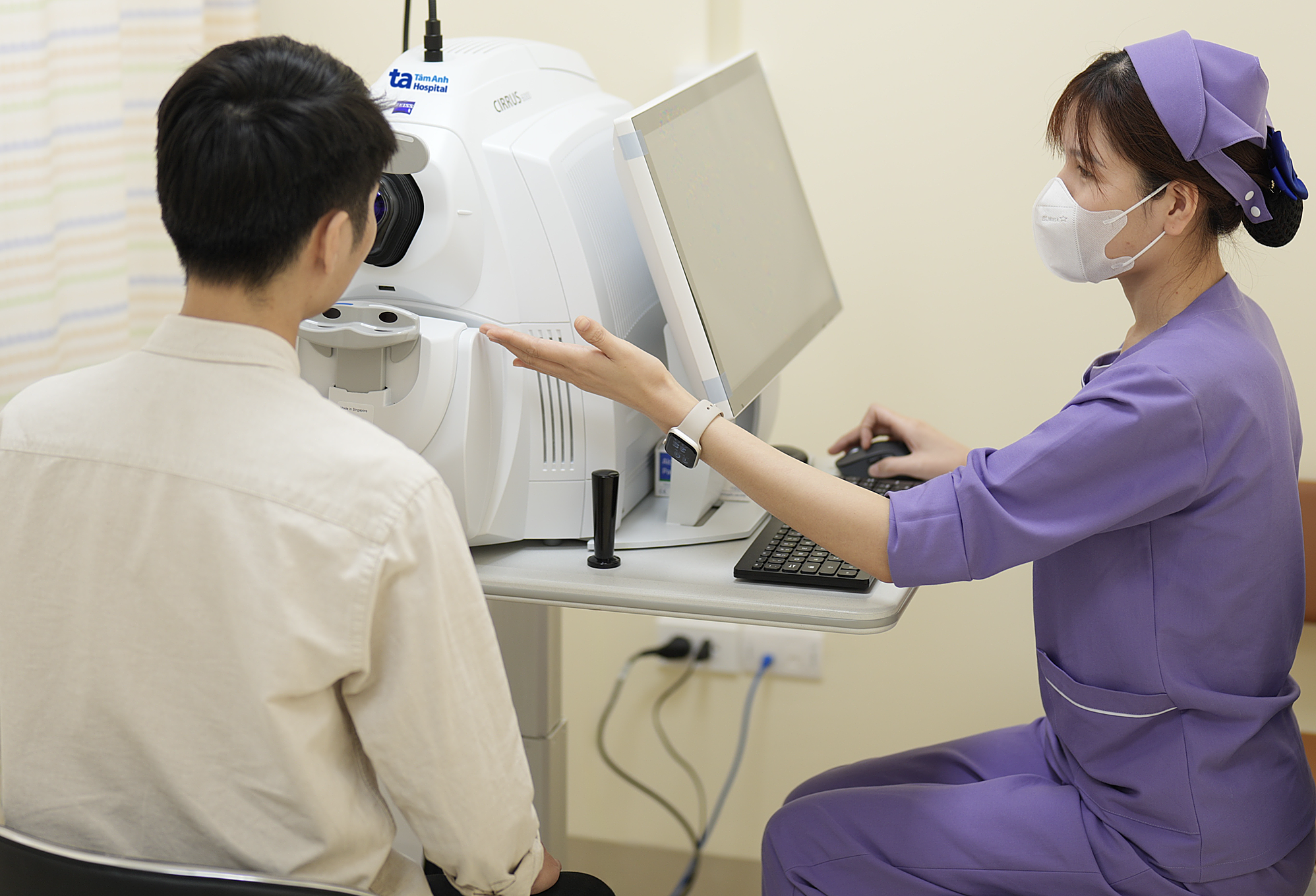 |
An ophthalmology technician checks a patient's vision. Photo: Tam Anh General Clinic |
An ophthalmology technician checks a patient's vision. Photo: Tam Anh General Clinic
Glaucoma
Eye strain accompanied by headaches, blurry vision, and seeing halos around lights can be linked to glaucoma. This dangerous condition, caused by increased intraocular pressure, damages the optic nerve and risks irreversible vision loss if detected late. In its early stages, open-angle glaucoma often progresses silently, causing only a feeling of heaviness in the eyes or mild vision reduction, making it easy to overlook. Acute glaucoma, however, can cause severe eye pain, redness, nausea, and rapid vision loss, requiring immediate emergency care.
Individuals over 40, with a family history of glaucoma, severe nearsightedness, diabetes, or hypertension should undergo regular eye exams for screening.
Conjunctivitis and blepharitis
Chronic inflammation in the eyes can also cause feelings of eye strain and heaviness. Conjunctivitis often accompanies red eyes, discharge, itching, or a gritty sensation. Blepharitis, meanwhile, causes redness of the eyelid margins, scales at the base of the eyelashes, is prone to recurrence, and leads to persistent discomfort.
Other medical conditions
Prolonged eye strain sometimes doesn't originate from the eyes but relates to systemic conditions such as migraines, vestibular disorders, thyroid disease, diabetes, or hypertension. Patients may also experience headaches, dizziness, blurry vision, or difficulty concentrating. Sinusitis, seasonal allergies, and environments with excessive smoke, dust, or chemicals can also irritate the eyes, leading to persistent aches and fatigue.
Doctor Huyen advises everyone to seek medical attention if eye strain persists for over 1-2 weeks, recurs frequently, or is accompanied by symptoms like blurry vision, eye pain, redness, discharge, headaches, double vision, or decreased vision. Early eye examination helps accurately identify the cause of eye strain, allowing for timely treatment and prevention of vision deterioration.
Trinh Mai
| Readers can submit ophthalmology questions here for doctors to answer. |