Completing cancer treatment does not guarantee the disease will not return. In fact, some cancers can recur many years, even 10 to 15 years, after initial treatment ends.
Cancer recurrence refers to the disease reappearing after a period of stable treatment, during which doctors detected no signs of cancer through examinations or tests.
The primary reason for cancer recurrence is the presence of residual cancer cells in the body. These cells may have detached from the primary tumor early on, existing as microscopic entities too small for detection by standard imaging methods.
In many cases, these residual cancer cells can remain "dormant" for extended periods. They exhibit minimal or no growth, producing no symptoms, making them difficult to detect.
Eventually, these dormant cells can reactivate and proliferate, forming new tumors or developing into metastatic lesions. This phenomenon is a key factor explaining why cancer can recur years after apparent remission.
 |
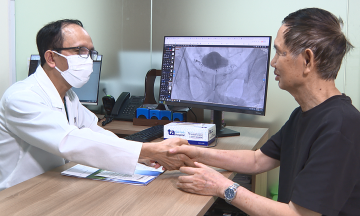
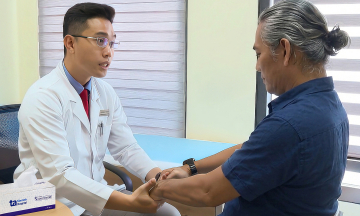
Dr. Binh consults cancer patients after treatment completion. *Illustration: Tam Anh General Hospital*.
The risk of recurrence varies significantly among different cancer types. For instance, breast cancer, kidney cancer, and melanoma can recur many years after treatment concludes. Conversely, most lung cancer and colorectal cancer recurrences typically occur within the first one or two years.
The likelihood of recurrence also depends on several factors: the disease stage at diagnosis, the biological characteristics of the tumor, the patient's response to treatment, and their overall health status.
Advances in cancer treatment, including targeted therapy, immunotherapy, and modern monitoring techniques, are reducing recurrence risks and improving patient prognosis. However, no current method guarantees the complete elimination of all cancer cells in every case.
Regular follow-up examinations are essential for doctors to monitor your condition, detect any abnormal signs early, facilitate timely intervention, and optimize treatment effectiveness.
Dr. Tran Hai Binh
Deputy Head, Oncology Department
Tam Anh General Hospital Hanoi