On 15/11, Master, Doctor Hoang Tien Trong Nghia, Head of the Neurology Department at Military Hospital 175, addressed a health education program for patients with autoimmune neurological diseases. He explained that multiple sclerosis poses significant diagnostic difficulties due to its varied symptoms, which change depending on the lesion's location. This autoimmune neurological disease involves the immune system mistakenly attacking the brain, spinal cord, and optic nerves.
Patients may experience blurred or double vision, headaches, dizziness, numbness, weakness, loss of balance, bowel and bladder dysfunction, fatigue, memory loss, and personality changes. Some may even develop psychiatric-like symptoms such as delusions or hallucinations. These symptoms can emerge, diminish, and then recur, making diagnosis challenging. Patients often dismiss them as stress, nerve compression, overwork, eye or joint issues, or psychosis.
Multiple sclerosis symptoms often overlap with other autoimmune neurological diseases, including neuromyelitis optica, MOG antibody-associated disease, and autoimmune encephalitis. Accurate differential diagnosis requires specialized techniques like MRI, OCT scans, visual evoked potentials, and biomarker tests, performed by experienced doctors. The actual number of diagnosed cases remains low.
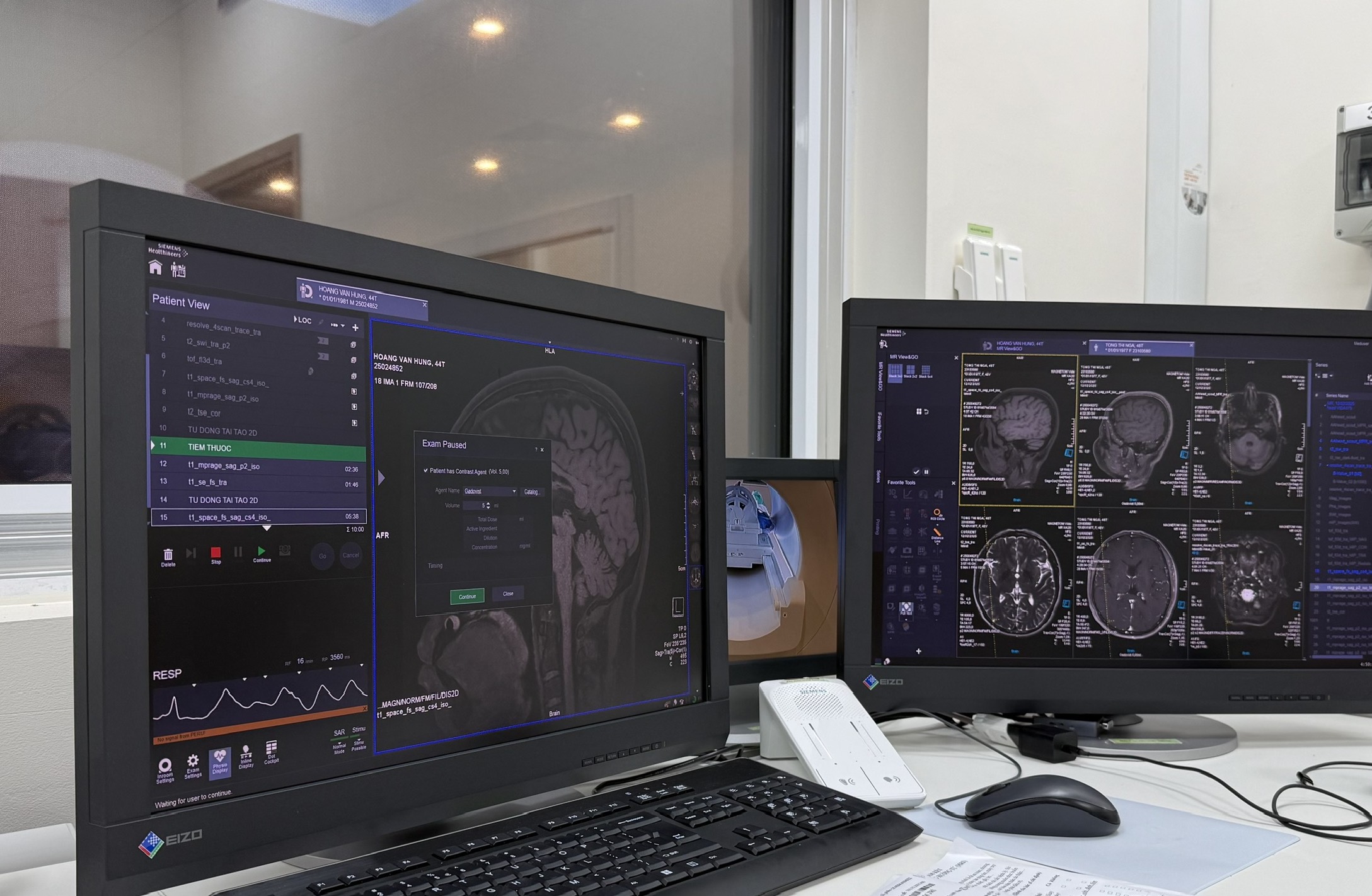 |
Magnetic resonance imaging with specific pulse sequences for multiple sclerosis at Military Hospital 175. Photo: Provided by doctors |
Magnetic resonance imaging with specific pulse sequences for multiple sclerosis at Military Hospital 175. Photo: Provided by doctors
Multiple sclerosis disproportionately affects individuals aged 18 to 40, the primary working demographic, creating a substantial burden on families and society. Globally, an estimated 2,8 million to 2,9 million people live with the disease, meaning one in every 3.000 people. A new patient is diagnosed every 5 minutes across all continents. In 2023, nearly 30.000 children under 18 were diagnosed, showing that multiple sclerosis is not exclusive to adults. While national epidemiological data for Vietnam is unavailable, Military Hospital 175 reported an increase in new cases from three to five to approximately 10 to 15 last year, suggesting improved diagnostic capabilities.
Master, Doctor Huynh Thi Nhu Y stated that the disease's cause is not fully understood. Several factors are believed to be linked, including: genetic predisposition to immune disorders, viral or bacterial infections, stress, hormonal and environmental changes, vitamin D deficiency, and immune dysregulation. Additionally, antibodies generated during the body's fight against cancer cells might inadvertently attack nervous tissue. However, no direct cause has been identified.
Early detection can mitigate long-term damage and preserve the ability to work. "Red flag" symptoms warranting immediate medical consultation include: blurred vision in one eye lasting days to weeks, double vision, limb weakness or paralysis that impairs grasping or walking, numbness or loss of sensation from the neck downwards, unsteadiness leading to falls, prolonged hiccups, and urinary dysfunction. "These symptoms originate from the central nervous system, not from anxiety or depression," Doctor Y emphasized.
Doctor Nguyen Xuan Dieu explained that while there is no complete cure, medical advancements can control the disease and prevent further damage. During the acute phase, patients require strong immunosuppressants, such as high-dose corticosteroids or plasma exchange, to stop attacks on the brain and spinal cord. Following this, patients transition to preventive treatment to avoid relapses, minimize damage during acute episodes, and support nervous tissue recovery. This personalized preventive treatment demands continuous monitoring, as each relapse results in the loss of valuable nerve cells.
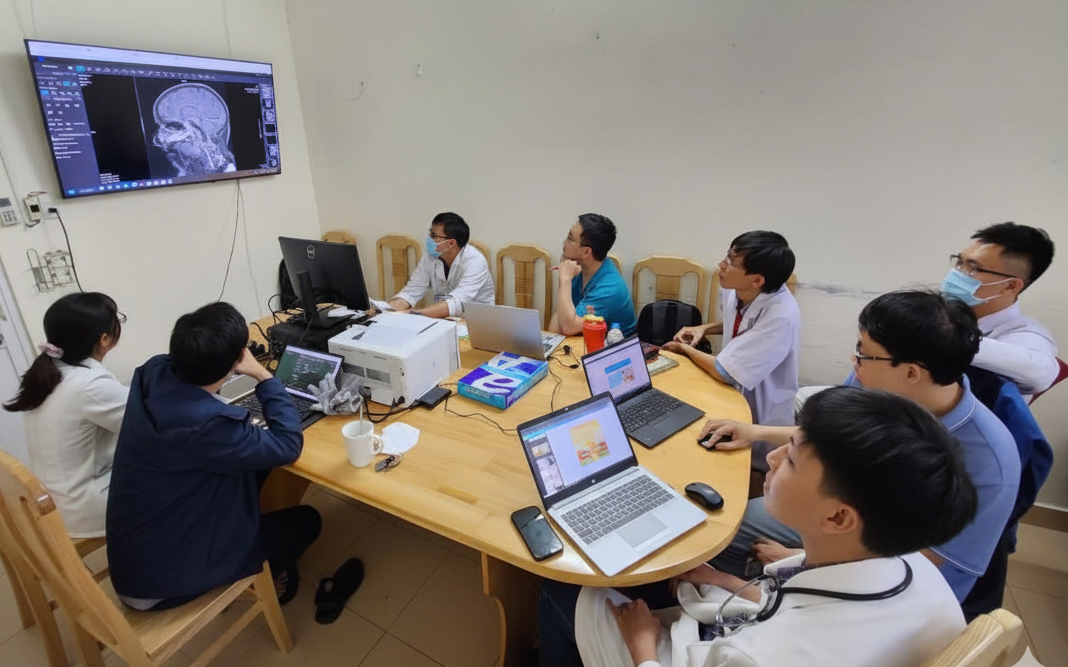 |
Doctors and medical staff from the Neurology Department, Military Hospital 175, discuss a multiple sclerosis case. Photo: Provided by doctors |
Doctors and medical staff from the Neurology Department, Military Hospital 175, discuss a multiple sclerosis case. Photo: Provided by doctors
The battle against multiple sclerosis continues to face challenges, including: difficulties in accessing accurate diagnosis, high costs, complex testing and monitoring, and limited information in many areas. Despite this, Vietnam now possesses comprehensive facilities and treatment options. Notably, since 2023, the country has gained access to Ocrelizumab, an FDA-approved disease-modifying drug. Approximately 20 domestic patients have received this medication, reducing the need for treatment abroad. However, high costs, the requirement for long-term monitoring, and ongoing rehabilitation remain significant obstacles for many patients.
Doctors advise individuals experiencing unusual central nervous system symptoms—such as unexplained numbness, blurred vision, weakness, bowel and bladder dysfunction, or persistent fatigue—to seek early assessment at a specialized autoimmune neurology facility to mitigate the risk of disability.
"In multiple sclerosis, time is critical for the brain and spinal cord," Doctor Nghia emphasized. "Every minute of delay causes patients to lose opportunities to preserve nervous tissue and maintain a normal life."
Le Phuong