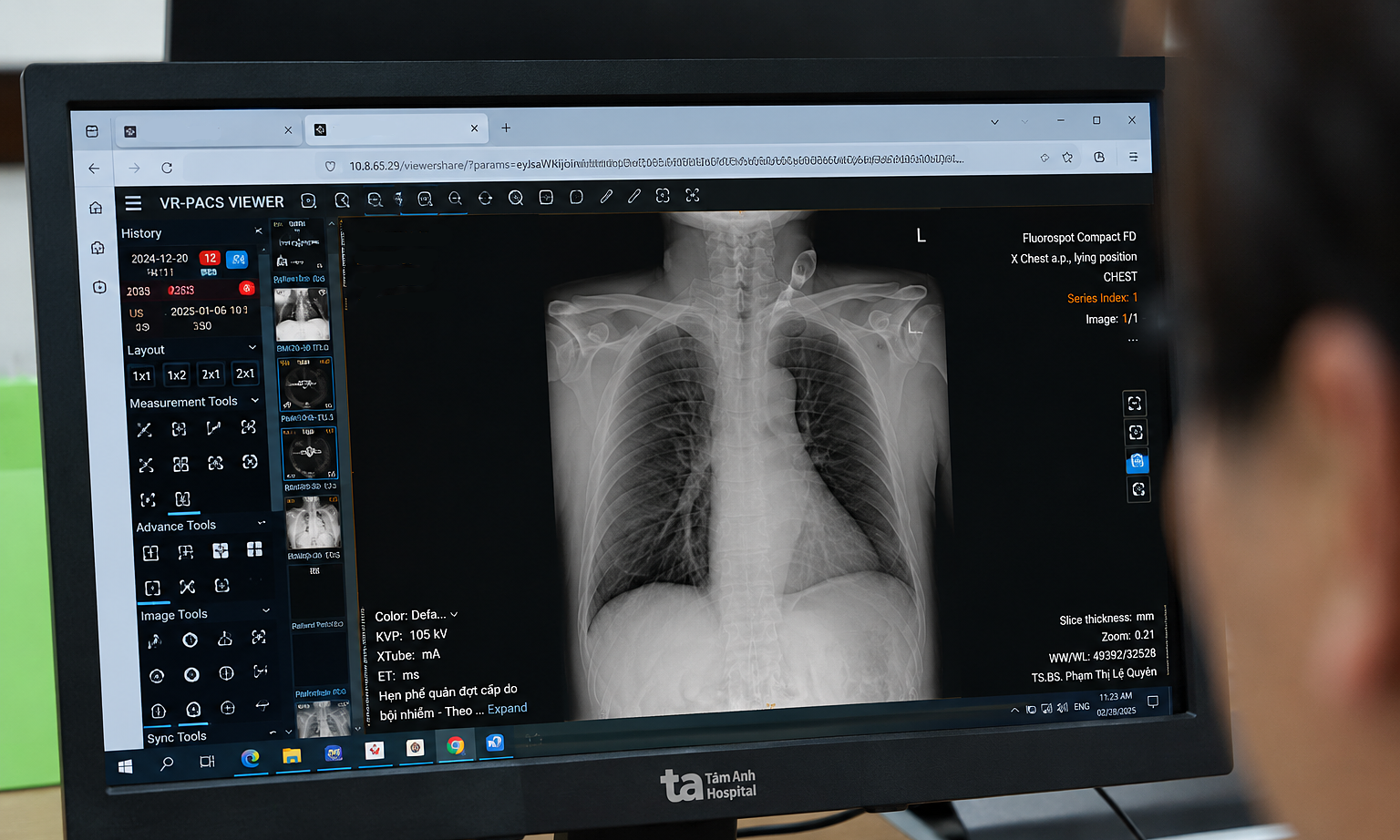
Anh Tu, who had stage one myasthenia gravis, initially received medical treatment with medication at a hospital. His muscle strength recovered well, and his eyelids improved. Recently, his symptoms worsened, with increasing limb weakness, prompting him to visit Tam Anh General Hospital TP HCM. A chest CT scan revealed a thymoma measuring 4x6x8 cm located in the anterior mediastinum.
According to Doctor Nguyen Anh Dung, Head of the Thoracic and Vascular Surgery Department at the Thoracic and Vascular Surgery Center, Anh Tu's myasthenia gravis had progressed to stage two. His left eyelid showed distinct drooping, and his limb muscle strength was 6/10. The tumor was situated directly behind the sternum, in front of the heart, surrounded by major blood vessels like the aorta and vena cava.
Doctor Dung recommended Da Vinci Xi robotic surgery to remove the tumor, aiming to treat the myasthenia gravis and prevent the tumor from growing and compressing nearby organs.
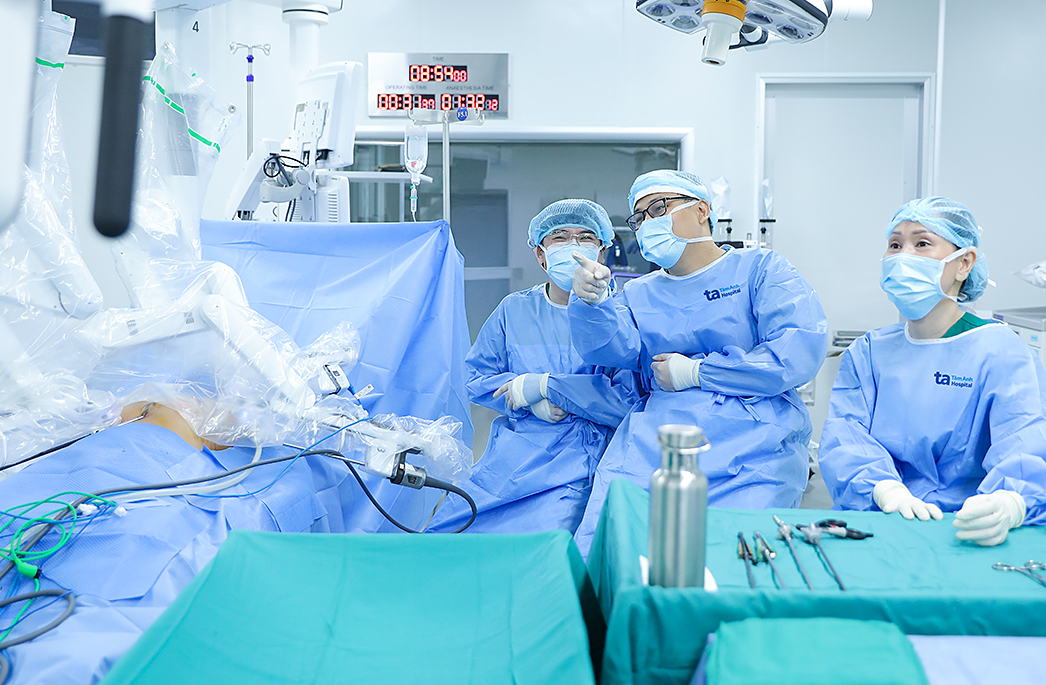 |
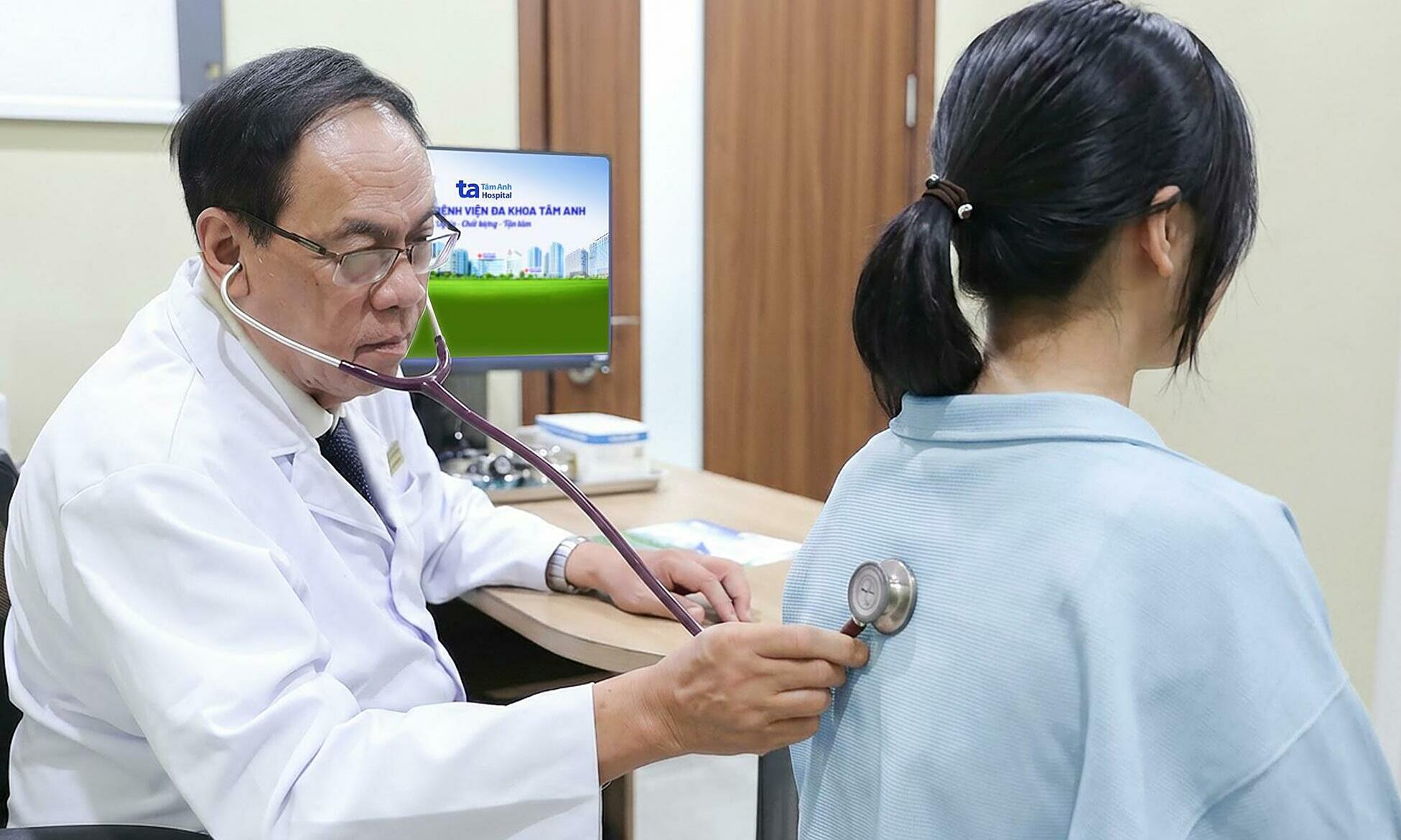
The patient underwent robotic-assisted surgery to remove the thymoma. Photo: Tam Anh General Hospital
Four robotic arms were inserted into the patient's chest through small 8 mm incisions, allowing the surgeon to operate easily in deep, narrow, and hard-to-reach surgical areas. Doctor Dung remotely controlled the robotic arms to approach the tumor from various angles, dissect it, remove tissue, and manage bleeding immediately. This approach avoided affecting surrounding healthy tissue and minimized blood loss.
Post-surgery, Anh Tu was able to walk gently one day after the operation. He experienced minimal pain, had small, aesthetic incisions, and was discharged after two days.
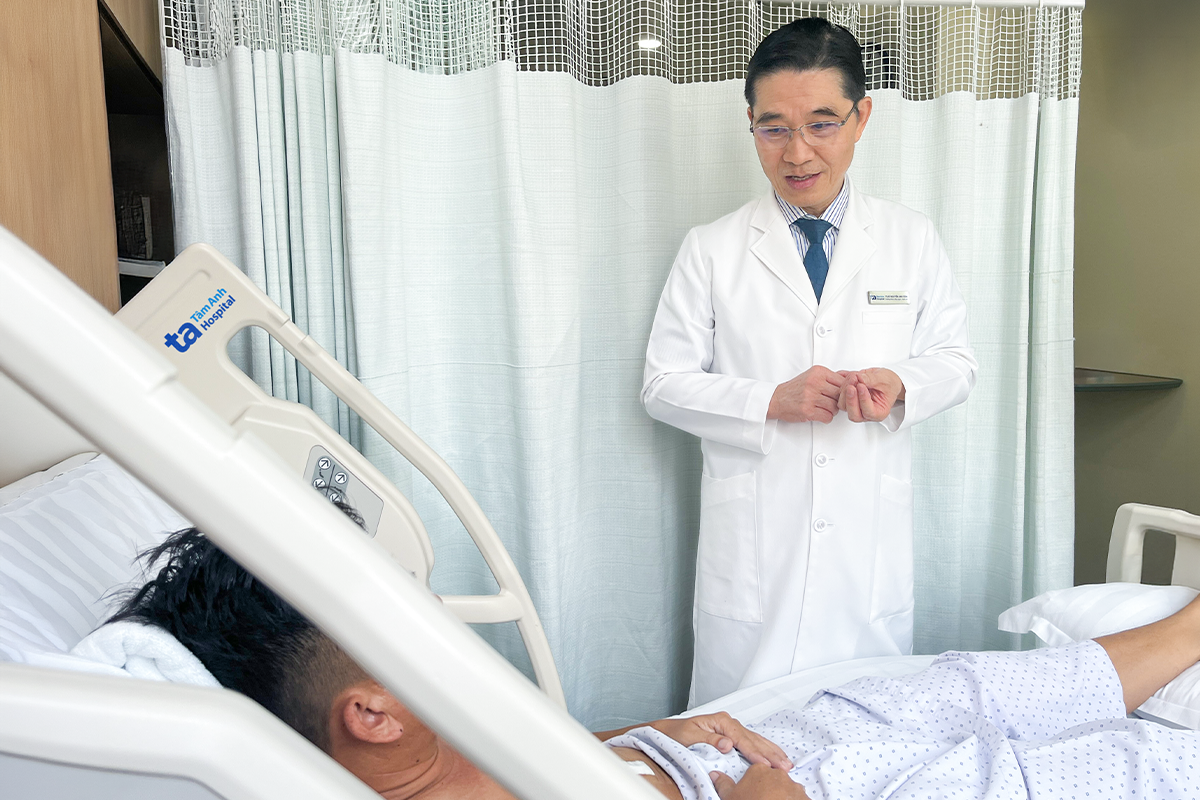 |
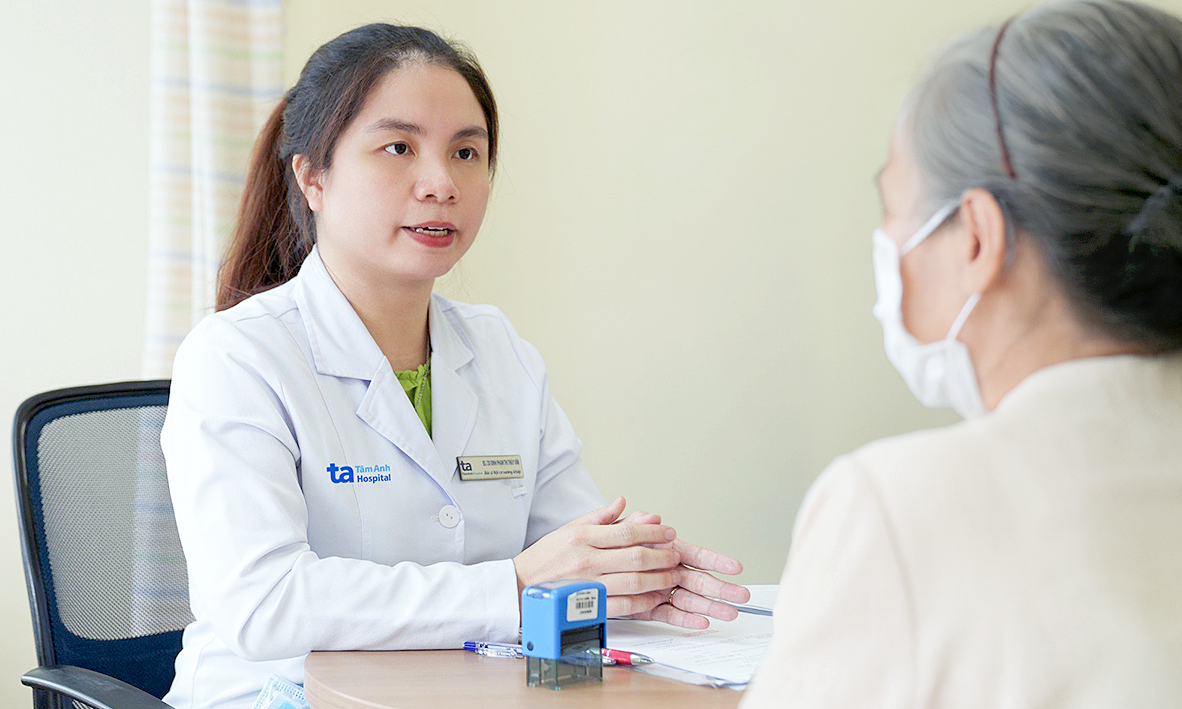
Doctor Dung advises the patient on diet and activities after discharge. Photo: Tam Anh General Hospital
The thymus is a small organ located in the chest, above the heart and below the sternum. It is responsible for producing lymphocytes, which help the body fight infections. A thymoma originates from epithelial cells on the outer surface of the thymus and can be either benign or malignant (cancerous).
Doctor Dung explained that early symptoms of thymoma are often subtle. When the tumor affects organs in the chest or is associated with paraneoplastic syndrome, patients may experience chest pain or pressure, shortness of breath, gasping, difficulty swallowing, fatigue, and headaches.
Other symptoms related to thymoma include myasthenia gravis (double vision, drooping eyelids, fatigue, muscle weakness) and pure red cell aplasia (fatigue, pallor).
Thymomas detected early and treated according to the correct protocol generally have a good prognosis. For benign tumors, doctors can completely remove them, leading to a low risk of recurrence. In cases of malignant or large, widespread tumors, surgery is the primary treatment. If complete removal is not possible, doctors may partially resect the tumor to alleviate symptoms, followed by radiotherapy or chemotherapy to eliminate residual cancer cells and reduce recurrence risk.
By Thu Ha
*Patient's name has been changed.
| Readers can submit questions about cancer here for doctors to answer. |