Statistics from Vietnam Social Security show that by the end of November, the country recorded over 177.8 million health insurance medical visits, an increase of nearly 10.3 million visits (over 6%) compared to the same period in 2024. Consequently, payment expenditures also rose by 16%, with the national health insurance medical examination and treatment fund utilization rate reaching 100.1%. Within the cost structure, consultation fees saw the sharpest increase at nearly 32%, followed by hospital bed fees, diagnostic imaging tests, and medical supplies.
This move by the social security agency to tighten spending coincides with the National Assembly's agreement today to a roadmap for increasing health insurance contributions starting in 2027. This decision aims to achieve basic universal hospital fee exemption for all citizens by 2030, aligning with the country's economic conditions. To realize this, the Ministry of Health is developing a plan to raise contribution rates to 5.1% by 2027, reaching 5.4% in 2030, and 6% by 2032.
Provinces with the highest budget utilization rates include Thanh Hoa, Dong Nai, Quang Tri, Nghe An, Son La, Ninh Binh, An Giang, Ha Tinh, Da Nang, and Quang Ninh. Many medical facilities in these areas show a high proportion (over 40%) of inpatient treatment days and bed fees within total inpatient expenditures, indicating extended hospital stays. There is also a continuous increase in spending on high-priced original brand-name drugs, supplementary medications, and vitamin mineral supplements.
Thanh Hoa recorded the highest budget utilization rate nationwide, with a significant increase in drug costs, particularly traditional medicine products, exceeding 132 billion dong, a rise of nearly 33% compared to last year. The average outpatient cost in this province also increased steadily from February to October. Inpatient treatment at traditional medicine and rehabilitation facilities accounted for over 99%, a very high rate. Furthermore, cerebral rheography, a technical service group with the highest proportion of expenditures nationally, also saw increased costs.
Ho Chi Minh City ranks 4th in the number of medical visits but 2nd in health insurance payments. This is primarily concentrated in specialized medical facilities, accounting for about 59% of health insurance expenditures. There are increasing costs for surgical procedures, high-priced hospital beds and medications, and some medical facilities are increasing magnetic resonance imaging (MRI) prescriptions.
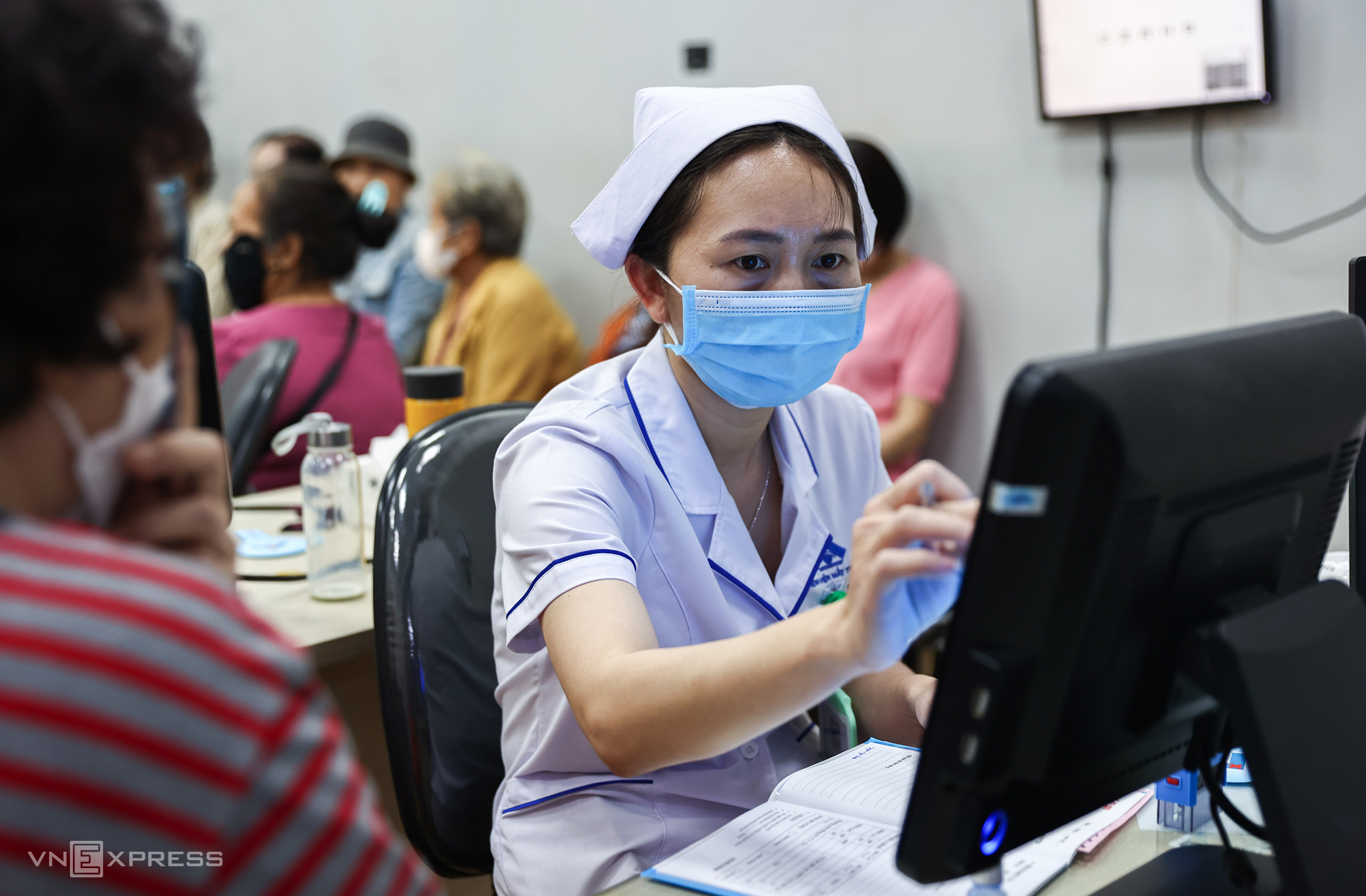 |
Medical staff at Ho Chi Minh City Eye Hospital during work hours, 7/25. Photo: Nhu Quynh |
Given the complex issue of fund misuse, Vietnam Social Security has directed provincial social security agencies to thoroughly review facilities with surging costs and promptly identify signs of exploitation for rectification. The agency asserts it will strictly implement the appraisal process and definitively refuse payment for unreasonable or irregular expenses.
Currently, the health insurance contribution rate is 4.5% of the basic salary, pension, or unemployment benefit. With a basic salary of 2.34 million dong, employees contribute 105,300 dong per month. For household models, the contribution rate gradually decreases from the second member onwards, amounting to 70%, 60%, 50%, and 40% of the first member's fee, respectively. Across the country, over 95.5 million people are currently covered by this social safety net, achieving a coverage rate of over 94% of the population.
Hong Chieu