On 11/12, TASS news agency quoted Alexander Gintsburg, Director of the Gamaleya Center, confirming this development at a seminar of the Russian Academy of Sciences. Gintsburg stated that the Gamaleya Institute's new production line has successfully completed three standard experimental vaccine batches.
"This is a significant milestone, demonstrating that mRNA technology is ready for practical application in cancer treatment," Gintsburg said, adding that the center has also recruited 30 volunteers to commence the injection process.
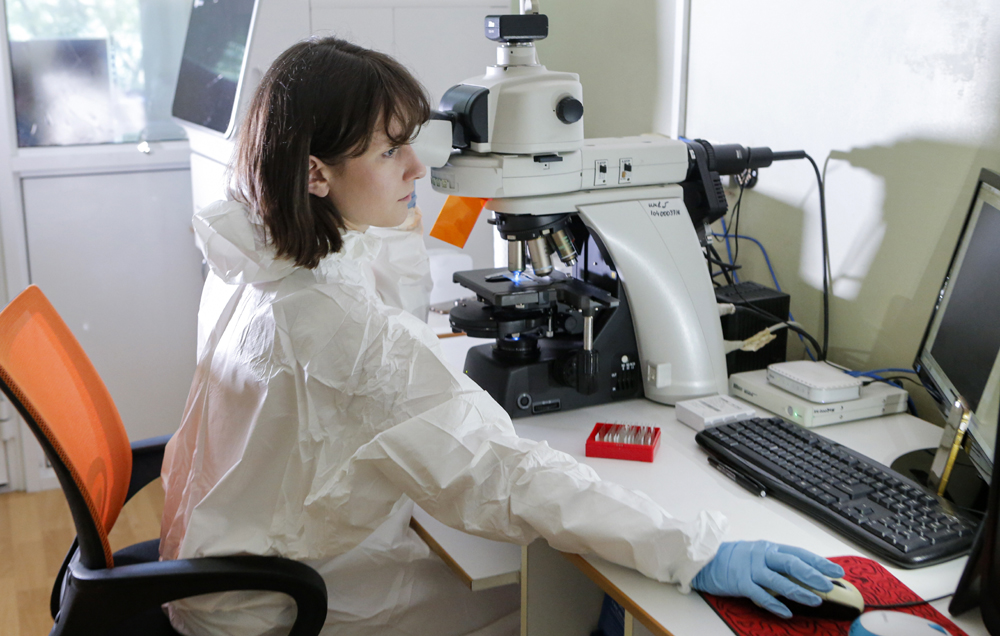 |
The Gamaleya National Research Center of Epidemiology and Microbiology, Russia. Photo: TASS |
The "made in Russia" cancer vaccine project drew attention in september when Veronika Skvortsova, head of the Federal Medical-Biological Agency (FMBA), announced research results. She affirmed that rigorous preclinical trials conducted over three years on animals "demonstrated the safety and tumor-inhibiting efficacy of the preparation, even with repeated doses."
Unlike traditional preventive vaccines that block disease before infection, this is a therapeutic vaccine. It functions as an immunotherapy, designed to train the body to recognize and destroy malignant cells in cancer patients, rather than for healthy individuals. Information from Russia indicates that preclinical data, derived from animal and laboratory tests, recorded promising results, with the vaccine potentially reducing tumor size by 60-80%.
The Russian government has fully funded this project. Although the estimated production cost exceeds 2,800 USD per dose, authorities assert it will be provided free of charge to citizens. This initiative aims to address the urgent treatment needs in Russia, where approximately 4 million cancer patients are currently registered, with an additional 625,000 new cases reported each year.
The success of the Covid-19 pandemic has fueled a global race to apply mRNA technology to cancer treatment, with intense competition among medical powers. In the US, pharmaceutical companies like Moderna and Merck are leading, conducting giai doan 3 clinical trials in humans for a melanoma treatment vaccine, representing the closest step towards commercialization. The UK government also launched the National Health Service (NHS) "cancer vaccine launchpad" program, strategically collaborating with BioNTech (Germany) to accelerate trials on thousands of patients. Meanwhile, Chinese biotechnology companies are developing domestic vaccine candidates, initiating clinical trials for liver cancer and various other solid tumors. Despite different regulatory pathways, these nations are striving to transform these experimental mRNA therapies into standard hospital treatment protocols within the next decade.
Binh Minh (According to TASS, RT)