In an era of increasingly stringent nutritional standards, packaging has evolved beyond a mere container to become a decisive factor in product stability and safety. External elements such as light, oxygen, temperature, or microorganisms can rapidly degrade nutritional value. Fat-soluble vitamins, unsaturated fatty acids, enzymes, and bioactive compounds are highly sensitive to the environment, making them prone to oxidation or degradation if not stored properly.
Therefore, Swedish Tetra Pak 6-layer aseptic packaging presents a scientific solution, widely adopted by many international corporations in medical food, including Orgalife. Tetra Pak's technology meets the stringent standards set by the US Food and Drug Administration, the European Union, and Chinese regulatory bodies.
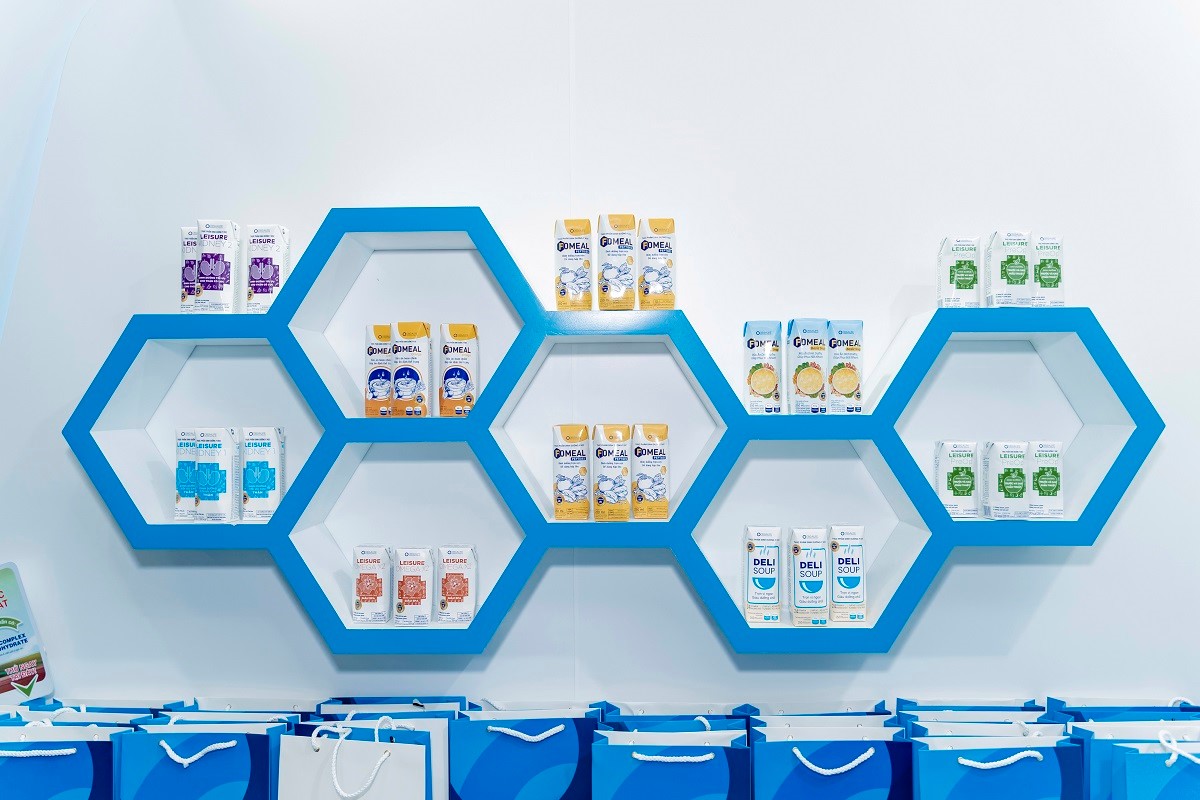 |
Orgalife's medical nutritional food uses Swedish packaging technology. *Photo: Orgalife* |
The 6-layer aseptic packaging operates on a "multi-layered shield" mechanism, where each layer serves a distinct, complementary function to form a comprehensive protective system. The outer plastic layer acts as the first defense, resisting moisture and ensuring surface durability against external factors like sunlight and humidity. Inside, the paper board layer provides structural integrity, preventing deformation during transport and serving as a clear display for product information.
A bonding plastic layer secures the materials into a stable structure, limiting environmental permeation. A notable feature is the aluminum barrier layer—a "metal shield"—which blocks UV rays, oxygen, and moisture. This layer determines the packaging's antioxidant capacity, preventing vitamin degradation and maintaining micronutrient activity over time. An adhesive layer further reinforces the entire structure, ensuring the packaging's integrity against the effects of time. Finally, a food-contact safe plastic layer, selected to high standards, ensures no interaction with ingredients, preserving flavor and nutritional stability. "This explains why Orgalife's products are considered suitable for recovery nutrition—a field demanding high precision and stability," a company representative stated.
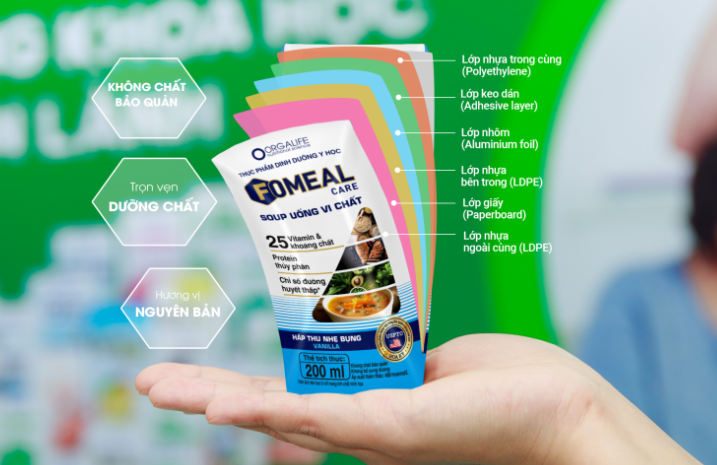 |
Orgalife uses 6-layer aseptic packaging technology, ensuring product quality reaches consumers. *Photo: Orgalife* |
A complete packaging system is evaluated not only for its nutritional protection capabilities but also for its environmental and supply chain impact. In the global trend of sustainable development, packaging is expected to be lighter, easily recyclable, and environmentally friendly. The 6-layer aseptic packaging structure, with its materials, helps reduce shipping weight, minimize storage losses, and limit the use of non-renewable resources. This aligns with the circular economy model that many major markets are pursuing.
Orgalife not only uses advanced Swedish packaging technology to protect nutrition but also considers it a part of its sustainable development strategy. The company researches material optimization, increasing the proportion of recyclable materials to reduce carbon emissions from production to consumption. Adopting multi-layer packaging technology from Sweden also helps reduce spoilage during transport—a factor that often causes waste in the food industry.
"The combination of nutritional science, modern packaging technology, and sustainable orientation has created distinctive value for Orgalife. This also demonstrates that modern packaging is not merely a box, but a foundation helping Vietnam's medical nutrition industry to grow strongly," an Orgalife representative emphasized.
The Dan