this morning and yesterday, the Environmental Pollution Control Agency's monitoring system reported a sudden surge in fine dust concentrations across numerous areas. The monitoring station at the gate of Hanoi University of Science and Technology (Giai Phong street) registered an AQI of 210. According to the measurement scale, levels above 200 are classified as "very unhealthy", posing a significant health risk to all residents. The 556 Nguyen Van Cu station reported an index of 201, while Khuat Duy Tien park recorded a level of 160.
many monitoring points in northern provinces also experienced poor air quality, including Thang Long 2 Industrial Park (Hung Yen) at 170; Bac Giang Inter-Agency Complex at 154; the former Hai Duong City People's Committee at 153; Nam Cao Park (Phu Ly) at 153; and Thai Binh bridge (Hung Yen) at 189.
the air quality index (AQI) is a measure of air pollution, ranging from 0 to over 300. Levels above 200 are considered hazardous, indicating that everyone is at risk of adverse health effects.
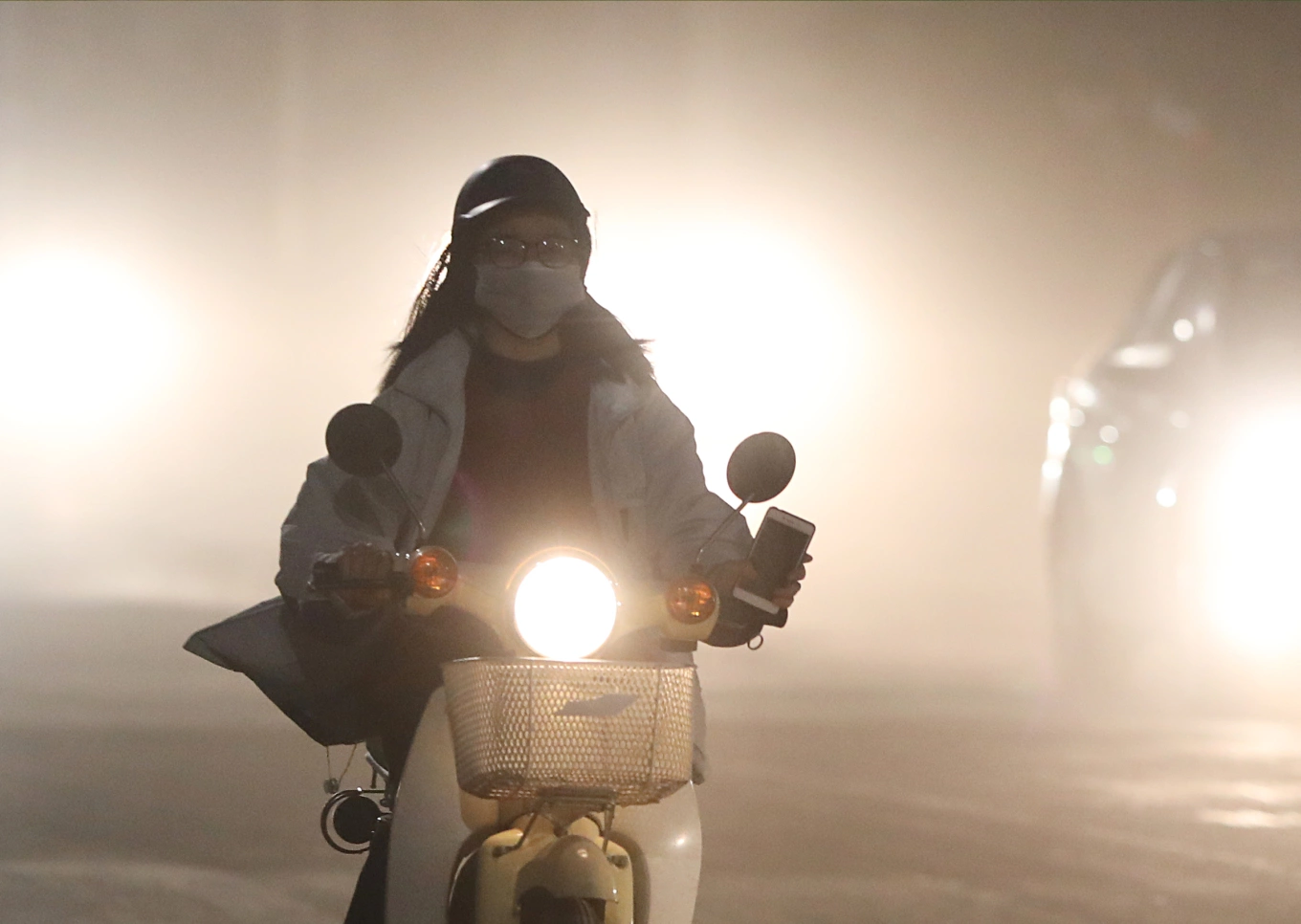 |
air pollution in Hanoi. Photo: Ngoc Thanh |
explaining the causes, Doctor Hoang Duong Tung, chairman of the Vietnam Clean Air Network, stated that pollution typically escalates from october to april of the following year. During this period, northern Vietnam experiences calm winds, fog, high humidity, and less sunlight. These weather conditions create a barrier that prevents dust from dispersing upwards, trapping pollutants close to the ground where they accumulate for several days.
assessing the health impacts, Doctor Doan Du Manh of the Vietnam Society of Vascular Diseases, compared breathing outdoor air on such mornings to "the equivalent harm of smoking two packs of cigarettes". Fine dust penetrates deep into the respiratory tract, damaging the lining of the trachea and bronchi, and reaching the alveoli, leading to inflammation and fibrosis. Elderly individuals, young children, pregnant women, and those with underlying respiratory conditions are particularly susceptible to recurrent sinusitis, pharyngitis, and even severe bronchopneumonia.
beyond lung damage, air pollution also harms the cardiovascular system and vision. Doctor Le Ngo Minh Nhu (University Medical Center Ho Chi Minh City - Campus 3) warned that fine dust adhering to the eyeball or penetrating deep into eye tissues can cause conjunctivitis and corneal damage. These ultrafine dust particles also elevate the risk of hypertension, myocardial infarction, and stroke.
the World Health Organization (WHO) refers to air pollution as a "silent killer", linked to 30% of lung cancer deaths and 43% of respiratory disease deaths. Studies from the University of Chicago (US) also indicate that this condition reduces average life expectancy by more than two years, a negative impact comparable to smoking.
to protect health, experts advise residents to minimize time spent outdoors. If outdoor travel is unavoidable, individuals should wear specialized masks to filter fine dust and protective eyewear. Upon returning home, cleaning the nose and throat with physiological saline solution and thoroughly washing the face helps remove accumulated dust. Residents should temporarily cease outdoor activities like jogging and cycling, opting for indoor exercise to avoid inhaling large quantities of toxic air during strenuous activity.
regarding nutrition, doctors recommend increasing protein-rich foods, green vegetables, and fruits high in vitamin C, such as oranges and grapefruits, to boost immunity. Measures to support lung detoxification include practicing diaphragmatic breathing to increase oxygen intake and hot steam inhalation with essential oils to humidify the airways. If symptoms of prolonged respiratory inflammation, chest pain, or difficulty breathing appear, patients should seek immediate medical attention.
Thuy Quynh