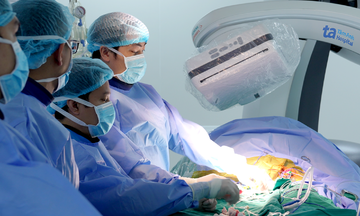
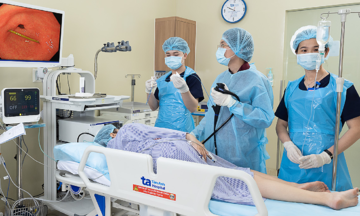
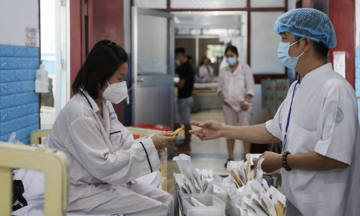
Medlatec General Hospital reported on 1/12 that the patient was admitted with severe headaches, nausea, difficulty speaking, and loss of balance. A cranial computed tomography scan revealed bilateral carotid artery calcification and atherosclerosis. Doctors diagnosed her with an ischemic stroke on a background of hypertension and immediately transferred her for specialized treatment.
Ten days prior, the patient frequently experienced headaches and dizziness. Although another medical facility had diagnosed her with cerebral ischemia and hypertension, she had not yet started medication. Her medical history indicated she had high blood pressure for many years but did not take her medication regularly.
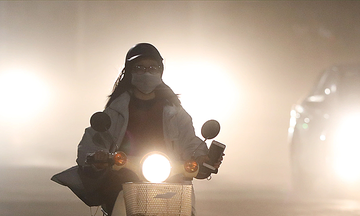
Doctor Hoang Minh Toai, a specialist in emergency resuscitation, warns that while strokes can occur year-round, their incidence rises sharply in cold weather. Low temperatures cause blood vessels to constrict, increasing blood flow resistance and blood pressure, which can easily lead to vessel rupture. Cold weather also increases blood viscosity and catecholamine hormone levels, creating conditions for blood clot formation that can block cerebral arteries.
Sedentary habits and a diet high in fats and salt during winter further increase the risk for elderly individuals and those with a history of cardiovascular disease, diabetes, dyslipidemia, or obesity.
Stroke (cerebrovascular accident) is a leading cause of death or disability. Survivors often endure severe sequelae such as motor paralysis, leading to complications like pneumonia, urinary tract infections, or depression.
Experts emphasize the principle that "time is brain". Every minute of delay results in two million irreversible nerve cell deaths. The first 3 to 4,5 hours are considered the "golden hour" for saving damaged brain tissue.
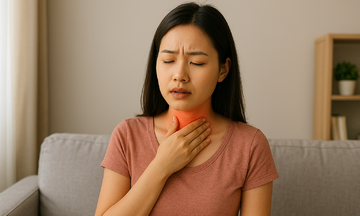
Doctors advise the public to recognize early signs of stroke using the BEFAST rule: Balance problems, headache (Balance); blurred Eyesight (Eyesight); Facial droop (Face); Arm weakness (Arm); Speech difficulty (Speech). If any symptoms appear, families should call emergency services or take the patient to the hospital immediately (Time).
To prevent stroke, people should keep their bodies warm, avoid sudden temperature changes, maintain a healthy lifestyle, and effectively manage underlying medical conditions through regular health check-ups.
Thuy Quynh