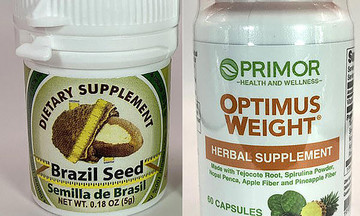
A 63-year-old man from Long An was admitted to Xuyen A General Hospital in critical condition, gasping for breath. After years of adhering to a Western medicine regimen for diabetes, he changed course following recommendations for a "hereditary miracle cure". As a result, his blood sugar levels did not decrease, and he developed severe lactic acidosis.
"This is a fatal complication with a high mortality rate, stemming from phenformin poisoning – a banned substance long removed from global medical literature," a hospital representative stated.
At Thong Nhat Hospital, TP HCM, a 54-year-old woman also experienced confusion and severe abdominal pain after taking unlabeled pills advertised as a "three-generation hereditary cure for diabetes". Subsequent tests confirmed these packages contained phenformin.
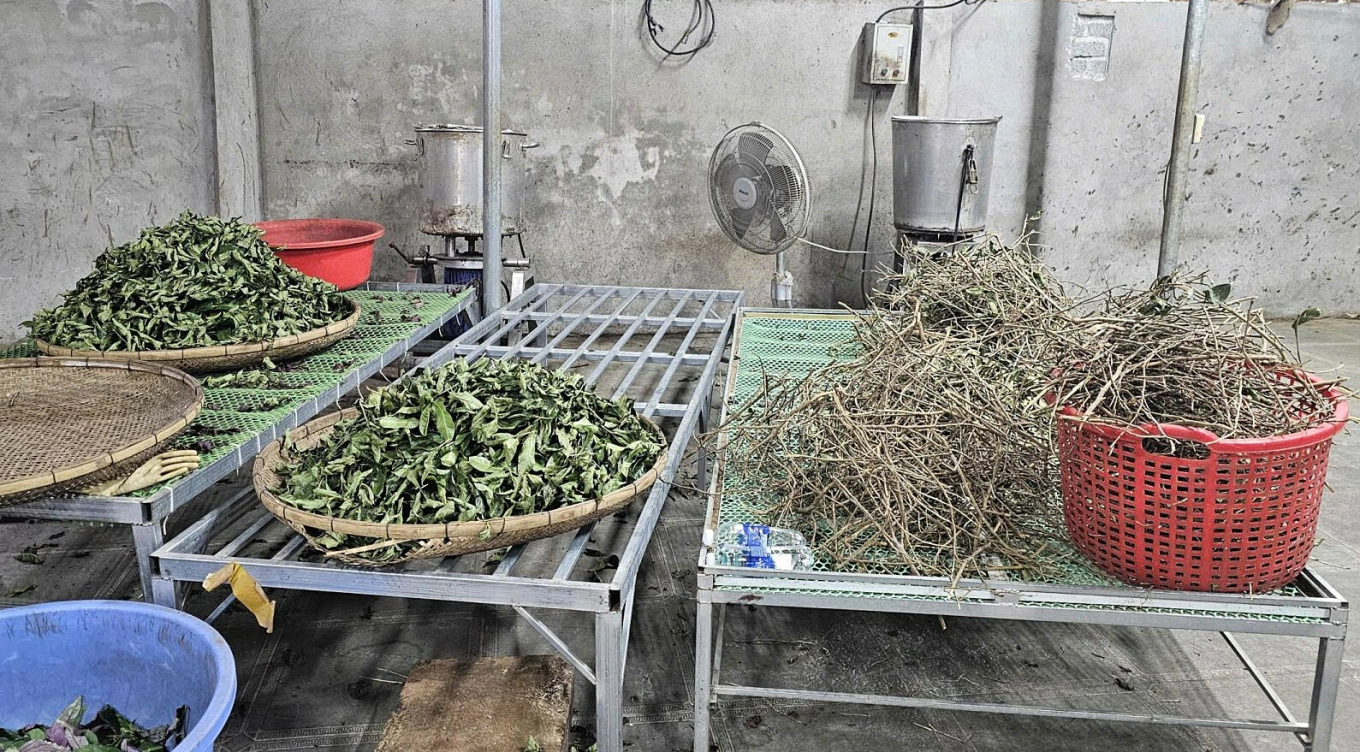 |
Forest plants gathered before being processed into Hoang Minh Duong bone and joint medicine. Photo: Lam Son
In other major hospitals, patients suffering from bone and joint conditions are repeatedly admitted with swollen faces, stage two or three kidney failure, and stomach ulcers. All these are consequences of herbal powder packets indiscriminately mixed with corticoid, ordered via YouTube.
Doctor Ha Hai Nam, Deputy Head of Department 1, K Hospital, describes this as the tip of a public health crisis quietly but fiercely unfolding online. Masquerading as "miracle doctors" with empty promises like "tenfold compensation if not cured", an industry producing and distributing counterfeit traditional medicine is engulfing patients. Exploiting the "seek help from all directions when ill" mindset and fear of modern medical intervention, this network not only drains finances but also leaves serious health sequelae.
The scamming machine
In reality, few "traditional healers" painstakingly climb mountains to gather herbs. Behind crude video clips featuring individuals in traditional Vietnamese attire standing before piles of dried roots is a sophisticated operation. This is exemplified by several large-scale fake traditional medicine rings recently dismantled by police.
Without deep medical knowledge, many suspects only need a short online course to claim to be traditional medicine practitioners. For instance, Hoang Van Toan from Thanh Hoa, who led the Hoang Minh Duong bone and joint medicine ring, was a former bank employee who "picked up" traditional medicine knowledge online. He then borrowed a location and rented someone else's practicing certificate to open a clinic. Similarly, many other facilities are run by individuals with no expertise in pharmacodynamics.
The ingredients in these expensive medicine packets are cheap materials, sometimes even agricultural waste. At Hoang Minh Duong's workshop, police seized 2.5 tons of stems, leaves, bark, and weeds purchased from unknown sources. These were chopped, ground into powder in unsanitary conditions, packaged in zip bags, and stored in freezers like food.
More dangerously, to create immediate effects, the perpetrators secretly added Western drugs. In Ha Tinh, investigators discovered a workshop impersonating traditional medicine practitioners using molasses mixed with corn flour, glutinous rice flour, and Western pharmaceuticals to formulate "rapid weight gain" pills. When patients using bone and joint poultices developed blisters and skin necrosis, the imposter doctors immediately sent Tetracyclin (eye ointment), instructing customers to apply it to "cool the wound", despite potential complications.
Despite crude ingredients, these organizations employ highly modern sales processes. According to authorities, they establish companies, organize clear departments, and spend billions of VND on "bombardment" advertising campaigns on Facebook, TikTok, and Zalo. To boost credibility, these individuals brazenly splice television station logos and impersonate the Traditional Medicine Association.
Dozens of call center employees, without medical knowledge, merely memorize scripts designed to appeal to the "seek help from all directions when ill" mentality. They pose as doctors or traditional medicine practitioners, promising "100% cure" and "complete treatment" to pressure patients into placing orders.
Through these tactics alone, from 2023 to early 2025, the Hoang Minh Duong network successfully sold nearly 87,000 orders to over 80,000 patients, pocketing 227 billion VND.
Why do patients fall for the trap?
Research by the Institute of Health Policy and Management indicates that 73% of Vietnamese people have used traditional medicine, but only 34% purchased from licensed sources. 68% of users hold the naive belief that "natural herbs have no side effects whatsoever". Similarly, a 2023 survey by the Institute of Nutrition and Preventive Medicine showed that 47% of rural elderly are using unverified, word-of-mouth traditional bone and joint remedies – a 15% increase in just three years.
Doctor Nam explains this blindness stems from a fear of surgery and an obsession with Western medicine's side effects. "While doctors always warn about surgical risks or prescribe medications with long lists of side effects on the packaging, fraudsters paint a rosy picture, only showcasing effectiveness and concealing risks," Doctor Nam analyzed.
Patients are easily manipulated because "they only believe what they want to believe". These fake medicines often contain potent painkillers, immediately alleviating acute pain, leading victims to believe a miracle has occurred.
The biggest threat from fake traditional medicine is the illicit mixing of Western drugs. Doctor Ngo Thi Kim Oanh, University Medical Center TP HCM, warns that to create immediate hypoglycemic or pain-relieving effects, these "self-proclaimed pharmacists" secretly introduce harmful substances like phenformin into the medicine. Diabetic patients who unknowingly use this banned substance face respiratory failure, hypotension, and death, while initial poisoning symptoms are vague, such as loss of appetite and fatigue.
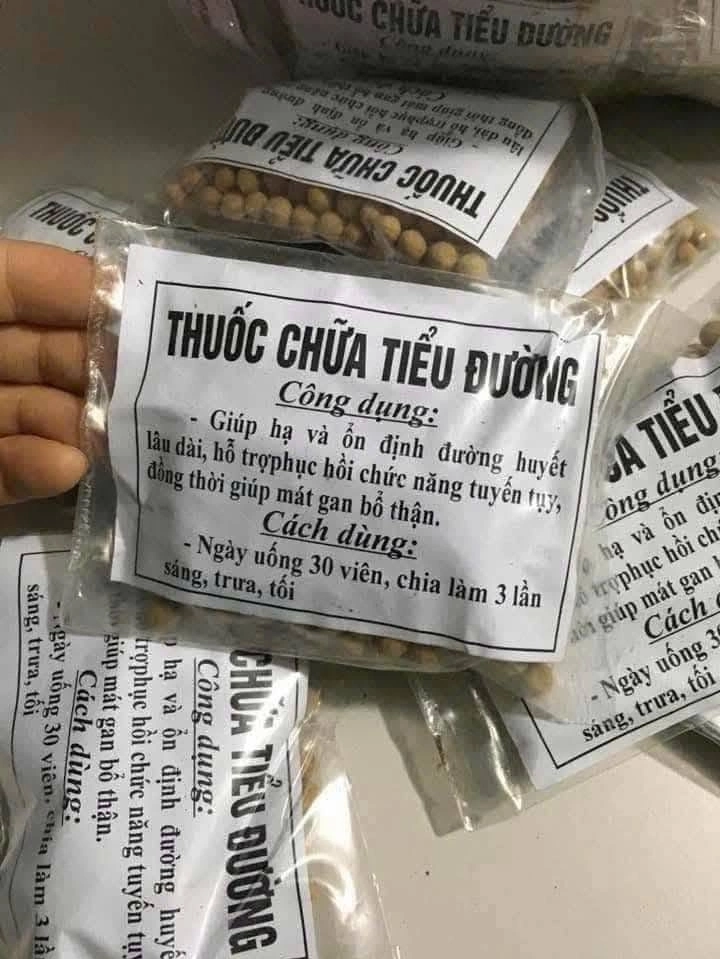 |
Unverified, unlabeled medicine packets are sold widely online, despite the risk of harm to users. Screenshot
Additionally, the indiscriminate abuse of corticoid is destroying the body's natural protective barriers. A 2023 report from the Poison Control Center - Bach Mai Hospital recorded hundreds of cases of self-medication poisoning annually, with 60% of patients showing severe corticoid addiction symptoms, leading to adrenal atrophy, spontaneous fractures, and Cushing's syndrome (moon face).
Laboratory analyses have also detected heavy metals such as lead, mercury, arsenic, and aflatoxin mold – a leading cause of liver cancer – hidden in the medicines. For cancer patients, the interaction between these counterfeit "poisons" and chemotherapy regimens triggers blood clotting disorders, pushing them into acute respiratory failure.
Medical experts do not deny the value of legitimate traditional medicine, as many remedies have been clinically proven and approved by the Ministry of Health. However, the rise of "online miracle doctors" poses a challenge to state management systems. While e-commerce has boomed, the testing system, with three central institutes and 62 provincial centers, lacks sufficient resources and technology to keep pace. Although the Food Safety Department issues billions of VND in fines, this amount is merely "a drop in the ocean" as fraudulent networks constantly change names and platforms.
Experts recommend that regulatory agencies tighten advertising regulations on cross-border platforms and establish coordination mechanisms to immediately "take down" infringing content. Citizens should research product names, carefully read labels or packaging, and seek information about ingredients, main active compounds, and whether the dosage meets daily recommendations for the body. It is also important to investigate auxiliary ingredients, including preservatives, flavorings, food colorings, allergens, or harmful substances. If signs of fraud are detected, consumers can report them via the Consumer Protection Hotline (Ministry of Industry and Trade) at 1800 6838 or the Food Safety Department Hotline (Ministry of Health) at 0243.232.1556.
My Y - Thuy An