Trang presented with a tumor in her right breast, measuring approximately 2.5x1 cm, along with abnormal lymph nodes in the right axillary fossa. Doctors at Tam Anh General Hospital in Hanoi confirmed the diagnosis of triple-negative breast cancer (TNBC) through immunohistochemistry staining of the biopsy sample. This is a specific subtype of breast cancer where cancer cells lack the three main receptors typically found in other breast cancer types.
Doctor Ngo Truong Son, Deputy Head of the Oncology Department, noted that TNBC accounts for about 15% of all breast cancer cases. This aggressive subtype grows quickly, metastasizes easily, and resists standard treatments like hormone therapy and HER2-targeted drugs.
Following a consultation, doctors prescribed neoadjuvant therapy for Trang, combining immunotherapy and chemotherapy to shrink the tumor. Subsequently, surgeons would perform surgery to remove the tumor while preserving the breast.
Doctor Son explained that chemotherapy and immunotherapy are combined to enhance the effectiveness of killing cancer cells. Chemotherapy directly destroys or inhibits cancer cell division, shrinking tumors and controlling disease progression. Immunotherapy, meanwhile, activates the body's immune system to recognize and attack cancer cells more effectively.
After completing 8 cycles of combined immunotherapy and chemotherapy, Trang responded well to the treatment. The tumor in her right breast and the right axillary lymph nodes significantly decreased in size. She underwent a total mastectomy of the right breast, preserving the nipple, along with axillary lymph node dissection to thoroughly remove any suspected residual disease. Post-operative pathological results helped doctors accurately assess the treatment response.
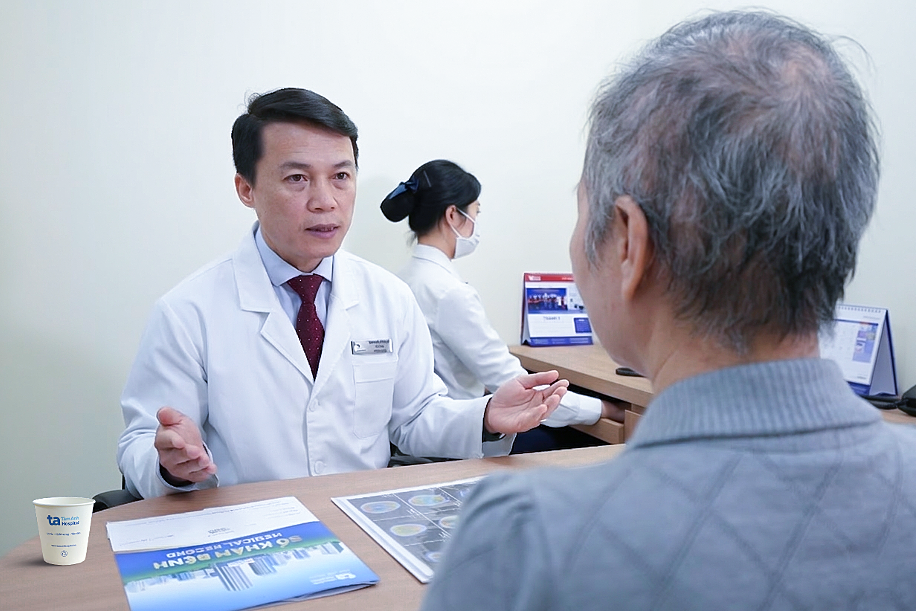 |
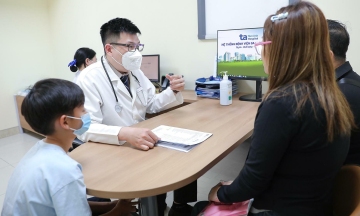
Doctor Son consults with Trang. Photo: Tam Anh General Hospital |
Doctor Son consults with Trang. Photo: Tam Anh General Hospital
During the surgery, the surgeon reconstructed the right breast with an implant, preserved the nipple, and ensured symmetry between both breasts. Intraoperative frozen section and post-operative pathology results showed the right breast tissue was benign, primarily fibrosis and fibrocystic changes, with no malignant cells detected. All 8 removed right axillary lymph nodes tested negative for cancer, and all surgical margins were clear of disease.
Doctor Son stated that post-operative histology revealed no residual malignant cells in the breast tissue or lymph nodes. Trang achieved a pathological complete response (pCR), a crucial prognostic factor in the treatment of triple-negative breast cancer.
Post-operatively, Trang's health stabilized. At her one-month follow-up, the surgical wound was dry and healed well, and she was eating and living normally. The patient will continue with immunotherapy treatment for one year.
Globocan 2022 reported breast cancer as the most common newly diagnosed cancer in Vietnam in 2022, with approximately 24,500 cases (13,6% of all cancer cases) and accounting for 8,3% of annual cancer deaths.
Doctor Son recommended that women regularly perform breast self-examinations or undergo periodic breast screenings at least every 6 months to detect any breast abnormalities and ensure timely treatment. Breast cancer screening should begin at age 40, or potentially earlier at age 35 if there is a family history of breast cancer.
Hieu Nguyen
*Patient's name has been changed
| Readers can submit questions about cancer here for doctors to answer |