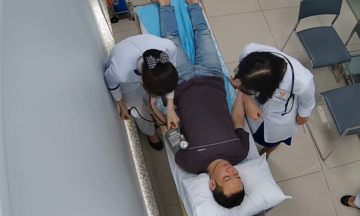
Dr. Duong Quang Huy, head of the Andrology Unit at Tam Anh General Hospital in District 8, Ho Chi Minh City, reported that Toan's genital warts were located in a hidden area, making them difficult to detect. Toan experienced no pain or itching and maintained a normal lifestyle, thus remaining unaware of the condition.
Dr. Huy explained that genital warts, or human papillomavirus (HPV) infection, typically do not cause immediate pain. However, long-term presence of these warts carries a risk of complications, including penile or anal cancer. Over time, small lesions can develop into large, cauliflower-like growths that may cover the glans and base of the penis. These growths are prone to scratching, bleeding, discharge, and can lead to bacterial superinfection and necrosis of the genital skin. Furthermore, inflammation of the seminal ducts can reduce sperm motility and increase the rate of abnormal sperm, potentially causing infertility.
The doctor prescribed electrocautery to temporarily remove the warts. Since the virus remains in the body, patients require scheduled follow-up appointments to check for new lesions. Toan's fiancee was also examined and fortunately had not contracted the infection. During treatment and until the doctor confirms no new warts appear, the couple must abstain from sexual intercourse or use condoms. They also need to receive the nine-strain HPV vaccine to protect against other HPV types they may not have contracted and to reduce the risk of recurrence.
According to Dr. Huy, genital warts are among the most common sexually transmitted infections (STIs) today. The condition is caused by the HPV, primarily types HPV-6 and HPV-11. Patients can be infected with multiple strains simultaneously, including high-risk types that can lead to cancer. In women, HPV is the main cause of cervical cancer.
Beyond unsafe sexual contact, HPV can also spread through mucosal abrasions via direct contact with affected skin, from mother to child, or by sharing personal items contaminated with virus-containing fluids. The incubation period typically ranges from two to nine months. Initially, warts appear as small, soft, pale pink or gray lesions, which may or may not have a stalk. These lesions then gradually enlarge, merging into patches resembling a cockscomb or cauliflower.
There is currently no cure to completely eradicate HPV. Treatment methods primarily focus on removing the warts through medication, electrocautery, laser ablation, or liquid nitrogen cryotherapy. Late detection prolongs treatment, often requiring multiple cauterization sessions, which significantly increases the risk of unsightly scarring on the penis and makes warts prone to recurrence after removal.
According to Dr. Huy, HPV vaccination is the most effective way to prevent genital warts for both men and women, ideally before their first sexual encounter. Additionally, men and women should practice safe sex, maintain monogamous relationships, and avoid sharing personal items. It is crucial to seek medical attention at a hospital if any unusual symptoms appear in the genital area and to refrain from self-medicating with unverified topical treatments, which could worsen the condition.
Dinh Lam
*Patient's name has been changed