Dat did not experience typical urinary symptoms like painful or frequent urination, fever, or urinary tract infections. His family only sought medical attention when, as he grew older, his penis showed signs of underdevelopment.
Dr. Nguyen Ngoc Tan, from the Department of Urology and Andrology at Tam Anh General Hospital, Hanoi, explained that Dat's urethral opening was displaced to the underside of his penis, a condition identified as hypospadias. This is a congenital defect that develops during the fetal stage due to incomplete urethral development. Depending on its severity, hypospadias can cause urine to spray erratically and may affect reproductive function and psychological well-being in adulthood.
Surgeons reconstructed the urethra, repositioning the urethral opening to its correct anatomical location. Following the operation, Dat's recovery was stable, with no complications such as bleeding or infection. Urine was drained via a catheter, keeping the surgical area dry and clean for optimal healing. After 12 days, Dat had his catheter removed and was discharged, now able to urinate easily through the newly created opening. He will require regular follow-up appointments.
 |
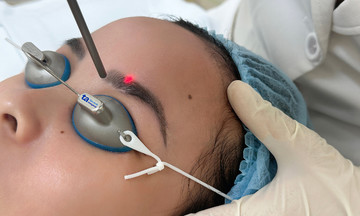
Surgery to correct hypospadias in a young boy. *Photo: Tam Anh General Hospital* |
Dr. Tan advises parents to carefully observe the genitalia of male children from their early years. If they notice the urethral opening is not at the tip of the penis, urine sprays abnormally, or the foreskin has an unusual shape, parents should seek early consultation with a urology and andrology specialist.
Thu Giang
*Patient's name has been changed