Doctor Nguyen Le Quy, from the Department of Neonatology at Tam Anh General Hospital Hanoi, states that babies born en caul, also known as a "veiled birth", occur in an estimated one out of 80,000 births.
After being gently removed from the amniotic sac, the baby boy had a weak cry, bluish skin, reduced muscle tone, and severe respiratory distress. Doctors immediately resuscitated him on the spot, providing respiratory support with a continuous positive airway pressure (cpap) machine, before transferring him to the neonatal intensive care unit (NICU).
Premature infants are particularly vulnerable to respiratory system damage due to a lack of lung-maturing surfactant, which can lead to alveolar collapse and acute respiratory distress. The baby also faced risks such as brain hemorrhage, sepsis, and necrotizing enterocolitis.
The baby boy was placed under level 1 care in the NICU. Doctors implemented a "golden hour" protocol, performing critical interventions within the first 60 minutes after birth to stabilize his respiration, circulation, and body temperature.
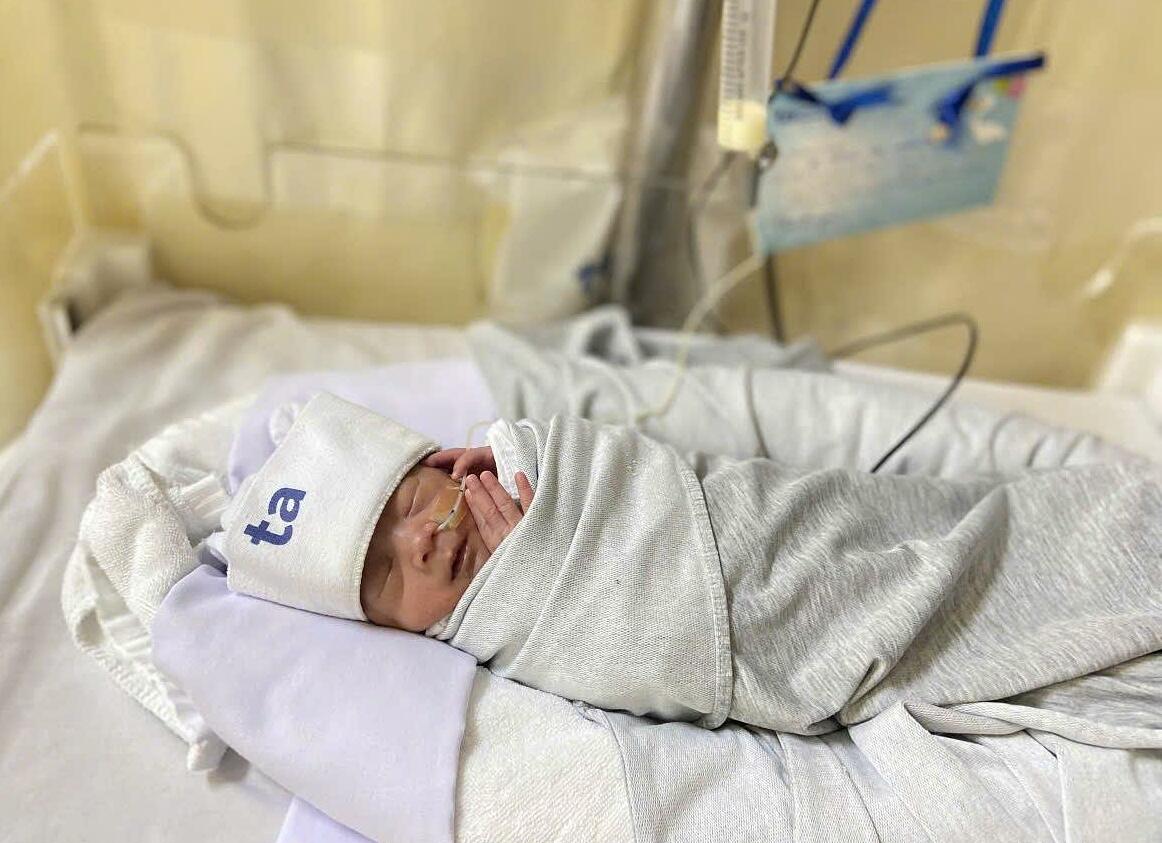 |
The baby received care in the NICU of the Department of Neonatology. *Photo: Tam Anh General Hospital*
To prevent periventricular intraventricular hemorrhage, the premature baby received care focused on minimal stimulation and invasive procedures to protect his brain. The incubator environment was kept with minimal light and noise, creating a quiet space that mimicked the womb. Doctors closely monitored his heart rate, breathing, and blood oxygen levels.
The baby developed jaundice and required continuous phototherapy. He experienced short apneic episodes with cyanosis, caused by an immature central nervous system controlling respiration. Doctors administered caffeine medication to stabilize his breathing cycle, adjusted the ventilator pressure, and protected his lungs.
In the initial days, the baby received intravenous nutrition. Concurrently, doctors gave him small amounts of pasteurized breast milk via a nasogastric tube to support gut function. After more than one month, he tolerated the milk well.
His lungs recovered, and the apneic episodes gradually ceased. The baby no longer needed mechanical ventilation and had his nasogastric tube removed in his 7th week of treatment. On the day of his discharge, he weighed approximately 2,9 kg, had pink skin, and was breastfeeding independently.
Doctors from the Department of Neonatology recommend that premature infants continue to receive close care and monitoring after discharge. Parents and caregivers should practice hand hygiene before contact with the baby and regularly disinfect surfaces and the baby's belongings.
Premature babies should be breastfed to receive easily digestible nutrients, suitable for their immature digestive system, and to boost immunity. The baby requires regular specialized follow-ups for doctors to continuously assess physical development, neuro-motor milestones, and hearing.
Thuy Hanh
| Readers can submit questions about pediatric illnesses here for doctors to answer. |