Gym is a sport that helps strengthen muscles, reduce fat, and improve physique and overall health. However, high-intensity training in hot weather conditions, such as summer, or pushing the body beyond its limits can increase the risk of rhabdomyolysis, a dangerous medical emergency.
Skeletal muscle is the main type of muscle in the body, attached to bones via tendons, enabling movements like walking, standing, running, gripping, or lifting objects. Dr. Nguyen Thi Oanh, a Second Degree Specialist from the Department of Musculoskeletal Medicine at Tam Anh General Hospital Hanoi, explains that when gym-goers push their muscles to overexertion, skeletal muscles can suffer widespread damage and destruction. This releases internal substances such as myoglobin, creatine kinase (CK), potassium, and phosphorus into the bloodstream, a condition known as rhabdomyolysis.
At high concentrations, these intracellular muscle substances can accumulate in the renal tubules, leading to acute kidney failure, electrolyte imbalance, cardiac arrhythmia, shock, and compartment syndrome. This condition can even be life-threatening if not treated promptly.
Dr. Oanh advises gym-goers to adhere to several principles to prevent rhabdomyolysis, especially when exercising during hot summer months.
Exercise within your limits
Individuals new to the gym or returning after a long break should begin with light exercises, avoiding sudden increases in intensity. Do not force your body to exceed its endurance threshold, particularly during weightlifting, squats, push-ups, pull-ups, or high-intensity interval training (HIIT), as this can cause severe muscle damage.
Hydrate adequately and replenish electrolytes
High temperatures cause the body to lose significant water through sweat, reducing blood flow to muscles and impairing thermoregulation. This increases the risk of rhabdomyolysis and kidney failure. Individuals should drink water before, during, and after exercise, without waiting until thirsty. Supplement with appropriate electrolyte solutions as guided to replace lost sodium and minerals. Avoid drinking beer after exercise, as it can worsen dehydration.
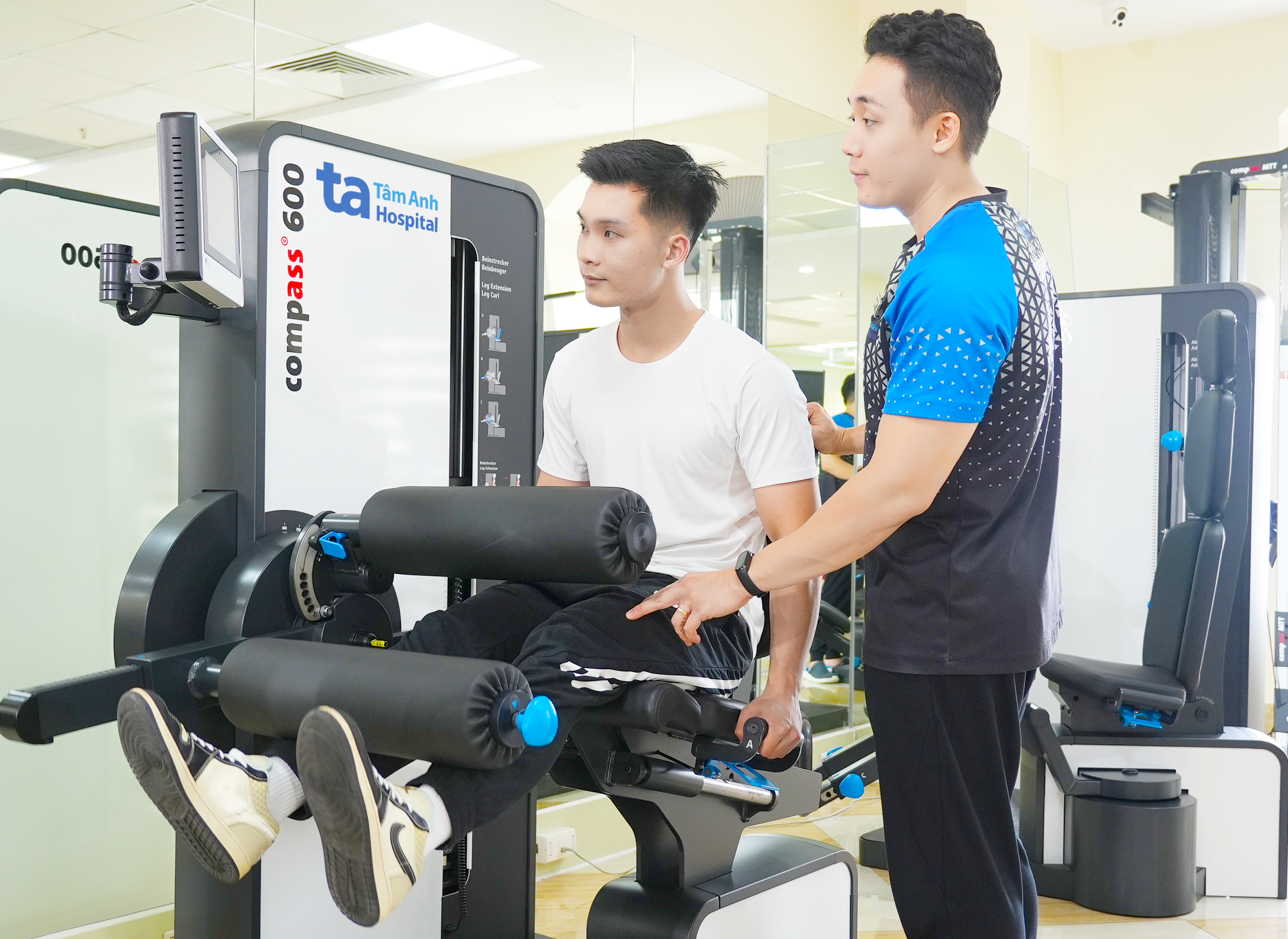 |
A technician guides a gym-goer through a personalized training program. Photo: Tam Anh General Hospital |
A technician guides a gym-goer through a personalized training program. Photo: Tam Anh General Hospital
Avoid exercising in overly hot environments
Many gym-goers often wear thick jackets or exercise in hot spaces to increase sweating and lose weight quickly. However, this raises body temperature, increasing the risk of heat stroke and rhabdomyolysis.
Gym-goers should choose well-ventilated gyms with air conditioning or good ventilation. Avoid outdoor workouts between 10 AM and 4 PM, when temperatures are highest. Clothing should be loose-fitting and sweat-wicking to help the body dissipate heat effectively.
Ensure adequate nutrition
Individuals should maintain a balanced diet, consuming enough protein for muscle regeneration, carbohydrates for energy, and green vegetables and fruits for vitamins and minerals.
Do not diet excessively, as muscles require energy and nutrients for post-workout recovery. Fasting for weight loss can lead to deficiencies in carbohydrates, protein, and essential micronutrients, increasing the risk of muscle damage during high-intensity activity.
Get proper rest
Muscle recovery primarily occurs during rest. Continuous training for many days without sufficient recovery time can lead to the accumulation of micro-injuries in the muscles, increasing the risk of rhabdomyolysis and other injuries.
Individuals should aim for 7-9 hours of sleep each night and incorporate rest days into their training schedule. If experiencing severe muscle soreness or persistent fatigue, reduce intensity or take a break to allow the body to recover.
Dr. Oanh notes that during gym workouts, the appearance of signs such as severe muscle pain, cramps, muscle swelling or tightness, significant muscle weakness, reduced urination, dark brown or tea-colored urine, fever, nausea, or extreme fatigue could signal rhabdomyolysis. Immediate medical attention at a hospital is crucial for timely examination, diagnosis, and treatment. Doctors will perform a clinical examination, order muscle enzyme (CK) tests, urinalysis, and check kidney function to assess the severity of rhabdomyolysis.
Mild rhabdomyolysis can be treated with fluid infusion, combined with rest and monitoring of urine output, kidney function, and electrolytes. Most patients recover within a few days to one week with timely treatment, showing decreasing muscle enzyme levels and no complications. Severe rhabdomyolysis causing kidney failure requires emergency dialysis to temporarily replace kidney function. If compartment syndrome occurs as a complication, patients may need fasciotomy surgery to relieve pressure and preserve muscle and limb function.
Thanh Long