The incident occurred approximately 4 hours after takeoff on 4/5, a representative from Bach Mai Hospital said. The man suddenly developed ear pain, paralysis on the left side of his face, and difficulty speaking. Faced with this situation, the flight crew considered an emergency landing at an intermediate airport and announced a search for medical professionals to assist.
Professor Mai Duy Ton, director of the Stroke Center at Bach Mai Hospital, who was on the flight, approached and conducted an examination of the patient. The doctor determined the patient had peripheral facial nerve paralysis, completely ruling out the risk of acute stroke.
Based on this diagnosis, he used corticoid medication he carried to provide on-the-spot treatment, continuously monitored vital signs, and advised the captain to maintain the original route. The expert's advice prevented the flight from diverting, avoiding disruption to the schedules of hundreds of people on board. By the time the plane landed at Charles de Gaulle Airport, the male passenger's health had stabilized.
 |
Professor Mai Duy Ton (wearing a grey shirt, standing in the middle) takes a photo with the flight crew. Photo: Dieu Hien |
Sharing his decision to provide emergency aid, Professor Ton considered assisting people in community emergencies a professional responsibility. Associate Professor Dao Xuan Co, the hospital's director, stated that the incident clearly demonstrated the doctor's professional competence and medical ethics. Hospital leadership also emphasized the strategy of developing medical staff into medical ambassadors in the context of international integration.
Peripheral facial nerve paralysis is common at all ages. Medical experts warn that many people often become complacent in the summer because they believe hot weather does not cause cold-induced illnesses.
However, habits like suddenly changing temperature environments, stepping directly from hot sun into an air-conditioned room, or allowing direct airflow to the head and neck area, can easily cause blood vessels to constrict.
This process causes local ischemia, nerve inflammation, and leads to facial paralysis with a series of symptoms: facial asymmetry, crooked mouth, inability to close eyes completely, water spilling from the corner of the mouth when drinking, slurred speech, inability to whistle, accompanied by symptoms of ear pain and reduced taste.
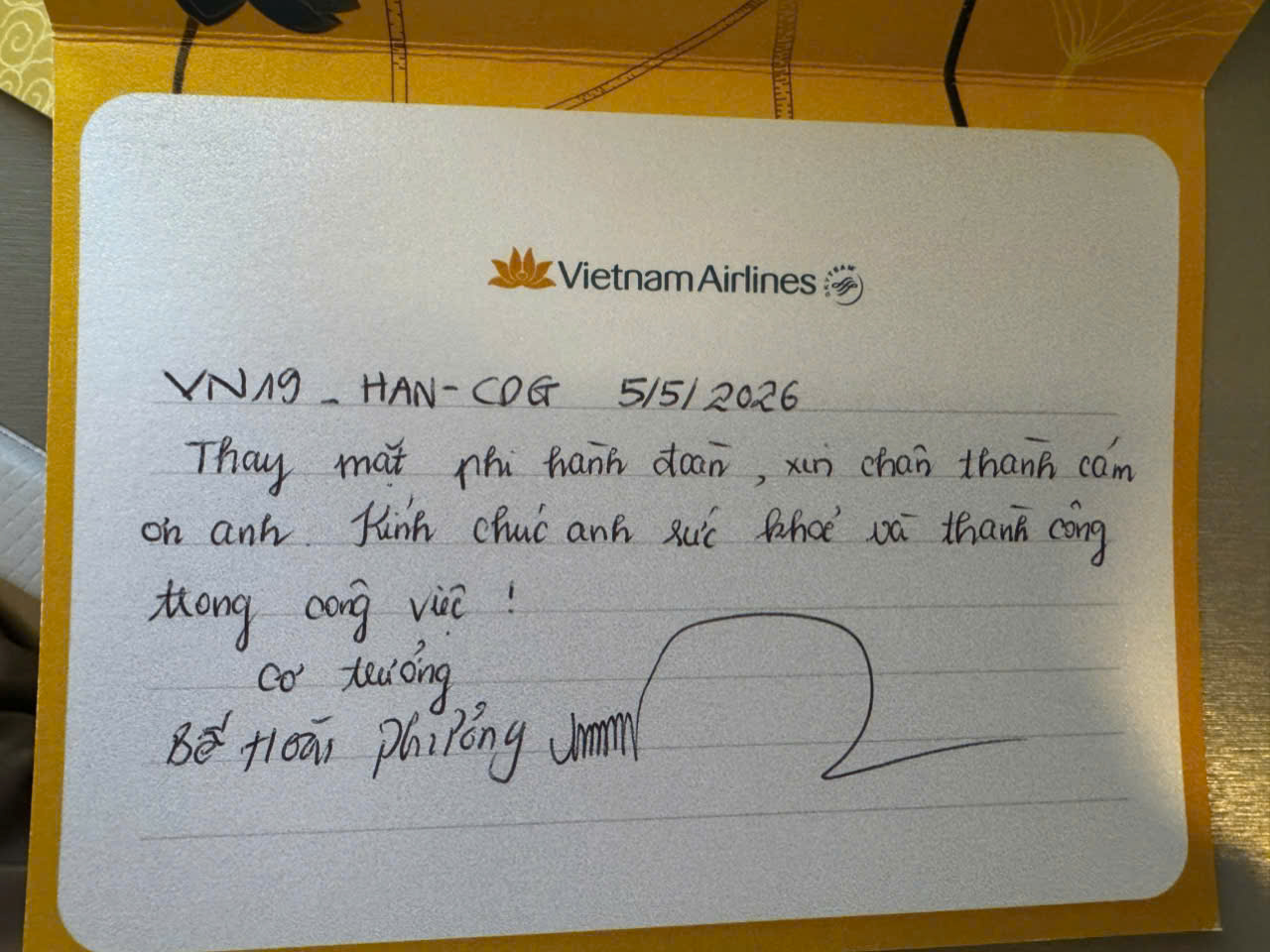 |
The captain of flight VN19 sent a thank you letter to Professor Mai Duy Ton. Photo: Dieu Hien |
Le Nga