


Esophageal cancer is considered the most devastating cancer of the digestive tract. It is characterized by rapid progression, silent early development, and early lymph node metastasis, making it a leading cause of death among digestive diseases. In 2022, the Global Cancer Organization reported over 3,600 new cases and approximately 3,400 deaths from this disease in Vietnam. On 5/5, Associate Professor, Doctor Kim Van Vu, Head of Digestive Surgery 1 at K Hospital, highlighted this critical issue, announcing the successful intervention for two male patients, aged 48 and 61, who presented with late-stage esophageal tumors.
The two men were admitted with prolonged difficulty swallowing; one had required a gastrostomy for nutrition, while the other had just completed a course of chemoradiotherapy. Doctor Vu noted that patients often miss the "golden window" for treatment because the body does not show clear symptoms in early stages. Consequently, 70% of patients arrive at medical facilities when tumors have already enlarged and spread. This disease primarily affects middle-aged men, especially those with a history of smoking and heavy alcohol consumption.
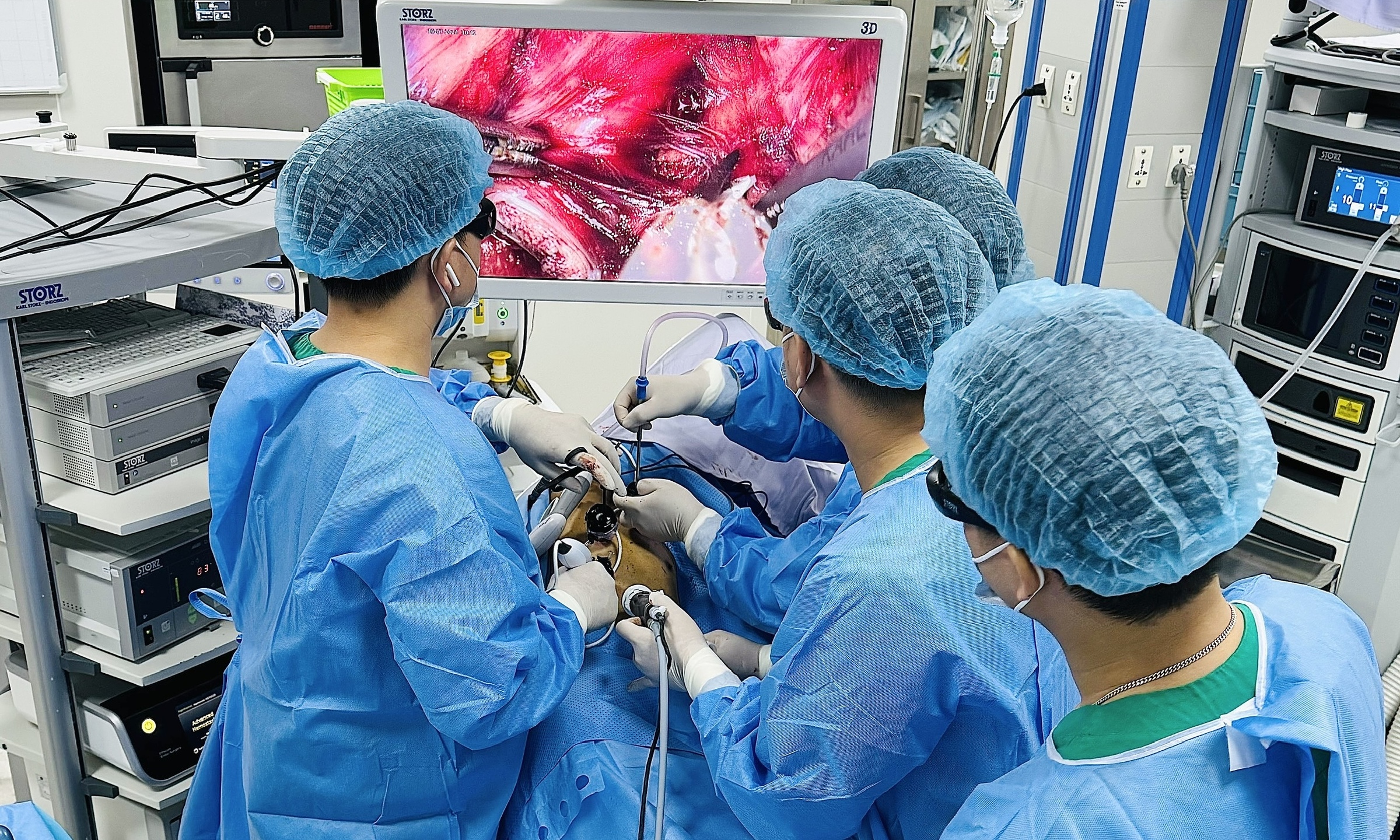 |
Doctors perform a 3D endoscopic esophagectomy combined with lymph node dissection of three regions: neck, chest, and abdomen. Photo: Thai Ha |
For these two complex cases, the K Hospital team opted for an advanced surgical technique: esophagectomy with lymph node dissection of three regions—the neck, chest, and abdomen. This specialized method is frequently utilized in countries with advanced medical systems such as Japan and South Korea. Doctor Nguyen Duc Duy, the lead surgeon, highlighted that the greatest challenge during the procedure involves dissecting lymph nodes around the laryngeal nerve. Accidental severance of this nerve can lead to hoarseness, voice loss, swallowing disorders, and aspiration, potentially resulting in pneumonia. Despite these risks, the team successfully managed complications, enabling both patients to recover quickly and begin consuming liquid food on the third day after the major surgery.
Experts advise proactive annual cancer screenings, particularly for individuals with genetic predispositions, obesity, or frequent alcohol and tobacco use. Patients with gastroesophageal reflux disease (GERD) should consult a doctor for definitive symptom treatment. Anyone experiencing persistent difficulty or discomfort while swallowing should seek immediate medical attention.
Le Nga


