Five years ago, Mrs. Mai underwent kidney stone lithotripsy at a medical facility. A subsequent complication was a ureteral stricture, which obstructed urine flow, leading to prolonged hydronephrosis. She sought examination at Tam Anh General Hospital, Ho Chi Minh City, experiencing severe abdominal pain.
Doctor Le Phuc Lien, Head of the Female Urology Unit at the Center for Urology, Nephrology, and Andrology, diagnosed the cause as a severe stricture in the ureter near the bladder. This resulted in chronic hydronephrosis, urinary tract infection, and severe urinary retention. Doctor Lien explained that merely placing a temporary catheter to drain urine carried a high risk of recurrent ureteral stricture. The definitive solution involved surgically excising the narrowed segment of the ureter and re-implanting the ureter into the bladder.
Mrs. Mai's medical history, including multiple cesarean sections, caused uterine adhesions to the abdominal wall. Previous liposuction and breast implant surgeries also resulted in severe inflammatory adhesions within the abdominal cavity, and her bladder was positioned low. These factors created a very narrow and deep surgical field, making open or traditional laparoscopic surgery difficult. Consequently, Doctor Lien opted for ureteral reconstruction using the Da Vinci Xi robot.
The robotic system, equipped with 4 flexible arms capable of 540-degree rotation, allowed surgeons to navigate through the broad ligament of the uterus and create an optimal surgical field with two supporting arms. The 4th robotic arm gently retracted the uterus to one side, providing precise access to the narrowed ureteral segment for excision, suturing, and successful re-implantation into the bladder.
 |
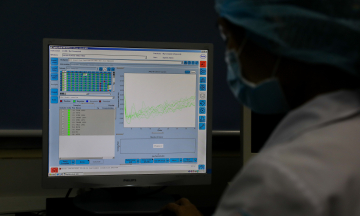
Doctor Lien and his team performing ureteral reconstruction on Mrs. Mai using the Da Vinci Xi robot. Photo: Tam Anh General Hospital |
Following the surgery, Mrs. Mai experienced a rapid recovery with minimal pain and a small incision. Her urine flow improved significantly, and kidney function showed improvement. She was discharged after 4 days and scheduled for regular follow-up appointments.
Ureteral stricture is a condition where the tube transporting urine from the kidney to the bladder narrows or becomes blocked, impeding urine flow and causing hydronephrosis. Without timely treatment, this condition can lead to renal colic, recurrent urinary tract infections, and even kidney failure.
According to Doctor Lien, ureteral strictures can be congenital or acquired. They commonly occur after ureteral stones, compressive tumors, retroperitoneal fibrosis, man tinh infections, or as complications of previous interventions or surgeries. Depending on the severity of the stricture, doctors may recommend placing a ureteral stent to dilate the narrowed area or performing ureteral reconstruction in severe cases.
To prevent ureteral strictures, doctors recommend maintaining adequate hydration, avoiding holding urine, adopting a healthy lifestyle, eating a balanced diet, and limiting foods high in salt and fat to reduce the risk of kidney stones. Individuals with a history of urinary tract diseases or previous abdominal or pelvic surgeries should undergo regular check-ups at a specialized hospital for early detection and management of any abnormalities.
Ha Thanh
*Patient's name has been changed