Ms. Phuc had her left knee replaced with an artificial joint three years prior. She returned to Tam Anh General Hospital, Ho Chi Minh City, for a replacement of her other knee.
Master, Doctor, Level I Specialist Dang Khoa Hoc, Head of the General Orthopedic Trauma Department, noted the surgery presented challenges due to Ms. Phuc's underlying conditions: diabetes, goiter, stage three kidney failure, and 4 previously placed cardiovascular stents. The patient had stopped anticoagulant medication and had coronary artery disease with stents, increasing the risk of intraoperative bleeding, myocardial infarction, or other cardiovascular complications, and acute kidney failure from significant blood loss. Long-term diabetes, if not well-controlled, could delay wound healing and increase infection risk. Doctors meticulously prepared Ms. Phuc pre-operatively to stabilize her internal medicine parameters.
During this time, doctors held a multidisciplinary consultation and decided to perform knee replacement surgery for Ms. Phuc with the assistance of the artificial intelligence (AI)-integrated Cuvis-Joint robot. With its precise positioning and bone cutting capabilities, the robot helps preserve bone structure, limit soft tissue damage, and reduce blood loss during surgery. This reduces the patient's risk of infection, decreases the amount of antibiotics and painkillers needed post-surgery, and minimizes impact on kidney and cardiovascular function.
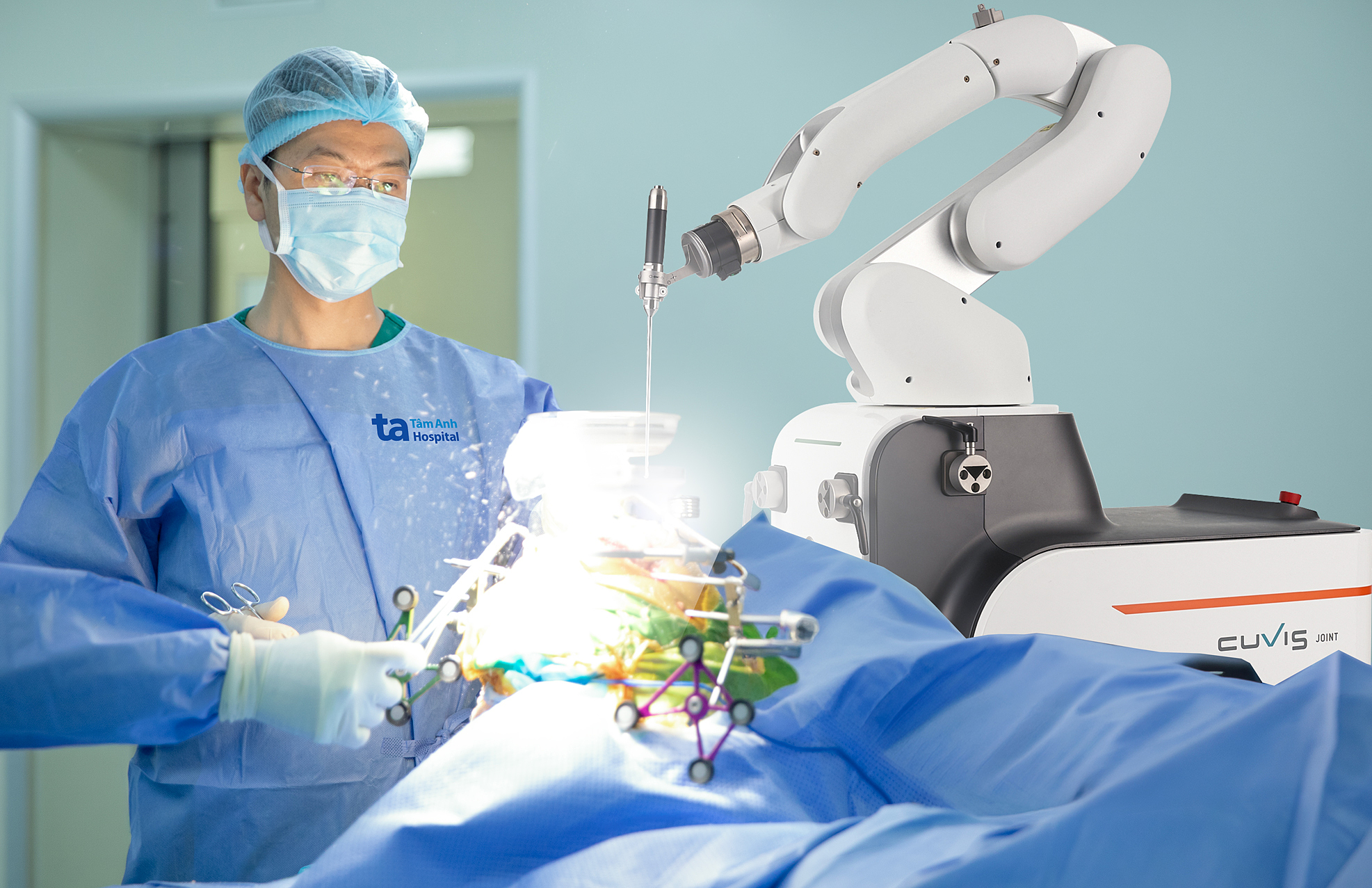 |
Dr. Hoc (left) performs knee replacement surgery for Ms. Phuc with the assistance of the Cuvis-Joint robot. Photo: Tam Anh General Hospital
Pre-operatively, doctors used the Cuvis-Joint robot's specialized J-Planner software to identify and analyze bone morphology, create 3D models, and reconstruct anatomical landmarks based on the patient's 3D CT images. During surgery, doctors could quickly and accurately determine the precise bone cutting position and direction, align the limb axis, and place the joint without invasively drilling into the femoral bone marrow cavity to attach navigation devices. The robot autonomously cuts bone according to the doctor's approved plan, avoiding the need for multiple re-cuts.
"Robot-assisted surgery led to faster recovery and less pain than last time", Ms. Phuc stated on the second day post-surgery, being discharged the following day. She needs to follow physical therapy instructions to quickly restore mobility and undergo regular health check-ups for comprehensive monitoring and treatment of her underlying conditions.
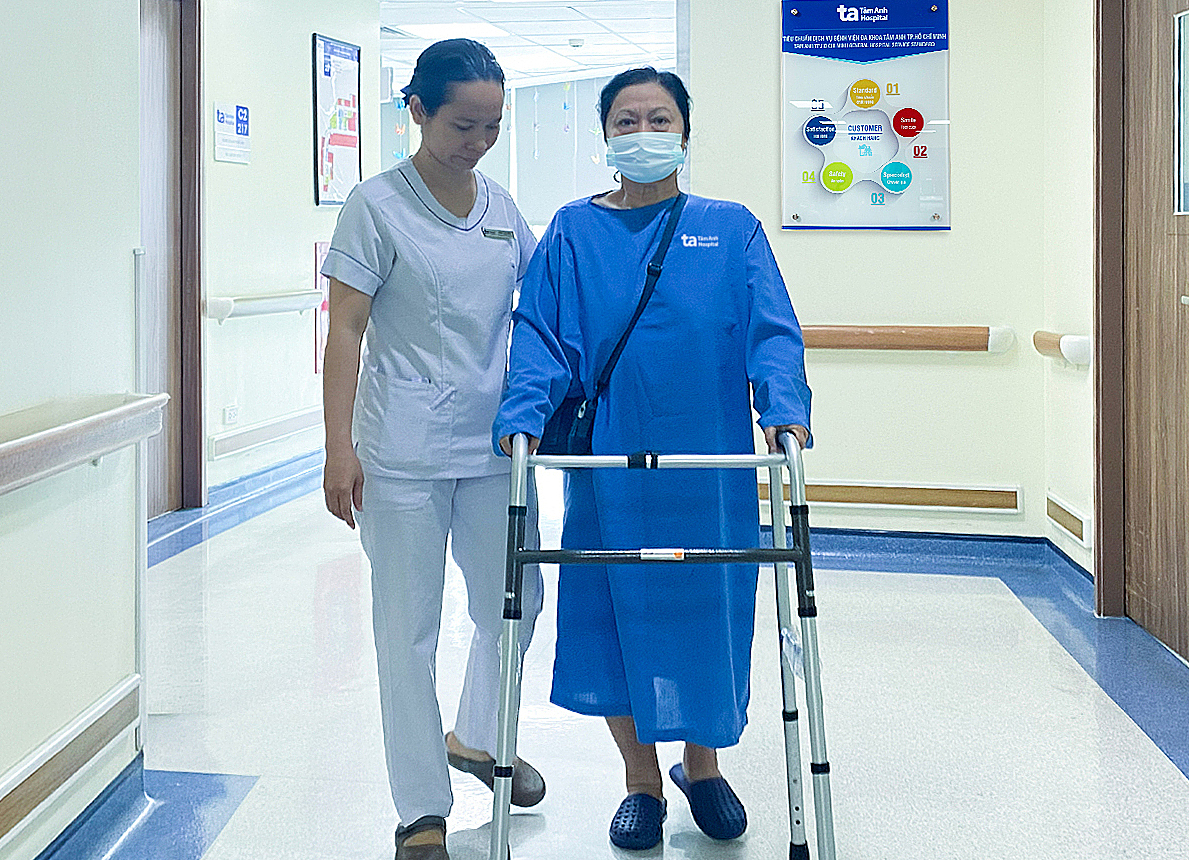 |
Ms. Phuc practices walking and prepares for discharge three days after surgery. Photo: Tam Anh General Hospital
Dr. Hoc stated that the active surgical Cuvis-Joint robot system was approved by South Korea in 2020 and has performed 35,000 surgeries worldwide without serious complications. Tam Anh General Hospital is the first hospital in Vietnam to deploy the new generation Cuvis-Joint robot, having performed dozens of minimally invasive knee and hip replacements, helping patients recover quickly, avoid complication risks, and achieve flexible joint movement post-surgery.
Phi Hong