Embryo biopsy results typically categorize embryos into two groups: euploid and aneuploid. Euploid embryos are chromosomally normal, possessing 46 chromosomes, and are generally prioritized for uterine transfer. Aneuploid embryos, conversely, lack the full 46 chromosomes, either missing or having extra. Transferring these embryos is usually not recommended due to a 98% risk of miscarriage.
Your specific case involves a 30% mosaic embryo. Mosaicism means the biopsied embryo cells contain two distinct cell lines: one normal line with 46 chromosomes, and another abnormal line with either too many or too few chromosomes.
Approximately 90% of day 3 embryos exhibit mosaicism, a rate that decreases to 15-30% by day 5 or 6. From day 0 (fertilization day) to day 3, embryos typically develop to about 6-8 cells. By day 5, they become blastocysts with approximately 100-200 cells. During this rapid cell division phase, embryos possess a self-correction mechanism that helps eliminate or reduce abnormal cells. Consequently, some embryos can continue to develop normally despite initial anomalies. Without self-correction, the embryo will cease development. If natural repair mechanisms fail, it can lead to miscarriage, stillbirth, or a child born with congenital abnormalities.
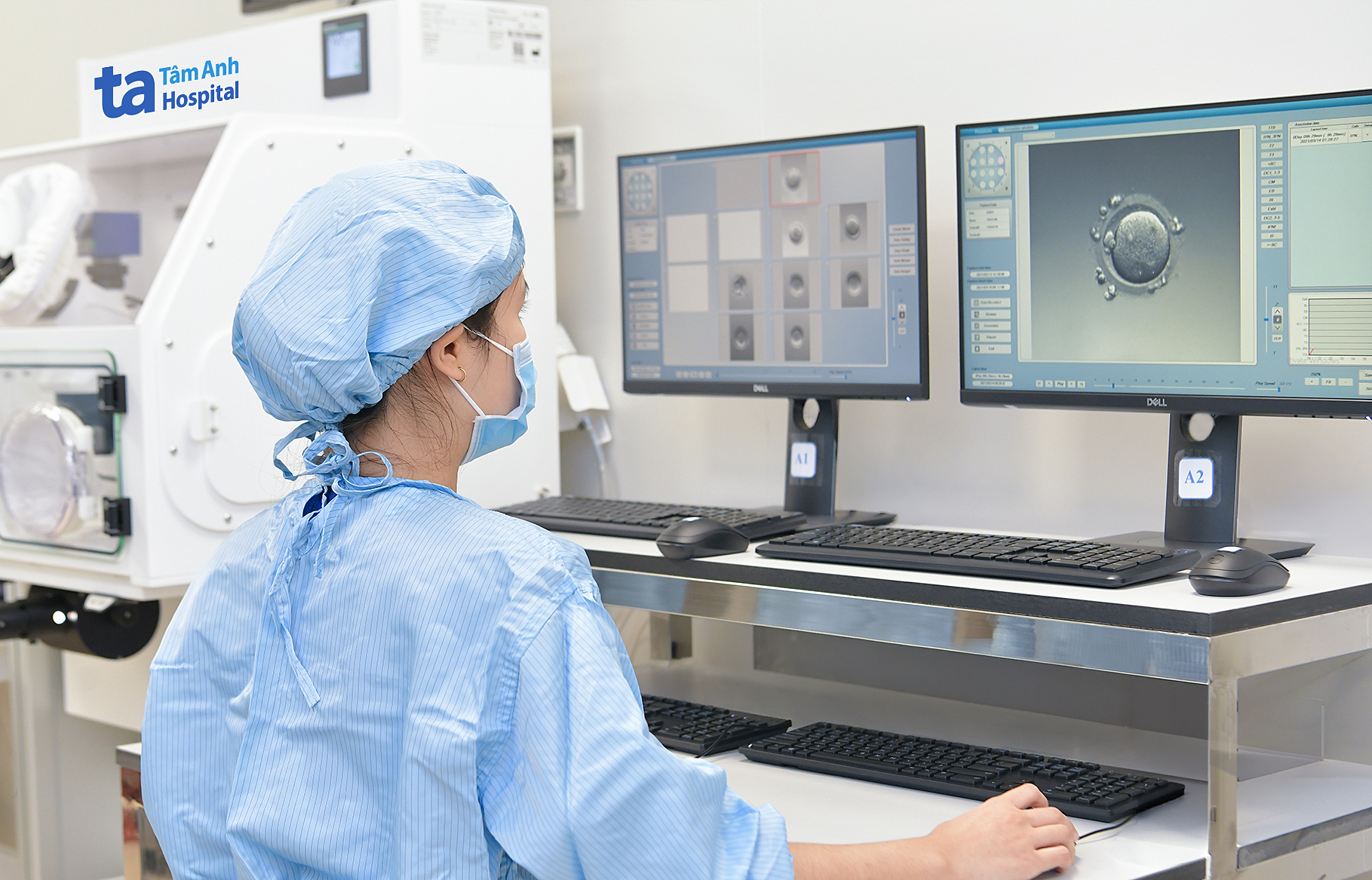 |
An embryologist assesses embryo development in a culture system equipped with a time-lapse camera and integrated AI. Photo: Tam Anh General Hospital
Mosaic embryos result from errors during early embryonic cell division. The percentage of abnormal cells in a mosaic embryo defines its mosaicism level. A level below 50% is considered low, and transferring such an embryo still offers a chance of successful pregnancy and a healthy live birth. However, the risk of miscarriage remains higher compared to embryos without cellular abnormalities.
Given that your embryo has multiple chromosomal abnormalities and a low mosaicism rate (30%), it is not an optimal candidate for transfer. This increases the risk of implantation failure or miscarriage compared to normal embryos. If circumstances allow, you and your husband should consider undergoing an additional IVF cycle to create and screen for chromosomally normal embryos, thereby improving your chances of a healthy pregnancy and birth.
If you still decide to proceed with transferring this embryo, you should consult your treating physician and a genetic counselor to thoroughly weigh the benefits and risks, and ensure close pregnancy monitoring.
Master Mai Pham Que Mai
Genetic Counselor
Center for Reproductive Assistance
Tam Anh General Hospital, TP HCM
| Readers can submit questions about infertility here for a doctor's response. |