Response:
Your skin exhibits signs such as darkening, thinning, weakening, and prolonged acne after using creams of unknown origin. These are typically complications from corticosteroid use, meaning it is not currently an appropriate time for a chemical peel.
Chemical peeling is a method that uses chemical acids like AHA, BHA, or TCA at specific concentrations to exfoliate the superficial layer of the skin. When the skin is healthy and its protective barrier intact, peeling can help improve pigmentation and surface texture. However, skin affected by corticosteroids is often thin, weak, easily red and irritated, and may be in a state of prolonged inflammation. Performing a chemical peel at this stage risks exacerbating skin damage, increasing irritation, prolonging inflammation, and leading to complications such as post-inflammatory hyperpigmentation or flare-ups of acne-like lesions.
If you proceed with a chemical peel before your skin has recovered, you may experience prolonged redness and burning, deep peeling, severe acne breakouts, more prominent dilated blood vessels, and even increased post-inflammatory hyperpigmentation, causing your skin to darken further. Some cases may also develop superinfection, skin infection, or prolonged dermatitis, making control and recovery difficult later on.
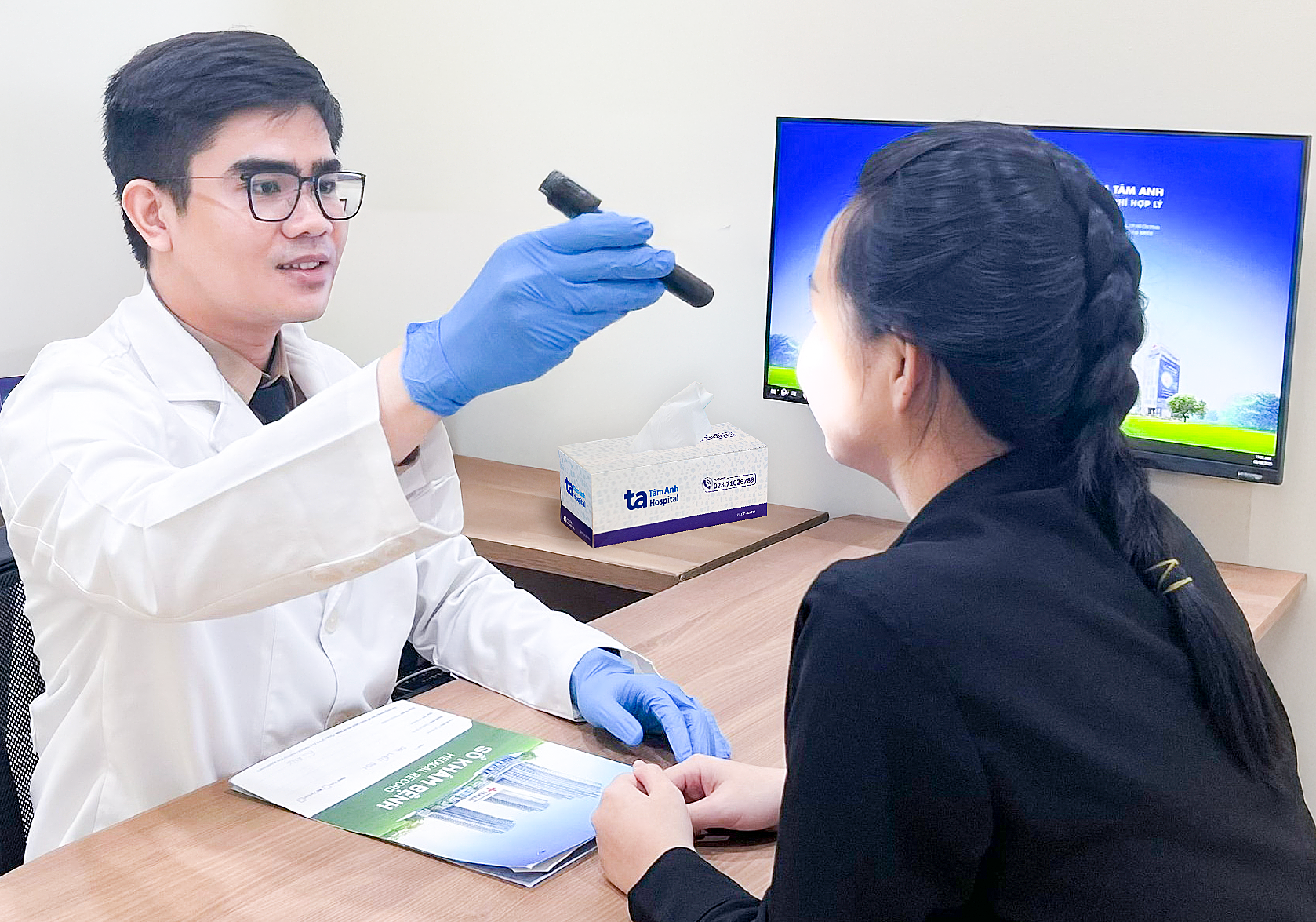 |
Doctor Tri examines a patient's skin condition. Illustrative photo: Tam Anh District 7 Polyclinic |
Doctor Tri examines a patient's skin condition. Illustrative photo: Tam Anh District 7 Polyclinic
For skin previously affected by corticosteroid abuse, the primary treatment goal is not chemical peeling, but rather restoring the skin's protective barrier and controlling inflammation. You should visit a medical facility with a Dermatology - Aesthetic Dermatology department for a doctor to examine, accurately determine the extent of the damage, and develop an appropriate and safe treatment regimen for each stage.
During this stage, you must meticulously protect your skin from the sun and limit exposure to irritants like heat and dust. Use a gentle sunscreen that is alcohol-free and fragrance-free. Additionally, maintaining a healthy lifestyle, getting adequate sleep, limiting spicy and oily foods, and drinking enough water will help stabilize your skin. Patients should also limit makeup use to avoid clogged pores, which can prolong acne.
Once the skin shows significant reduction in inflammation and redness, with no persistent burning or stinging, and the protective skin barrier has stabilized, aesthetic interventions such as chemical peels can then be considered. At that point, a specialist from the Dermatology - Aesthetic Dermatology department will directly prescribe, perform, and closely monitor the intervention to ensure skin safety.
Master, Doctor Huynh Cong Tri
Dermatology - Aesthetic Dermatology Unit
Tam Anh District 7 Polyclinic
| Readers can submit questions about dermatological and aesthetic skin conditions here for doctors to answer |