Tossing and turning nightly, constantly checking your phone, and struggling to fall asleep not only ruins the next morning but also severely impacts your overall health. Sleep deprivation, especially a lack of deep sleep, immediately affects cognitive ability and daytime performance. In the long term, the health consequences are even worse.
Doctor Tiani, a sleep psychology expert, explains: "We have seen many people go to extreme lengths to sleep, trying all sorts of 'tricks' that prove counterproductive. Excessive pressure inadvertently creates sleep anxiety, making you dread when night falls."
With consistent practice, the following simple three-step process offers a quick solution for better sleep. While most people take an average of 30 minutes or longer to fall asleep, this method can reduce that time to just two minutes.
step 1: relax your entire body
First, for a good night's sleep, the military method requires you to focus entirely on relaxation. Lie on your back in bed, gently close your eyes, and actively sense each area of your body, slowly "shutting them down."
Starting from your head and moving down to your toes, slowly relax each tense muscle group. Relax your jaw, release all pressure from your shoulders, and let your feet splay naturally. If you find yourself tensing your stomach, relax it so your abdomen rises and falls with regular breaths. Every part of your body should be in its most loose and relaxed state.
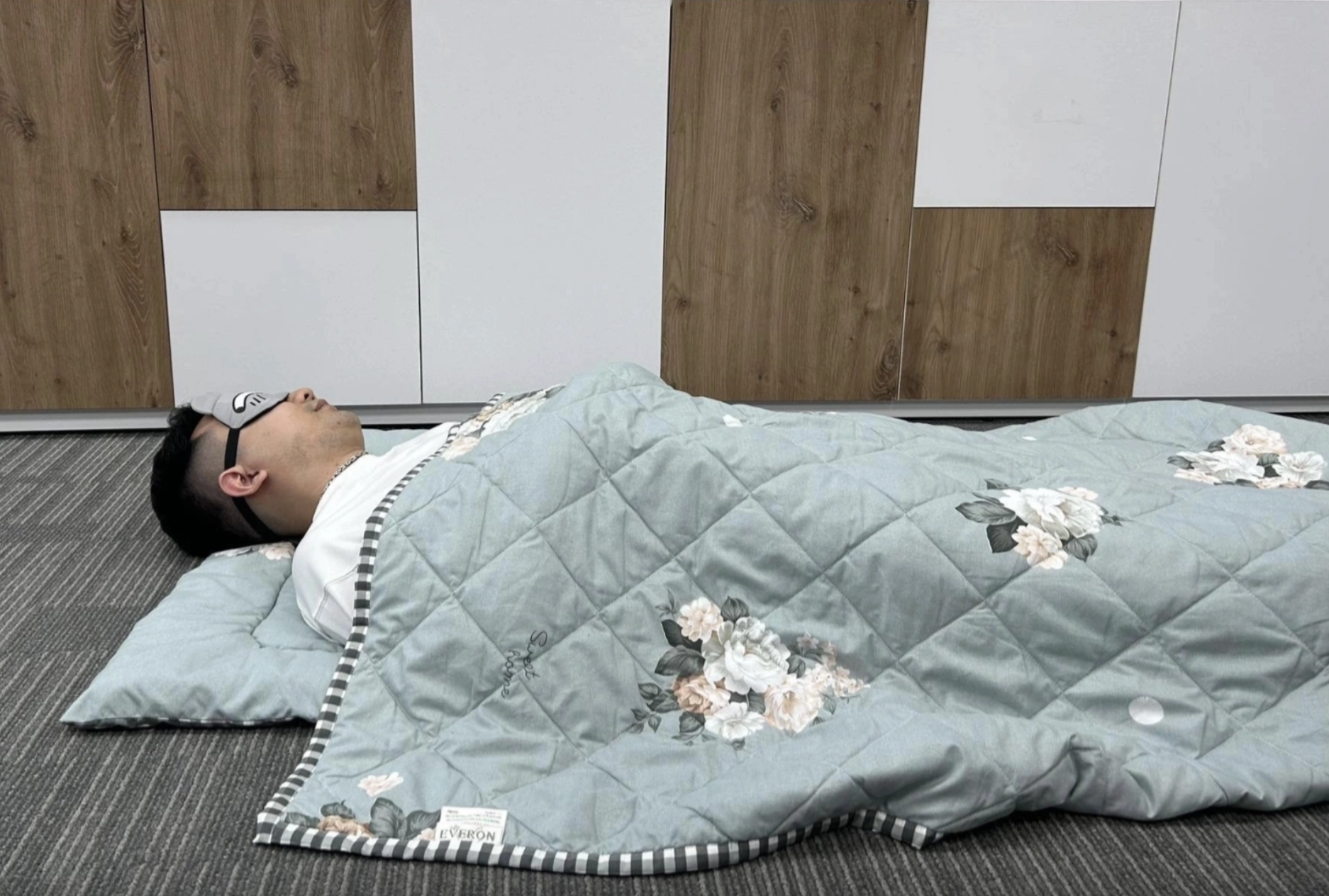 |
to fall asleep quickly, every part of your body needs to be in its most loose and relaxed state. Photo: Duc Trung |
step 2: control your breath
This is a crucial part of any sleep process. Once your body is relaxed, focus on your breathing, aiming for deeper breaths.
While lying down, take long inhales and even longer exhales. Deep breathing helps oxygen circulate more freely throughout your body, calming racing thoughts and keeping your body in a static state.
step 3: visualization technique
This is arguably the most important part of the military method: using your brain to provide guiding images for sleep.
Once your body is relaxed and your breathing is controlled, try to visualize a peaceful scene and immerse yourself in it. This could be the feeling of floating in mid-air, watching waves lap the sand, or swimming in a river. Find a "happy place" in your mind and stay there.
To fall asleep quickly, fully immerse yourself in this setting: clearly visualize the sounds, smells, and surrounding images. If your mind begins to drift to unfinished tasks or daily worries, gently guide it back to that peaceful anchor.
Proponents of this method believe that with consistent practice over six weeks, you can fall asleep in just two minutes. Current research has also demonstrated the effectiveness of this technique.
Doctor Tiani adds an additional tip for falling asleep sooner: "Only go to bed when you are truly sleepy – not just feeling tired, but experiencing actual drowsiness. It's that heavy feeling when you can barely keep your eyes open."
"We cannot impose an arbitrary time frame to force the body to produce sleep. It is best to live normally and wait until you notice signs of sleepiness; that is the right time to go to bed," the expert adds.
My Y (according to Express)