Response:
Avascular necrosis of the femoral head is a condition caused by insufficient blood supply to the femoral head, leading to the death of bone and bone marrow cells. Initially, the femoral head area gradually thins, forming bone defects. Over time, this can lead to subchondral fracture, collapse of the femoral head, secondary osteoarthritis, and loss of hip joint function, ultimately resulting in disability.
Not all patients with avascular necrosis of the femoral head require hip replacement surgery. In mild to moderate cases, patients may undergo conservative treatment with medication and physical therapy to reduce pain, slow disease progression, and maintain mobility.
For more severe cases, depending on clinical symptoms and the extent of damage visible on X-rays and MRIs, doctors may recommend various interventions. These include core decompression of the femoral head, vascularized fibular grafting, or osteotomy to remove damaged bone sections and graft new bone. Total hip replacement surgery is the final treatment option, indicated when the patient experiences severe pain, femoral head collapse, severe acetabular osteoarthritis, and when all other treatment methods have proven ineffective.
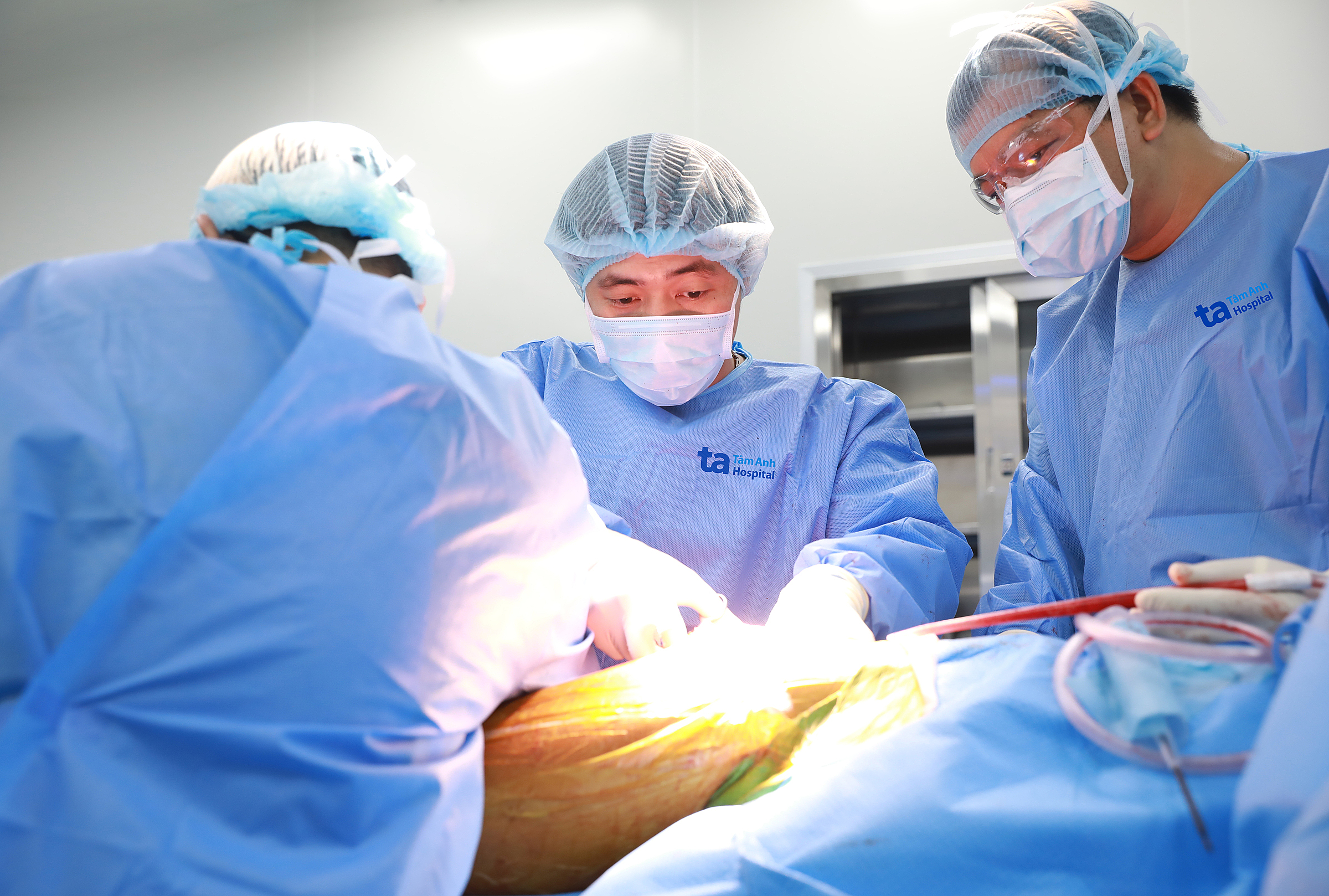 |
Doctor Loc (center) during a hip replacement surgery for a patient with avascular necrosis of the femoral head. Photo: Tam Anh General Hospital |
Doctor Loc (center) during a hip replacement surgery for a patient with avascular necrosis of the femoral head. Photo: Tam Anh General Hospital
The hip joint is one of the largest joints in the body, so hip replacement surgery carries potential risks such as infection, dislocation, deep vein thrombosis, leg length discrepancy, and artificial joint loosening over time. However, with advancements in modern medicine and technology, these risks have been mitigated.
For example, prior to surgery, doctors use specialized software for hip replacement, such as TraumaCAD or MediCAD, to select the appropriate size and orientation of the artificial hip joint for the patient's body. During surgery, minimally invasive techniques like DAA, SuperPATH, and ABMS are employed to minimize damage to tendons and muscles, ensuring stable joint fixation. This prevents the risk of dislocation while maintaining flexible range of motion. Typically, patients can walk on the first day after surgery and are discharged approximately one to two days later. An artificial hip joint usually has a lifespan of about 15-20 years or more, depending on the patient's lifestyle habits.
You should visit hospitals with specialized departments in musculoskeletal or orthopedic trauma to have a doctor accurately examine and assess the stage of your condition, and then determine the appropriate treatment.
Master of Science, Doctor Ho Duc Loc
Orthopedic Trauma Center
Tam Anh General Hospital, Ho Chi Minh City
| Readers can send questions about musculoskeletal diseases here for doctors to answer. |