Answer:
Many parents habitually burp their babies after each feeding to reduce spitting up. Helping infants release excess gas is necessary, but it is not mandatory after every feeding and cannot completely prevent spitting up.
During feeding, especially bottle-feeding, infants often swallow a certain amount of air into their stomachs. Accumulated gas can compress the baby's abdomen, leading to bloating, restlessness, and fussiness. For newborns, parents can hold the baby upright after feeding, carefully supporting the head and neck so the baby's chin rests gently on an adult's shoulder. One hand should support the baby's bottom, while the other hand gently cups and pats or rubs in a circular motion from the lower back upwards. The action must be gentle; avoid shaking or patting too hard. If the baby does not burp after a few minutes but remains calm and comfortable, the parent does not need to continue burping.
 |
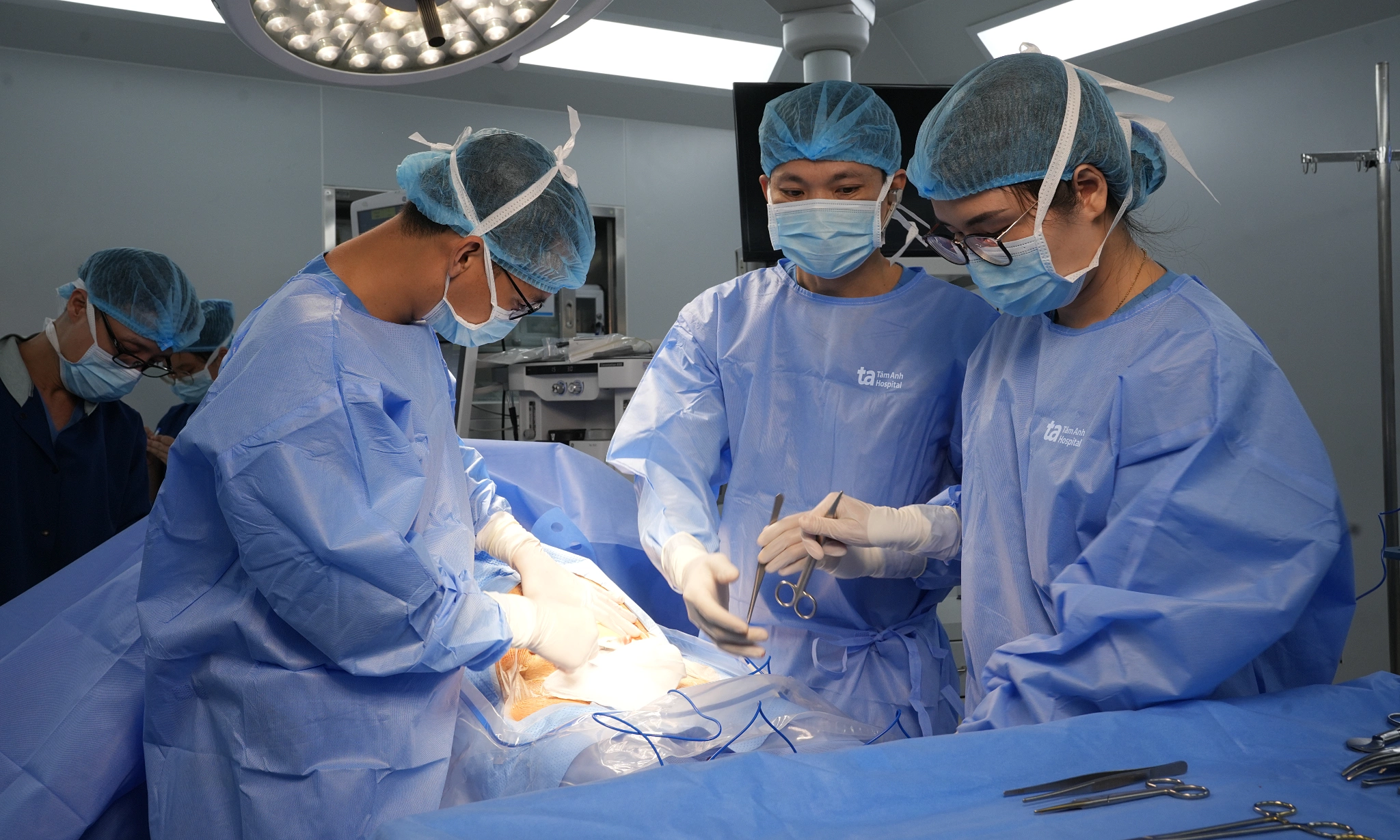
A nurse cares for a newborn. Illustration: Benh vien Da khoa Tam Anh |
It is important to note that burping does not completely prevent spitting up. An infant's digestive system is not yet fully developed; the lower esophageal sphincter is weak, and the stomach is horizontal with a small capacity. Consequently, milk can easily reflux into the mouth when the baby moves. To reduce spitting up, adjusting feeding techniques is more important than merely extending burping time.
Parents should avoid letting infants get too hungry before feeding, as the baby will swallow more air by feeding too quickly. For bottle-fed babies, parents need to keep the bottle tilted so that the nipple is always full of milk. Pay attention to the baby's cues to stop, such as turning their head, clamping their mouth shut, or pausing feeding. Babies who feed too quickly can be temporarily paused mid-feed to rest or be burped before continuing.
After feeding, hold the baby upright for about 15-20 minutes to help the milk settle in the stomach. However, when placing an infant to sleep, the paramount safety rule is to lay the baby on their back on a flat, firm surface. Parents must never place the baby on their stomach or arbitrarily elevate the head of the mattress to prevent spitting up, as these positions increase the risk of airway obstruction and sudden infant death syndrome (SIDS).
Physiological spitting up naturally decreases over time as the infant's digestive system matures. The sound of a burp is not an indicator of good digestion, as long as the baby is gaining weight normally and urinating regularly. However, if the baby projectile vomits, vomits continuously, refuses to feed, gains weight slowly, or the vomit is green or bloody, accompanied by signs of lethargy or a bloated abdomen, parents should promptly take the child to a medical facility for examination.
Dr. Mai Hai Yen
Department of Neonatology
Benh vien Da khoa Tam Anh Ha Noi