Linh's mother had been infected with cytomegalovirus (CMV), a virus capable of transmission from mother to fetus via the placenta. This infection can impact the formation of several organs, notably the eyes and heart. Both of Linh's eye lenses were entirely opaque white, and a fibrotic membrane covered the anterior surface, preventing any visual response to objects.
Children with bilateral cataracts typically undergo surgery before about 10 weeks of age to prevent missing a critical phase of visual development. Baby Linh's situation was more complex. At four months old, she weighed only 3,5 kg, suffered from grade 3 malnutrition, and had an underlying congenital heart condition. These factors complicated the anesthesia process, a mandatory requirement for pediatric surgery.
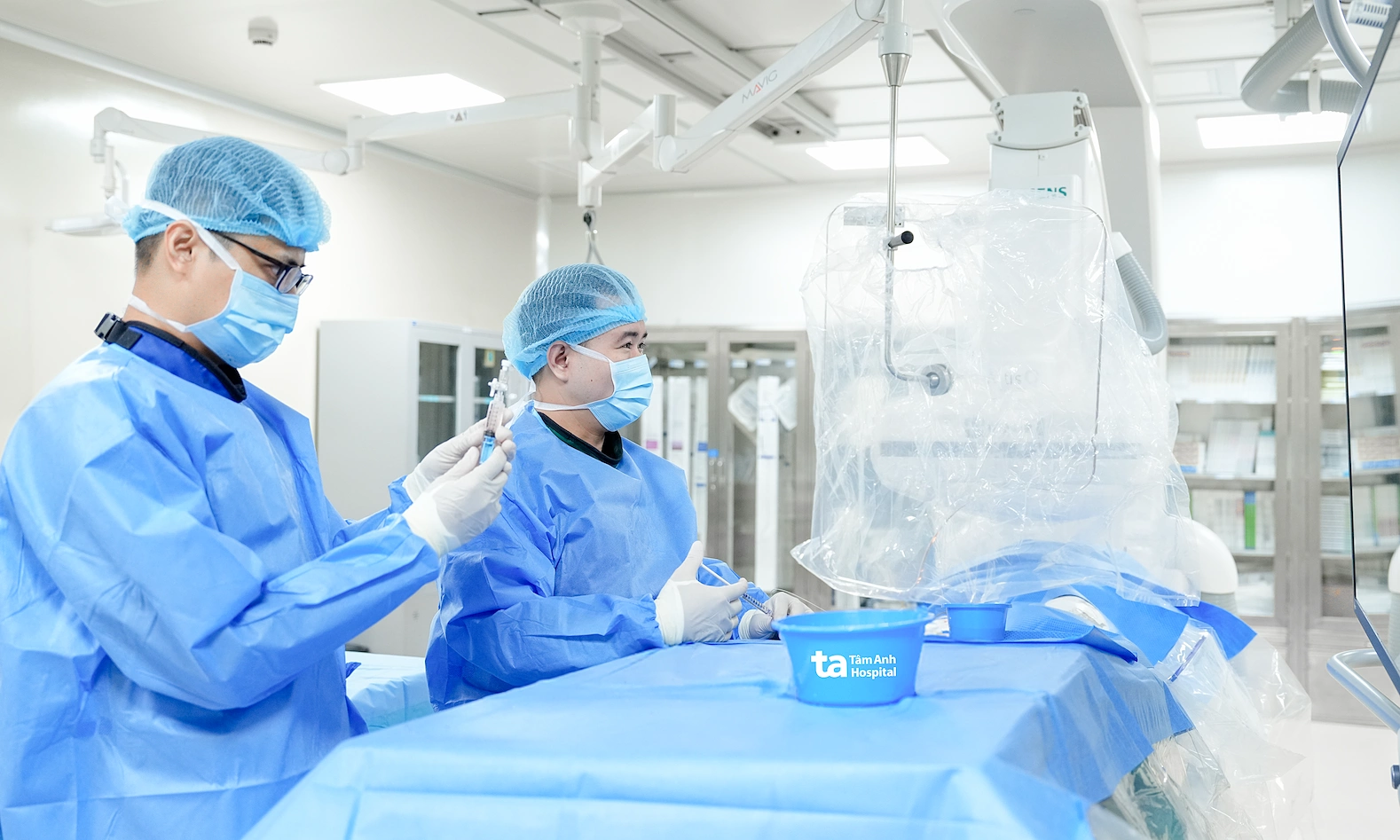
Associate Professor Doctor Nguyen Thi Thu Hien, Head of the Refractive Department at the High-Tech Eye Center, Tam Anh General Hospital Hanoi, led a multidisciplinary consultation. She also offered nutritional guidance to the family to improve Linh's health in preparation for surgery. After two months, Linh's condition stabilized, making her eligible for the operation.
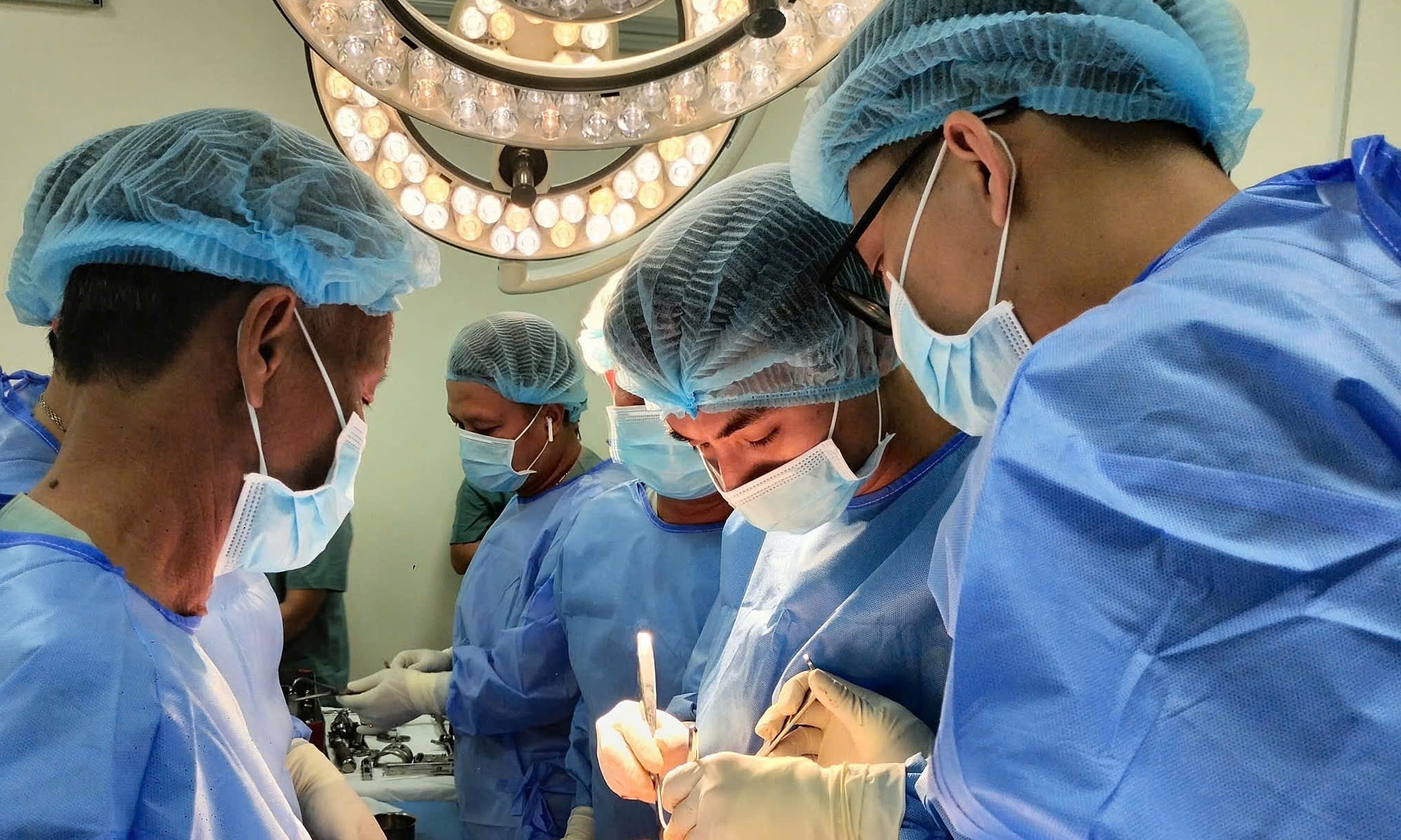
Associate Professor Hien and the multidisciplinary team decided to operate on both eyes in a single procedure. This approach, deviating from the usual separate surgeries for each eye, aimed to reduce the number of anesthesia administrations and surgical interventions, thereby minimizing stress on Linh's heart and circulatory system.
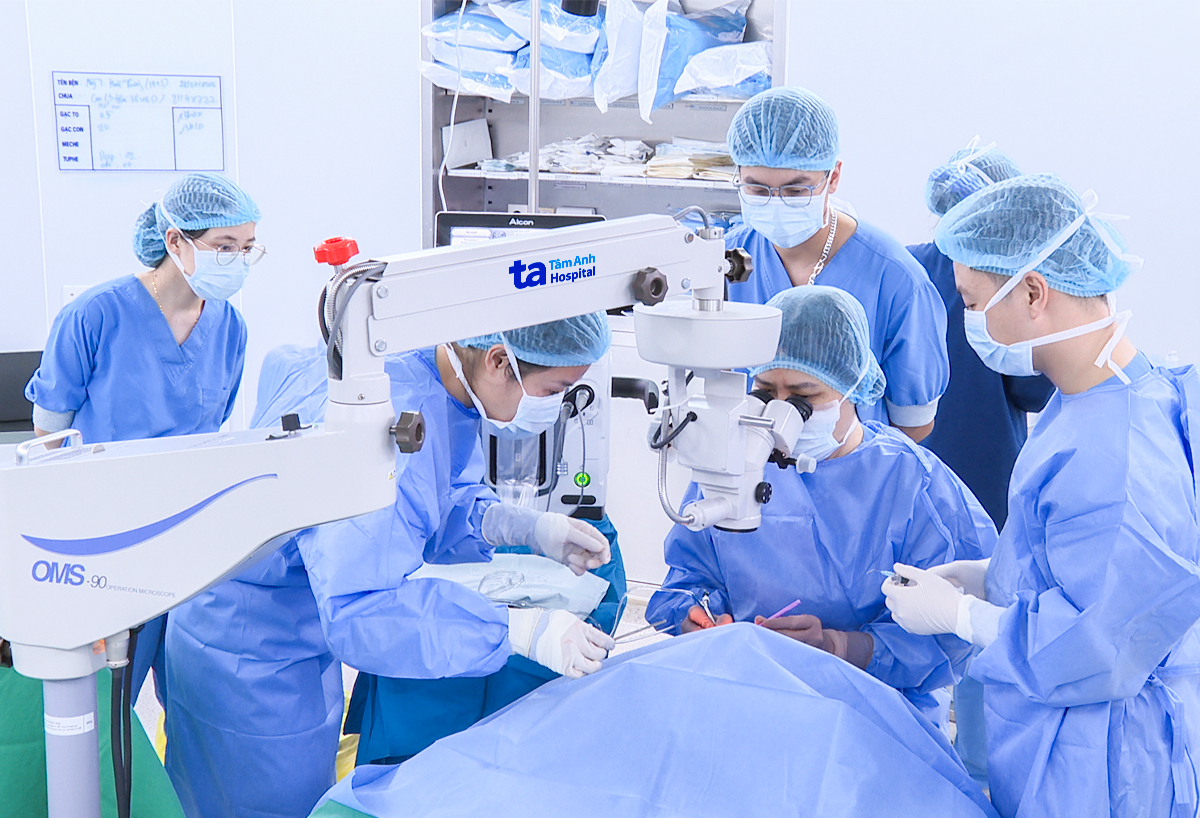 |
The surgical team performs cataract surgery on baby Linh. Photo: Tam Anh General Hospital. |
Linh's eyeball measured only about 18 mm, with extremely small eye structures, which limited the microsurgical operating space. The opaque white lens further complicated the procedure compared to adult cataract surgery, which typically takes 5-7 minutes per eye. She received deep anesthesia via a laryngeal mask, enabling the team to perform precise microsurgical maneuvers throughout the operation.
Associate Professor Hien employed a specialized surgical system to emulsify the opaque lens using ultrasound energy. The lens capsule was preserved for artificial lens implantation. Recognizing that the posterior capsule could become opaque over time and obstruct light, the team used a vitreous cutter to open this part of the capsule during the same operation. This proactive measure prevents the need for additional interventions and saves costs for the family.
The surgery concluded in about one hour, 45 minutes ahead of schedule. One month later, Linh's eyes demonstrated excellent recovery. Her corneas were clear, pupillary reflexes were good, and nystagmus significantly reduced. She also began tracking objects in front of her.
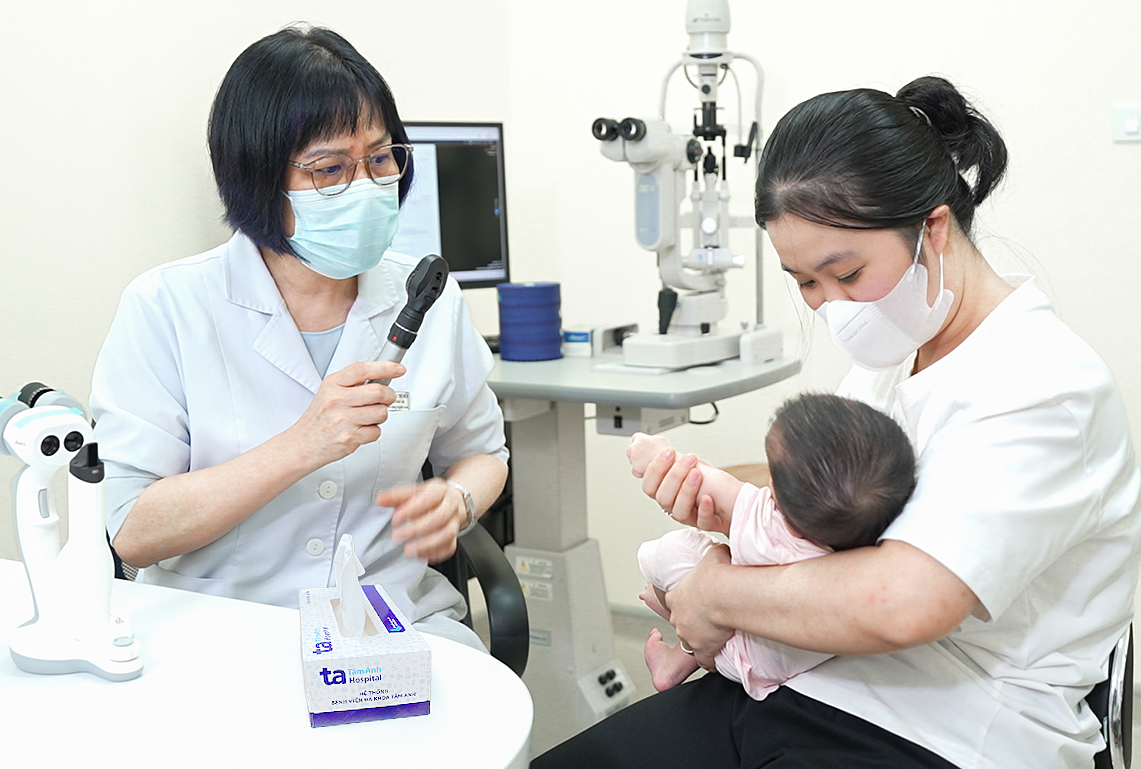 |
Baby Linh reacts to light and tracks objects after surgery. Photo: Tam Anh General Hospital. |
According to Associate Professor Hien, congenital cataracts can severely impact a child's visual development. Consequently, post-surgery, doctors will conduct fundus photography to screen for CMV-related retinal damage and continuously monitor the child's vision.
Doctors advise women to undergo health check-ups before pregnancy, screening for infectious diseases like CMV that can transmit from mother to fetus. Comprehensive prenatal care, guided by a doctor, is also crucial. After birth, at-risk infants should receive early eye examinations. Parents should seek specialist care if they observe a white reflex or spot in the pupil, if the child fails to track faces or objects, reacts poorly to light, or displays any other eye abnormalities.
By Thu Giang
| Readers can submit questions about ophthalmological diseases here for doctors to answer. |