Ms. Ngoc had a history of gastritis-colitis that did not improve with medical treatment. This time, test results at Tam Anh General Hospital TP HCM showed she had severe anemia due to prolonged blood loss.
Master, Doctor Ngo Hoang Kien Tam, from the Center for Endoscopy and Gastrointestinal Endoscopic Surgery, ordered a transfusion of nearly two liters of blood for Ms. Ngoc to stabilize hemodynamics and improve her anemia. This amount of blood is almost equivalent to one-half the total blood volume in an adult (3,5-5,5 liters).
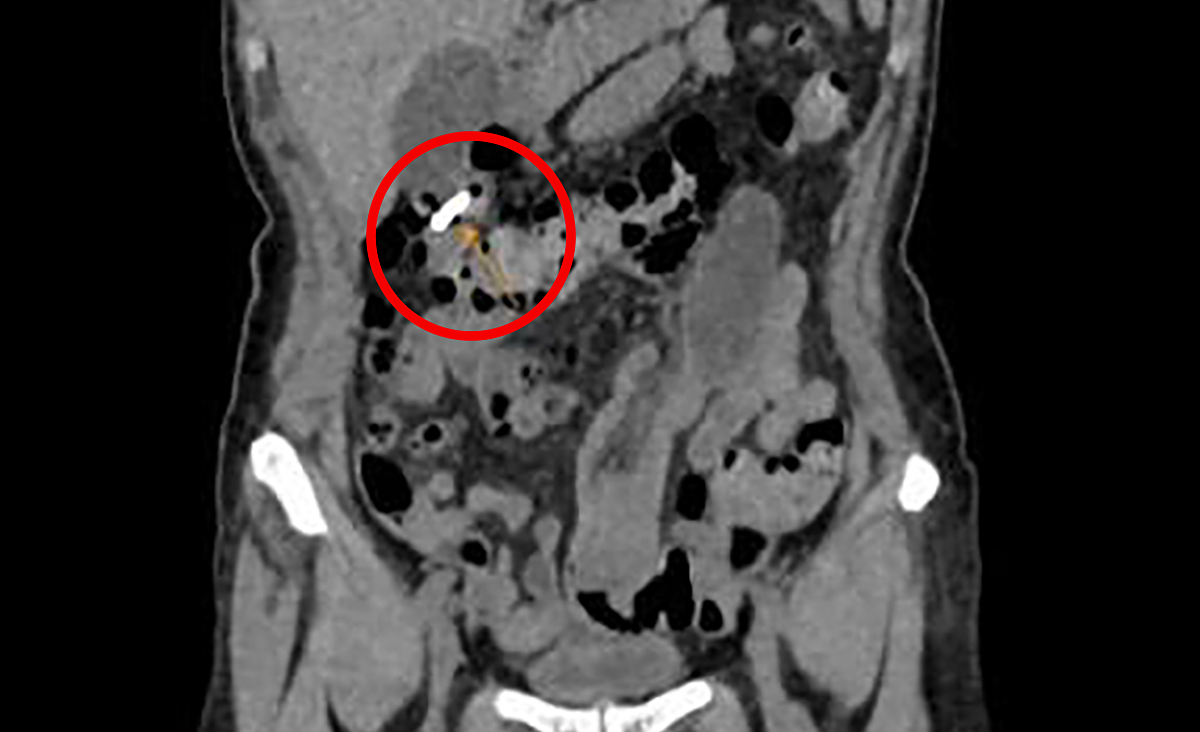 |
CT image shows an intussusception in the small intestine (circled by arrow). Photo: Tam Anh General Hospital
To determine the cause of the gastrointestinal bleeding, Ms. Ngoc underwent a gastrointestinal endoscopy. The results revealed a tumor on the intestinal wall at the beginning of the ileum, with a friable surface, occupying about one-half the circumference of the intestinal lumen. An abdominal CT scan confirmed small intestinal intussusception, with mildly dilated small bowel loops above the lesion and several small lymph nodes surrounding the affected area.
Doctor Tam diagnosed Ms. Ngoc with ileal intussusception caused by a small intestinal tumor, accompanied by chronic gastrointestinal bleeding leading to severe anemia. The tumor caused prolonged, slow bleeding, resulting in chronic blood loss and severe anemia.
Intussusception occurs when one segment of the intestine telescopes into an adjacent segment. This condition narrows or obstructs the bowel, hindering the passage of food. Simultaneously, it compresses the blood vessels supplying the affected intestinal segment, leading to ischemia and potential intestinal necrosis.
Following a consultation, the medical team decided to perform laparoscopic surgery to resect the small intestinal segment containing the tumor. After resolving the intussusception (reducing it), the surgeon used an ultrasonic scalpel to remove the tumor-bearing segment, which measured approximately 2,5x3 cm. The ileum was then anastomosed, and the intestinal opening and mesentery were repaired. Pathological examination confirmed the tumor was a benign inflammatory fibroid polyp.
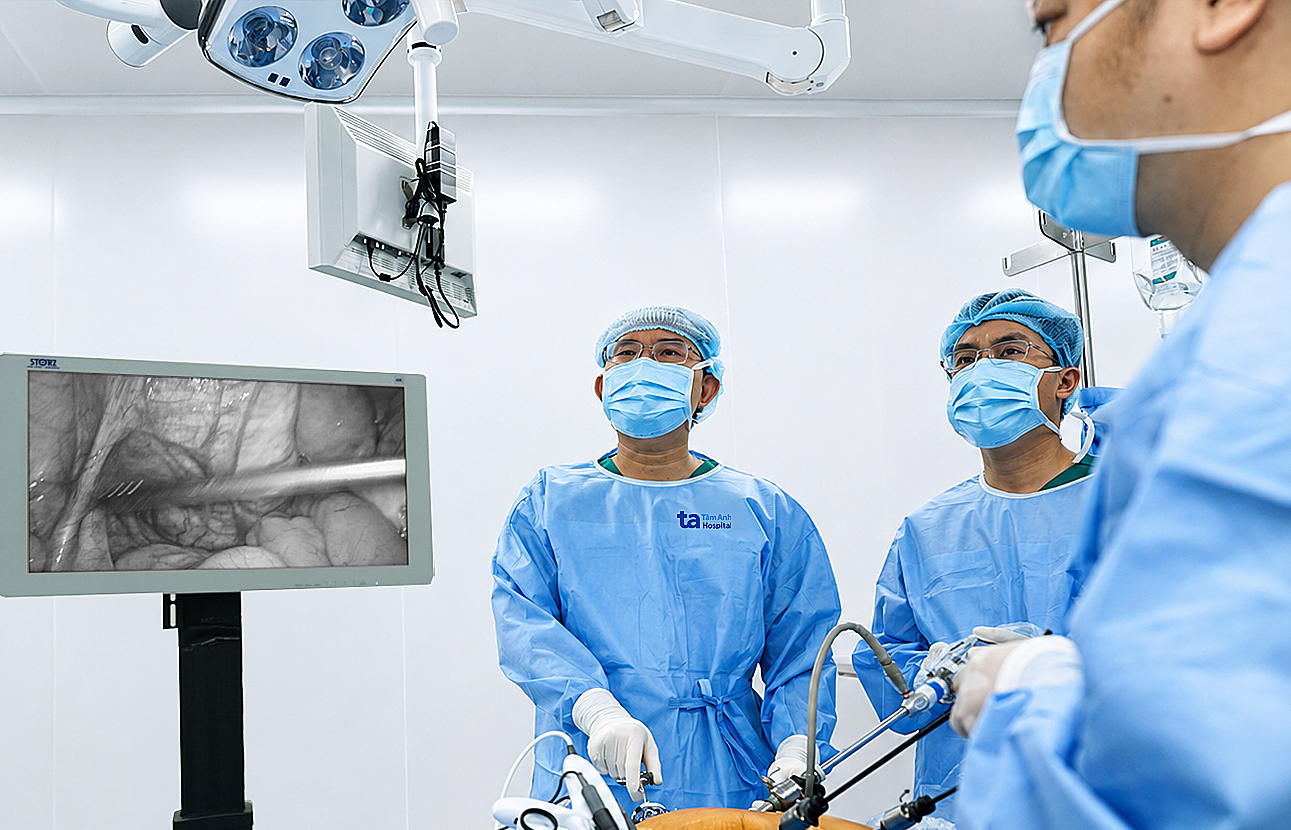 |
Doctor Tam (near the screen) performing laparoscopic surgery to remove the tumor for Ms. Ngoc. Photo: Tam Anh General Hospital
According to Doctor Tam, intussusception is more common in children than in adults. Its symptoms are non-specific and easily confused with common digestive diseases, often leading to delayed diagnosis. Individuals experiencing colicky or prolonged abdominal pain, vomiting, abdominal distension, black stools, or unexplained anemia should seek early medical attention. They should avoid self-medicating with painkillers or laxatives, as these can mask crucial symptoms.
Quyen Phan
*Patient's name has been changed
| Readers can send questions about endocrine diseases here for doctors to answer |