At 1,57 m tall, weighing 74 kg plunged Mo, a multi-platform content creator and online nutrition and weight management coach, into a crisis. She had significant abdominal fat, felt sluggish, and her body noticeably weakened. Previous misuse of various weight loss medications had resulted in elevated liver enzymes and weakened kidneys. Shame consumed her, making her afraid to go out and leading her to immerse herself in food and work.
 |
Mo now, after losing 22 kg. Photo: Provided by subject |
One evening in late 2024, she reviewed old photos and realized that without a change, she would live her entire life in that condition. At the same time, her son's innocent remarks about her weight echoed in her mind. In 12/2024, the mother decided to start seriously.
Learning from past failures, Mo avoided restrictive diets like Keto or Low-carb. Instead, she adopted the principle of calorie deficit based on her body's BMR (Basal Metabolic Rate) and TDEE (Total Daily Energy Expenditure), meaning consuming fewer calories than expended. This "calories in, calories out" principle is scientifically supported. According to over 30 studies compiled by the National Institutes of Health (NIH), a daily deficit of about 500 calories helps individuals lose 0,2 to 0,9 kg per week.
She aimed for a clean diet, ensuring adequate intake of the four main macronutrient groups: carbohydrates, protein, fiber, and healthy fats. Flexibility was key. By understanding the calorie deficit principle, she still allocated about 20% of her daily intake to foods she enjoyed.
This approach prevented Mo from feeling exhausted and made it sustainable long-term. Data from the American Journal of Preventive Medicine shows that individuals who lose weight gradually and balance macronutrients are twice as likely to maintain their shape long-term compared to those on extreme fasting diets.
The biggest challenge in the early days came not from her body, but from old habits. Mo had a strong craving for carbohydrates and sweets. Once on the diet, her body didn't feel hungry or lack energy, but her mind constantly craved familiar sweet tastes.
Her menu centered on quality nutritional sources: protein from chicken breast, lean beef, fish, eggs, and milk; healthy carbohydrates from oats, brown rice, and sweet potatoes, while still including white rice; fiber from dark green vegetables; and healthy fats from nuts. She set several unwavering rules for herself: no cutting out carbohydrates, no processed snacks or refined sugar, and drinking enough water daily.
Her standard eating day began light with two eggs, one sweet potato, and one-quarter of an avocado, or oatmeal cooked with two eggs. Lunch consisted of 200 g of stir-fried chicken breast with vegetables, 130 g of rice, and a small bowl of soup. In the afternoon, she snacked on grass jelly or yogurt mixed with nuts and fruit. Dinner concluded with 150 g of fish baked in an air fryer, 100 g of rice, and plenty of green vegetables until full.
For exercise, she worked out at home 5 times a week, each session lasting 45 minutes to one hour, usually between 16h and 17h. Her workouts combined resistance exercises for muscle groups like glutes, thighs, back, and abs using dumbbells, resistance bands, and cardio sequences such as Tabata jump squats or jumping jacks. On days she wanted a change, she would run, as long as she burned an equivalent amount of calories. Mo did not push herself excessively; consistency was key.
After many impatient failures, Mo realized that no pill or magic could replace a healthy lifestyle. "Weight loss is a journey of understanding your body, not a punishment. Don't starve yourself, and don't take weight loss pills as I once did," she stated. She advises everyone to start by learning how to calculate calorie deficits, exercise regularly with the simplest routines, and above all, be disciplined with themselves.
From 12/2024 to 6/2025, she lost 22 kg. Her clothes went from size 2XL to S and M. Now, she has transitioned to a maintenance and muscle-building phase, still controlling calories but with more flexibility and better listening to her body. She no longer avoids parties with family and friends, nor is she obsessed with food, having understood nutritional principles.
The transformation in her physique led to a change in her entire life. What she values most is her improved health. Her confidence returned, and her husband shows her more love and affection.
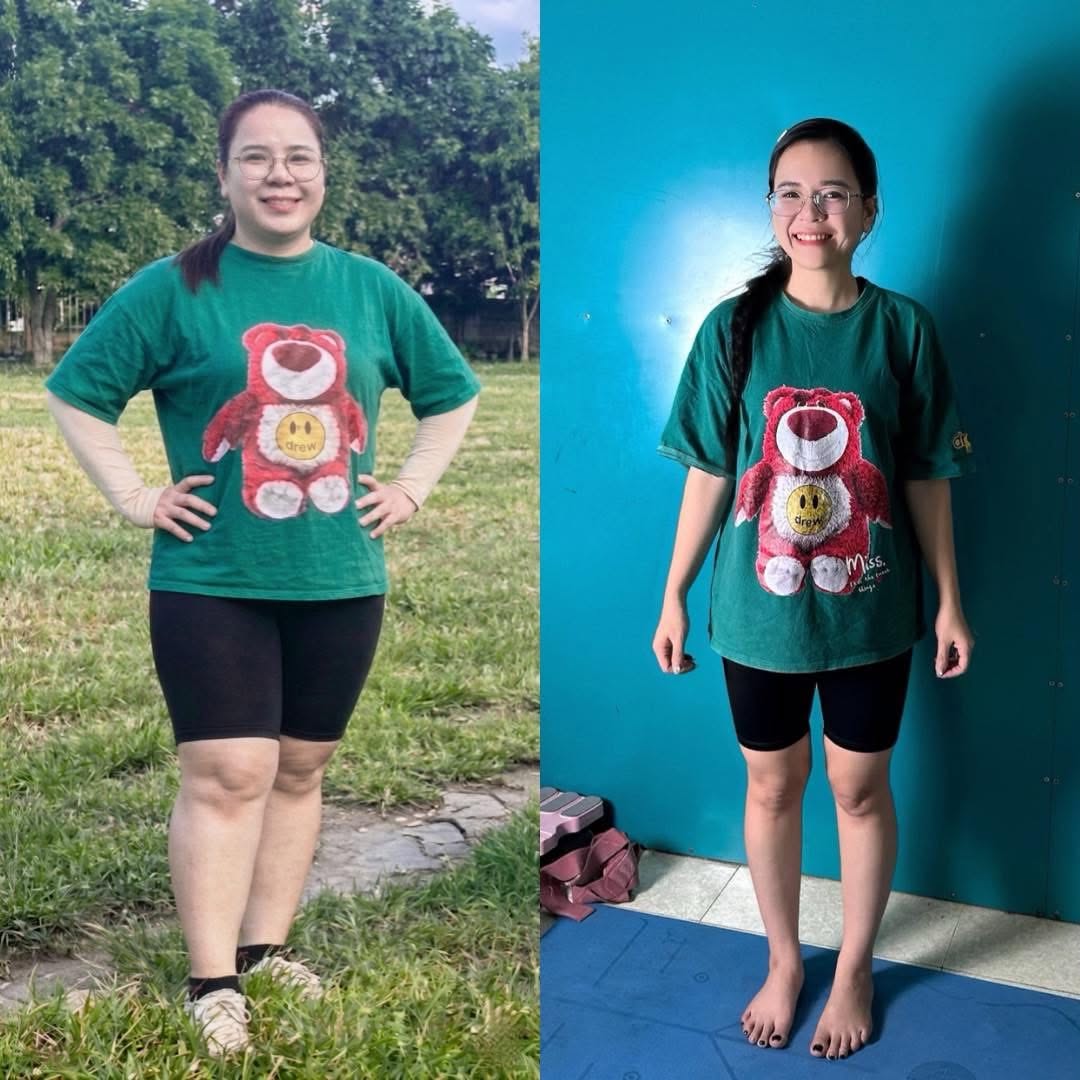 |
Mo in the same outfit, before and after losing weight. Photo: Provided by subject |
From day one, Mo filmed herself and created a TikTok channel to document her entire journey. Her daily transformation videos gained popularity on both TikTok and Facebook, helping her connect with and motivate many women in similar situations. Realizing that many people hadn't accessed healthy methods and were misled by products with misleading claims, she underwent training and became a nutrition consultant in weight loss.
My Y