In the era of modern football, world-class players are athletes with peak physical conditions. Given the demanding and high-intensity nature of each match, it is mandatory for a player to cover at least 10 km over 90 minutes. However, when pure speed and explosive acceleration are mentioned, the first name that comes to mind for fans is the phenomenon Kylian Mbappe. At World Cup 2026, he continues to be a major hope for the French national team, thanks to maintaining his physical foundation in optimal condition.
Emerging from the Paris suburbs, the French superstar has revolutionized world football since lighting up stadiums with his rapid strides, superior strength, and speed as a young talent at World Cup 2018. In just a few years of playing at the highest level, Mbappe has amassed an impressive collection of titles that most players never achieve in their careers, including 6 Ligue 1 championships in France, over 250 career goals, one World Cup title, and a historic hat-trick in the World Cup final in Qatar.
Despite proving his status among the top superstars, Mbappe continuously progresses each season. With legends Lionel Messi and Cristiano Ronaldo stepping away from the European top-tier football scene, the French forward is now considered the best player on the planet.
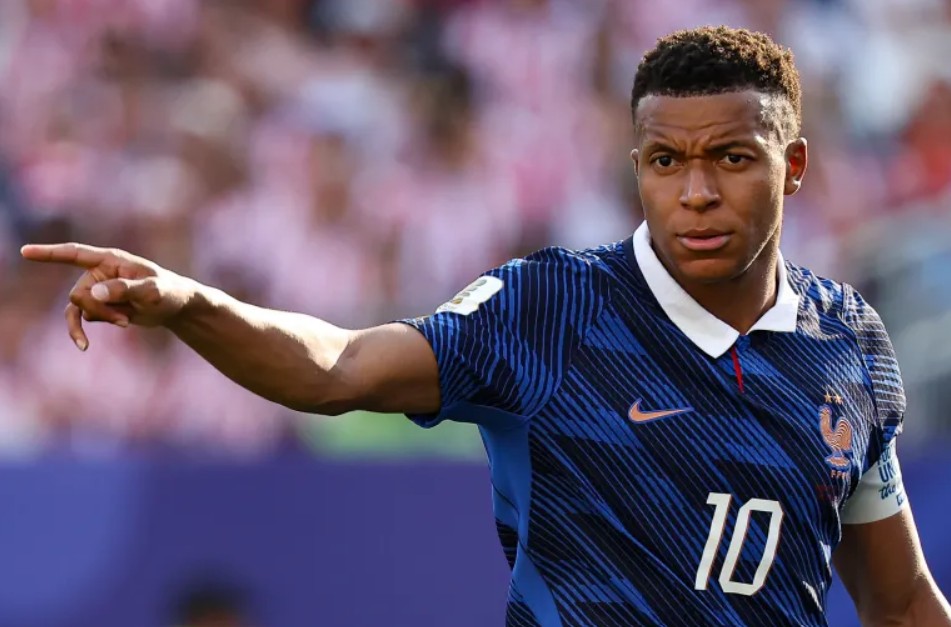 |
Kylian Mbappe in a match against Paraguay in the round of 16 of World Cup 2026 at Philadelphia Stadium, US. Photo: Bill Streicher/Reuters. |
Beyond his speed, Mbappe also possesses exquisite skill, sharp tactical thinking, the ability to play well with both feet, composure, bravery, and a natural goal-scoring instinct. The explosive power that allows him to easily leave opponents behind is the result of a very low body fat percentage and a scientific training plan that focuses intensively on strengthening the lower body. His training program is designed by his personal fitness coach and updated periodically according to specific fitness goals.
A typical training day for Mbappe usually begins with basic stretching exercises, followed by cycling or jogging to maintain a resilient endurance foundation. After this warm-up, he moves into intensive speed and agility drills, a common routine for professional players. This regimen is divided into multiple segments with various supporting exercises. To increase joint mobility and flexibility, Mbappe often performs movements such as: planks, lunges, hamstring stretches, and high knee jumps in place.
Mbappe's core training regimen for enhancing agility includes exercises like: short shuttle runs, T-drills for changing direction, weaving through tactical cones, ladder drills for small steps, and box jumps. The main purpose of these exercises is to help the player refine his footwork, increase lateral movement capability, improve sudden acceleration and braking, and optimize body coordination, reflexes, and flexible maneuvering in all directions on the field.
In addition to running, Mbappe incorporates weight training. Gym sessions not only help him achieve a toned, muscular physique but also comprehensively enhance his overall fitness and playing strength. The forward maintains a regular weight training schedule of 5 sessions per week, dedicating two days specifically to leg training, while the remaining three sessions are evenly distributed among other muscle groups. All weight exercises are performed for 3 to 4 sets, with 10 to 15 repetitions per set.
Immediately after finishing his weight training, Mbappe consistently includes core exercises at least three times a week. Possessing a strong and stable core (comprising abdominal muscles, hips, and lower back) is crucial for improving movement efficiency, supporting the development of other muscle groups, and achieving an athletic physique. His abdominal workout is diverse, including movements such as: straight crunches, oblique crunches, bicycle crunches, scissor kicks, hanging leg raises with a ball, and basic or side plank variations, each maintained for 45 to 60 seconds over 3 sets.
For elite athletes, nutrition directly reflects performance. Mbappe's diet revolves around healthy eating principles with "colorful meals" from vegetables and fruits, ensuring the precise and adequate intake of essential nutrients such as: carbohydrates, protein, fats, along with a system of vitamins and minerals.
He favors pasta dishes due to their rich content of carbohydrates, fiber, and vitamins, which boost clean energy and improve digestion before matches. Additionally, the player supplements complex carbohydrates from wheat, unsweetened oats, and whole grains. High-quality protein is adequately supplied through a varied menu including: beans, protein smoothies, fish, eggs, and chicken; while good fats are prioritized from olive oil, avocado, and nuts.
Learning from his predecessor Ronaldo, Mbappe minimizes red meat, sugary soft drinks, and refined grains. Cutting down on simple sugars is extremely strict, as they can easily lead to weight gain and increase fatigue during endurance runs. He divides his portions into six healthy meals daily and rarely has a "cheat meal."
A typical daily menu begins with the first meal of boiled eggs served with avocado or almond butter and oatmeal. The second meal is a protein bar. The third meal consists of a tuna or chicken wrap with salad. The fourth meal is a protein shake combined with fresh fruit or dried nuts. The fifth meal comprises chicken or fish with brown rice and vegetables. The last meal of the day concludes with a protein shake. The forward also maintains high water intake throughout the day to ensure body hydration.
Alongside nutrition, recovery processes and sleep are considered by Mbappe to be as important as time spent on the training pitch. The French superstar particularly believes in the value of deep sleep for muscle regeneration and maintaining mental alertness; any diet or training regimen becomes meaningless without this factor.
To promote faster body recovery, reduce swelling, alleviate inflammation, and prevent injuries, Mbappe applies modern sports medicine methods such as: cryotherapy and thalassotherapy. The application of these technologies, combined with the use of specialized supplements (whey protein, caffeine, vitamin D3, fish oil, creatine), thermal baths, and weekly massage sessions, are indispensable catalysts that help him maintain peak physical condition throughout the season.
After the quarterfinals on 11/7, World Cup 2026 has determined two equally matched semifinal pairings: France vs. Spain and England vs. Argentina. These are considered "dream" semifinals, as all are top contenders for the championship, having even won the title at least one time in history. The match between France and Spain will take place at AT&T Stadium, Arlington, Texas, US at 2h on 15/7, Hanoi time.
Binh Minh (According to Goal)