In a small home on 12/12, Minh appeared much healthier after his autologous stem cell transplant. He was chatting animatedly, running around, and frequently calling for his mother. "He still needs weekly check-ups to assess his health, but I am happy and grateful, celebrating every milestone he overcomes," said his mother, To Thi Huyen, 30.
Minh fell ill in 10/2024, suddenly experiencing vomiting followed by a high fever. A doctor at a nearby clinic initially diagnosed food poisoning, but medication did not alleviate his symptoms. Ms. Huyen then took her son to Thanh Hoa Children's Hospital, where scans revealed he had stage 4 neuroblastoma, metastatic to the bone marrow, with a poor prognosis.
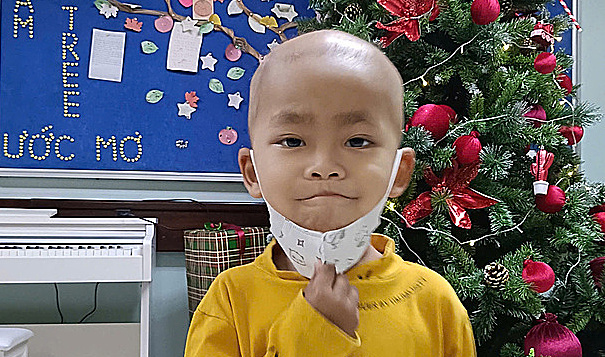 |
Minh during his treatment days at the hospital. Photo: Family provided
Neuroblastoma is common in infants and children under five years old, as it can form before birth. This solid tumor originates in nerve cells outside the brain, specifically in nerve tissue near the cervical, thoracic, abdominal, or pelvic spine, most frequently in the adrenal glands (located on top of the two kidneys). Symptoms arise from pressure exerted by the tumor, including bone pain, difficulty breathing, fever, and anemia. The cancer is often detected after it has metastasized to other parts of the body, such as lymph nodes (small, bean-shaped organs that help fight infection), the liver, lungs, bones, and bone marrow (spongy, red tissue inside large bones).
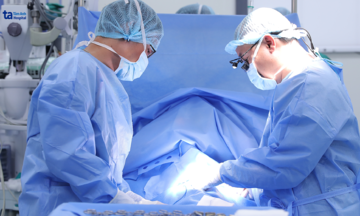
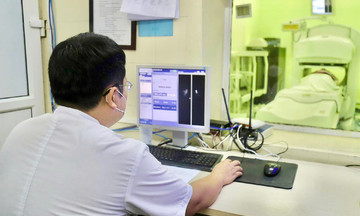
"When I received the diagnosis, my world collapsed," the mother recalled, explaining that information like "late stage," "about 30% survival rate," "tumor growing by the hour," and "high costs" left her and her husband stunned. In the days that followed, the couple repeatedly told each other, "we cannot give up." Minh was transferred to the National Children's Hospital for a combined treatment plan: tumor removal surgery, high-dose chemotherapy, stem cell transplant, followed by radiation therapy.
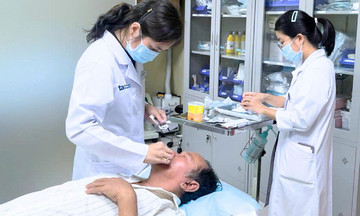
During his first round of chemotherapy, Minh experienced severe pain and a full-body rash, requiring additional dermatological treatment due to an allergic reaction to the chemicals. After 17 rounds of chemotherapy, his thin arms were covered in needle marks from intravenous drips. The chemotherapy caused insomnia, poor appetite, and continuous vomiting, making his body increasingly pale. Ms. Huyen suffered many sleepless nights, her health deteriorating, yet she remained a steadfast pillar of support for her son.
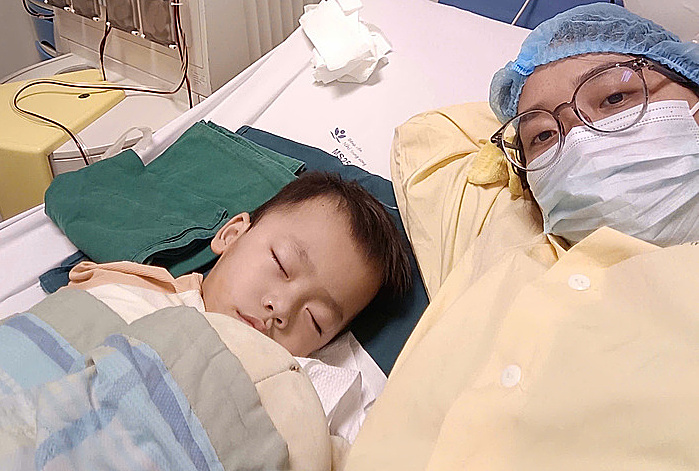 |
Minh and his mother during treatment. Photo: Family provided
Doctors advised a stem cell transplant as the final measure to help the child survive, as palliative care alone would result in a short lifespan. A stem cell transplant helps eradicate cancer cells, regenerate healthy cells, leads to remission, and reduces the risk of recurrence.
However, the cost of a single stem cell transplant is substantial, approximately 300-400 million Vietnamese dong, while expenses for sterile isolation rooms are not covered by health insurance. This therapy can only be performed in centers with advanced technical equipment and facilities, including stem cell harvesting machines, stem cell storage facilities, and certified stem cell transplant rooms (special rooms with air filtration systems). The medical team must also be trained and experienced in stem cell transplantation. These factors present a significant barrier to treatment for financially challenged families in general, and for Ms. Huyen's family in particular.
Ms. Huyen is a homemaker, and her husband works as a driver to support the family. However, his job is unstable, and his income is low, insufficient to cover living expenses. They borrowed money from friends and relatives to pay for their son's treatment but still faced financial shortfalls.
In 9/2025, Minh received partial funding for his stem cell infusion from the Thien Tam Fund and Vietnam Exhibition Fair Centre Joint Stock Company (VEFAC), through the Sun of Hope program (Hope Fund - VnExpress). After the transplant, once his indicators stabilized, Minh was discharged for home care and weekly follow-up appointments.
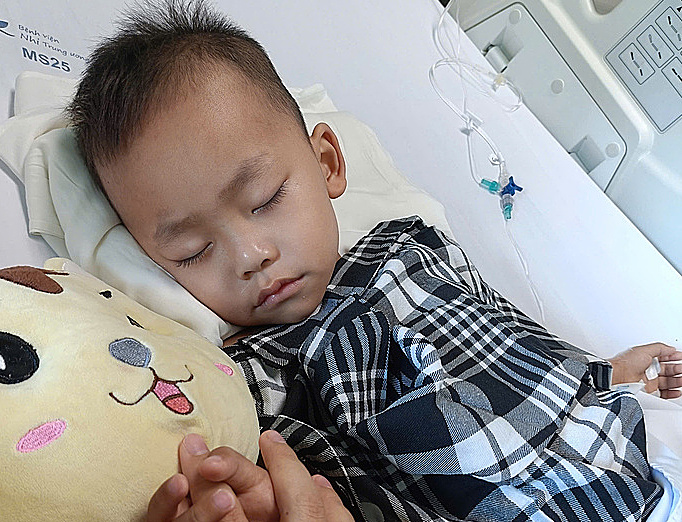 |
Ms. Huyen by her son's side. Photo: Family provided
In the initial period at home, Minh still had a poor appetite, diarrhea, and a runny nose, but these symptoms gradually improved. Currently, Minh is much healthier and can play with friends. The family is awaiting biopsy results to determine if any malignant cells remain; afterward, Minh will undergo radiation therapy once his health returns to normal.
According to doctors, stem cell transplantation is often the most challenging stage for pediatric cancer patients. They require strong chemotherapy and must stay in special isolation rooms, with family members ensuring sterility to prevent external infections. Children need nutritional supplements due to increased fatigue, loss of appetite, diarrhea, malnutrition, and weight loss.
Reflecting on the past over one year, Ms. Huyen expressed that it felt "like a dream" to see her son come back to life. "Thank heavens, as long as my child is healthy, I have everything," the mother shared.
| With the goal of igniting hope for pediatric cancer patients, the Hope Fund, in collaboration with Mr. Sun, launched the Sun of Hope program. Every community contribution adds a ray of light to the nation's future generation. Readers can find program information here. |
Thuy Quynh
Program name: Ten cua ban - Mat Troi Hy Vong
Program ID: 195961