"Previously, chemotherapy, a primary treatment, often caused significant side effects by destroying both cancerous and healthy cells, leading to patient exhaustion during treatment. New drugs have largely overcome this limitation," stated Professor Le Van Quang, Director of K Hospital, at a scientific workshop on Clinical Pharmacy in Multimodal Cancer Treatment and Medical Physics for the Era of Precision Medicine, held on 18/12 in Hanoi.
Specifically, targeted therapy drugs have advanced to the third generation, working by directly impacting the gene mutations of malignant cells. This allows patients to shorten their hospital stays and avoid prolonged drug infusions. Statistical data shows this method helps patients extend disease-free survival by up to 36,8 months, a critical indicator in cancer treatment.
Alongside targeted therapy, immunotherapy has also made significant strides in accessibility. The biggest barrier to these drugs was their high cost due to patent exclusivity. Now, biosimilar drugs have appeared on the market, offering lower prices while maintaining efficacy.
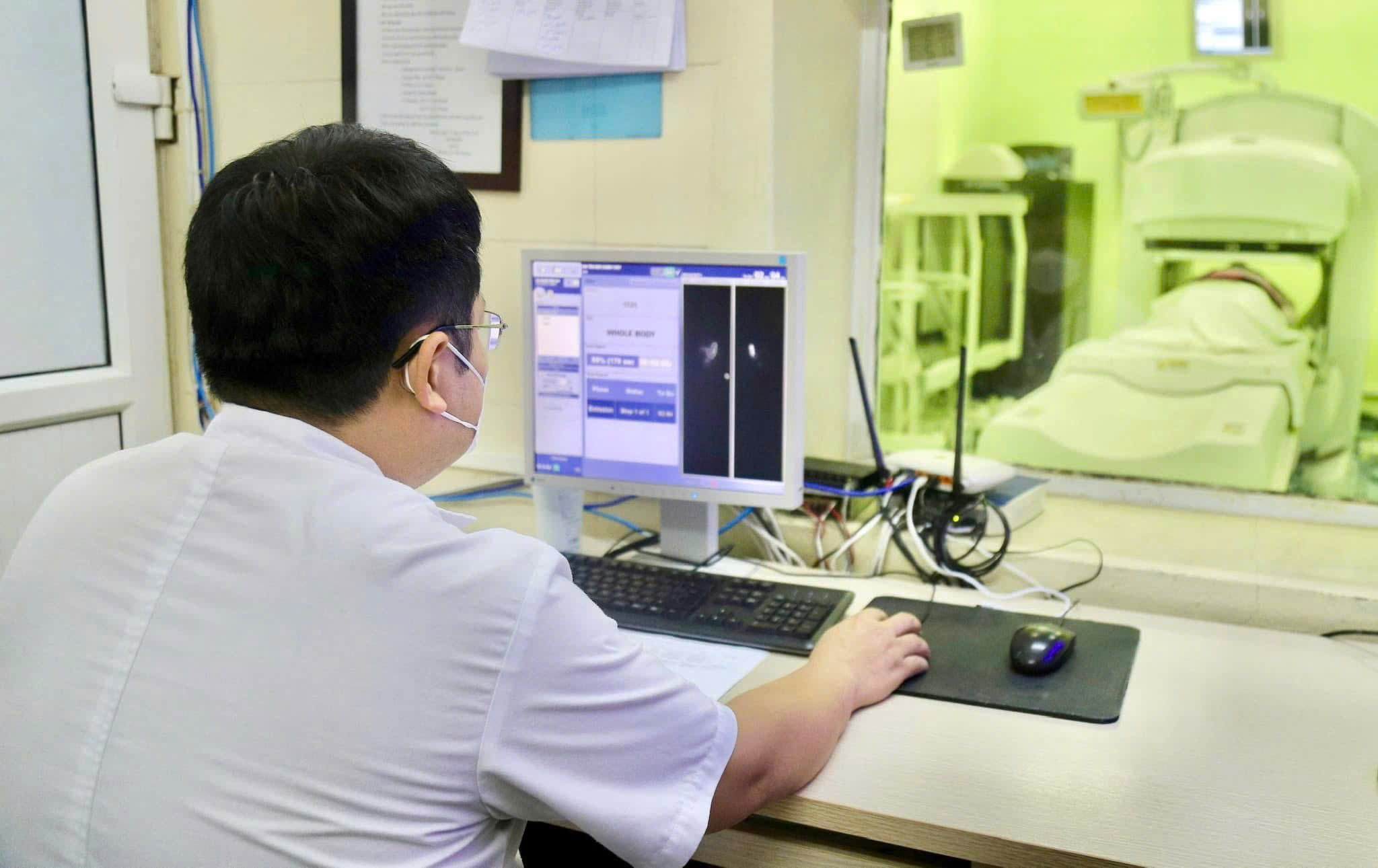 |
Patients receiving cancer treatment at K Hospital. Photo: Thai Ha
A prime example is Pembroria (Russia), an immunotherapy drug recently licensed for import into Vietnam, priced at approximately 18 million VND per vial. This price is significantly lower than the original drug, Keytruda (around 60 million VND per vial for an equivalent dosage or 120 million for the older regimen), while its treatment efficacy is considered comparable to popular Western drugs.
The leadership of K Hospital reported that the facility is expediting plans to tender for Pembroria, offering treatment opportunities for many financially struggling patients. However, they also noted that doctors need to carefully consider when developing combination drug regimens due to their complex mechanisms of action, to avoid situations where patients incur high costs without achieving expected efficacy.
In addition to pharmaceuticals, the field of radiotherapy has also seen strong upgrades with modern linear accelerator systems replacing older cobalt machines. This new technology increases accuracy in targeting tumors, protecting healthy tissue, and minimizing side effects. Thanks to synchronized investment, overcrowding at K Hospital has significantly reduced. Patients no longer have to wait for late-night radiotherapy, and the quality of care has improved.
Currently, K Hospital performs radiotherapy for approximately 1,000 patients daily. In the coming period, the hospital plans to install four more latest-generation radiotherapy machines at all three facilities to further enhance treatment capacity.
Le Nga