Mr. Hoi had a long-standing history of stomach issues. When he experienced continuous epigastric pain and belching, he initially thought it was a recurrence of his old condition and self-medicated. After one week without improvement, he sought medical attention.
At Hong Ngoc General Hospital, doctors ordered a digestive endoscopy. The endoscopic images revealed an abnormal lesion in the gastric antrum, near the lesser curvature angle. Doctors took three biopsy samples for pathological analysis.
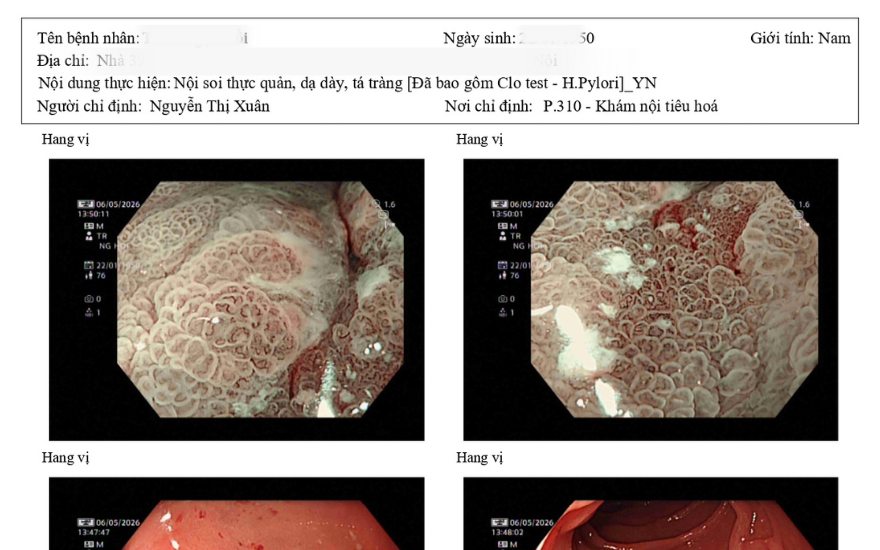 |
Endoscopic images showing an abnormal lesion in the gastric antrum. *Photo: Hong Ngoc General Hospital* |
Pathology results confirmed the patient had moderately differentiated gastric adenocarcinoma, on a background of atrophic gastritis and intestinal metaplasia. Following investigations to assess the extent of invasion, doctors diagnosed stomach cancer at the lesser curvature and recommended partial gastrectomy.
The digestive surgery team, led by Associate Professor, Doctor Nguyen Xuan Hung, Director of the Center for Digestive & Colorectal - Perineal Diseases, removed approximately three-quarters of the stomach and performed a dissection of 12 lymph nodes, adhering to cancer surgery principles.
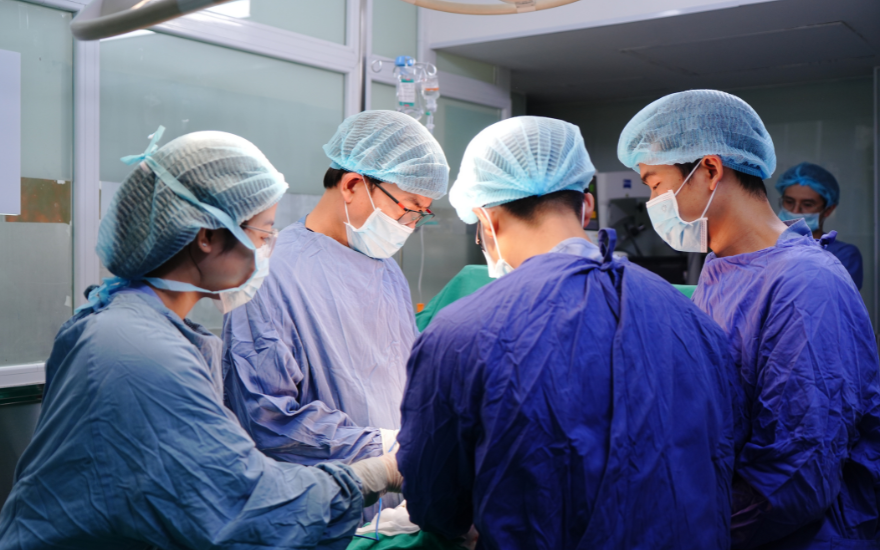 |
The surgical team performing a partial gastrectomy on the patient. *Photo: Hong Ngoc General Hospital* |
Post-operative pathology results showed that the cancerous lesion was completely removed. Both surgical margins were free of cancer cells. The 12 lymph nodes removed for evaluation also showed no signs of metastasis. Doctors concluded that the surgery achieved its curative treatment goal.
"The disease was detected at an early stage, with no evidence of lymph node or distant metastasis. This is a critical factor that enhances treatment effectiveness and improves the patient's prognosis," Doctor Hung stated.
Following surgery, Mr. Hoi participated in an enhanced recovery after surgery (ERAS) program. This comprehensive approach included: multimodal pain control, early mobilization, optimized nutrition, and close post-operative monitoring. After one week, he was eating, active, and discharged from the hospital. Doctors noted that the patient currently does not require additional chemotherapy or radiation therapy, but will continue with regular follow-up appointments.
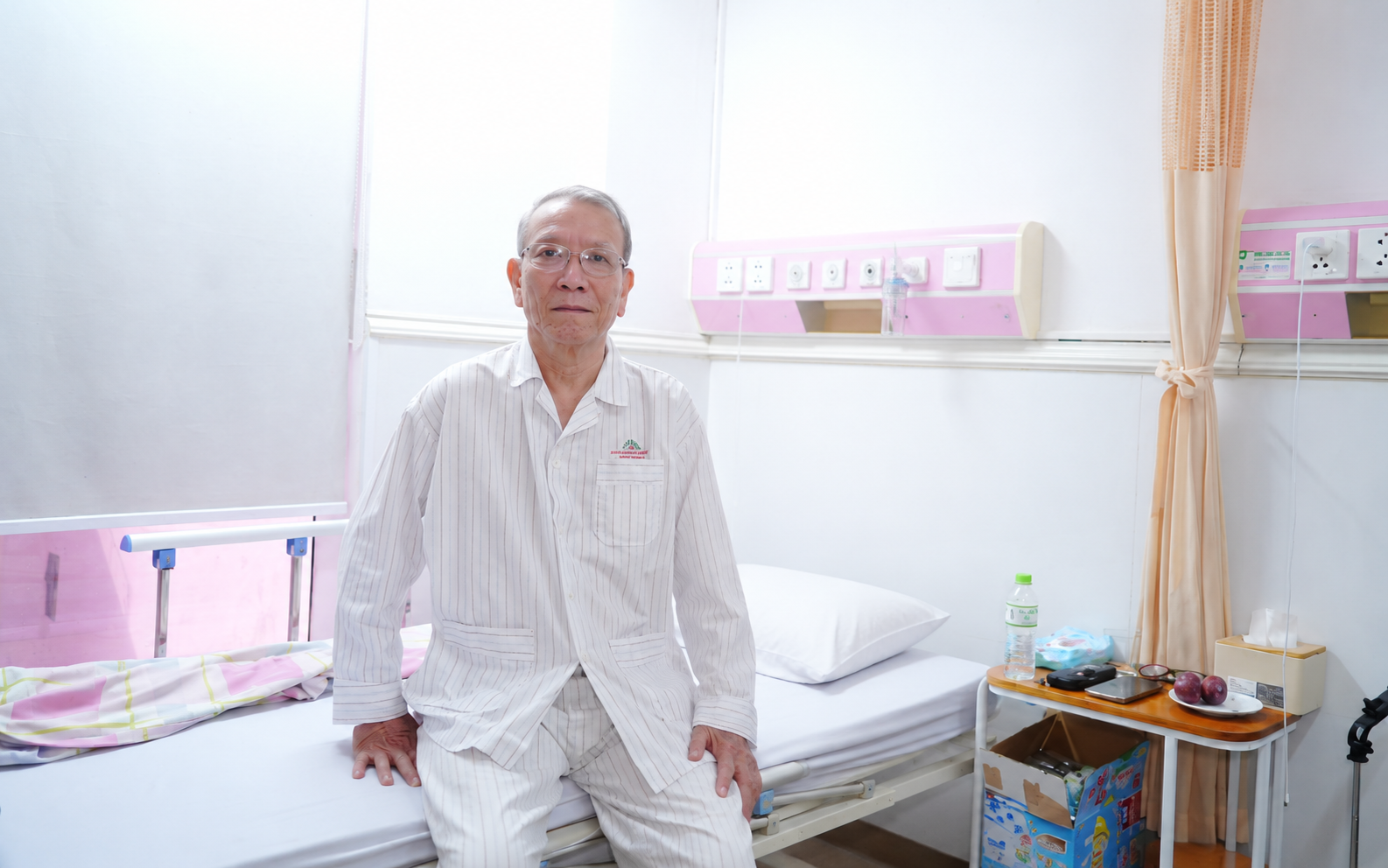 |
The patient recovering after surgery. *Photo: Hong Ngoc General Hospital* |
According to Doctor Hung, early-stage stomach cancer often presents no specific symptoms. Patients may only experience prolonged epigastric pain, bloating, indigestion, loss of appetite, nausea, or belching. These symptoms are often mistaken for common conditions such as gastritis, ulcers, reflux, or general digestive disorders.
Therefore, elderly individuals, those with a history of stomach disease, or anyone experiencing prolonged, recurrent digestive symptoms should avoid extended self-treatment. Digestive endoscopy enables doctors to visualize the stomach lining, detect suspicious lesions, and perform biopsies when necessary.
"Detecting stomach cancer at an early stage significantly increases the potential for curative treatment, reduces the need for supplementary therapies, and improves the patient's quality of life," Doctor Hung emphasized.
Van Ha
Hong Ngoc General Hospital currently offers comprehensive endoscopy, digestive surgery, and multi-specialty treatment systems. The hospital is certified by the Royal College of Surgeons (RCS) of England as a Global Surgical Standard Center.
Hong Ngoc General Hospital is offering special promotions for digestive endoscopy from 15/6 - 15/7 at Hong Ngoc General Hospital, 55 Yen Ninh, Ba Dinh, Hanoi:
Up to a 30% discount on digestive endoscopy packages.
A 35% discount for customers aged 60 and above.
Direct examinations and endoscopies performed by experienced doctors using Japanese technology. Consultation hotline: 0911 908 856