Dr. Tran Nguyen Anh Thu, a dermatologist at Tam Anh General Hospital TP HCM, noted two types of lesions on Hung's nose: uneven scars from sebaceous gland overgrowth and atrophic acne scars. These developed because he frequently used pore strips and self-extracted pimples. Over time, his nasal skin became thick and uneven, with raised areas mixed with deep depressions.
According to Dr. Thu, such cases are challenging to improve with a single treatment method. Each scar type requires an individualized treatment plan that combines laser therapy with specialized procedures. This approach aims to enhance the skin's surface, reduce the risk of recurrence, and deliver lasting aesthetic benefits.
For the uneven scars resulting from sebaceous gland overgrowth, the doctor prescribed a combination of 6D laser and CO2 laser. This approach aims to flatten the skin surface, reduce tissue proliferation, and improve the overall uniformity of the nasal area. The 6D laser, in particular, utilizes two wavelengths, Er:YAG and Nd:YAG, to abrade the surface and deliver energy deep into the skin. This process stimulates regeneration and reorganizes collagen, enhancing the treated skin's flatness, softness, and color.
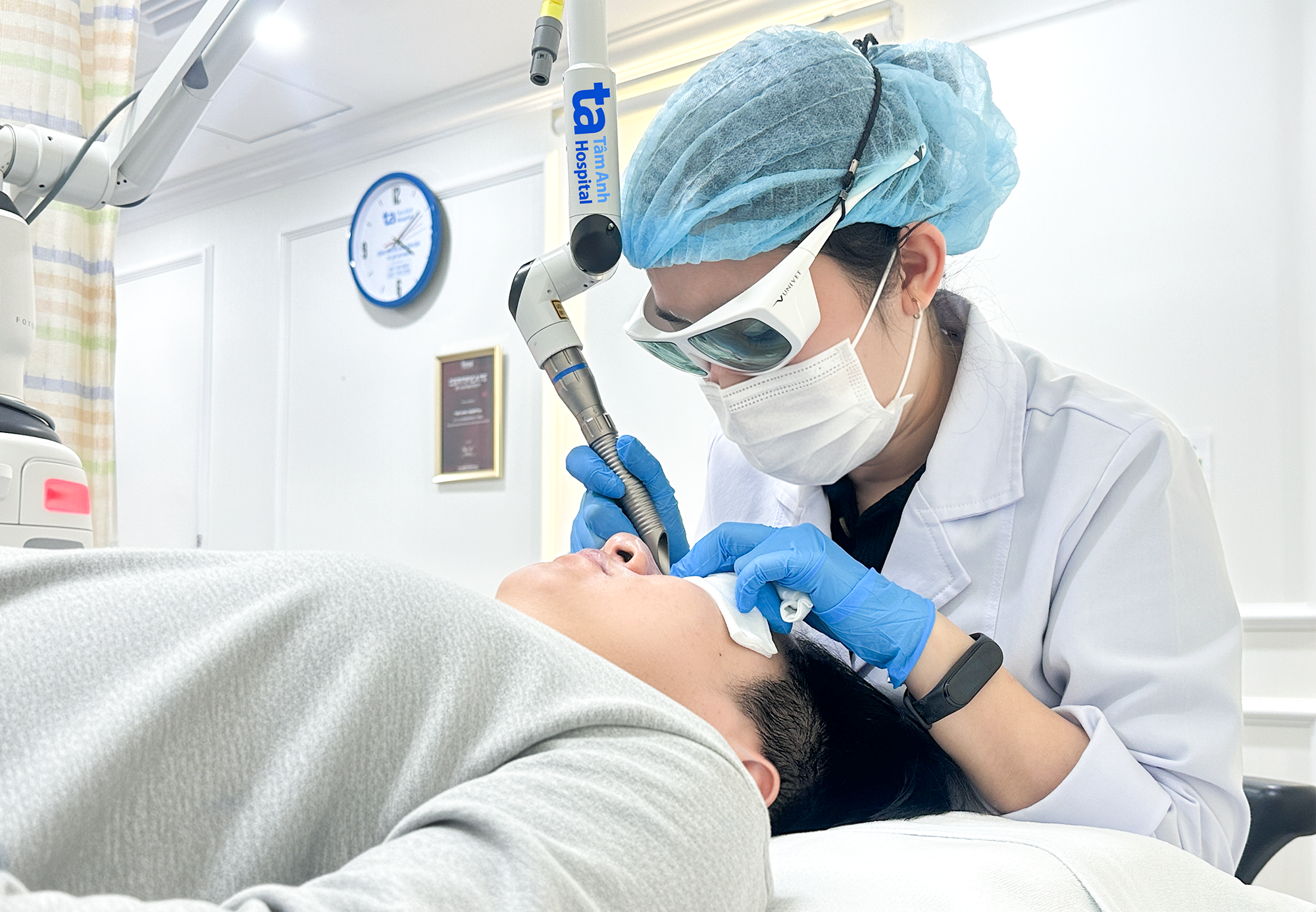 |
A doctor uses a 6D laser to treat Hung's nasal scars. *Photo: Tam Anh General Hospital*
For the atrophic scar areas, Hung underwent subcision to release the underlying fibrous bands. This was combined with the controlled application of trichloroacetic acid (TCA) to the skin lesions, a technique commonly used for treating ice-pick scars, which minimizes impact on surrounding skin. Throughout the treatment, the patient received medication to support healing, reduce inflammation, shorten recovery time, and optimize aesthetic results. Following 6 treatment sessions, the scars around his nose became flatter and gradually faded.
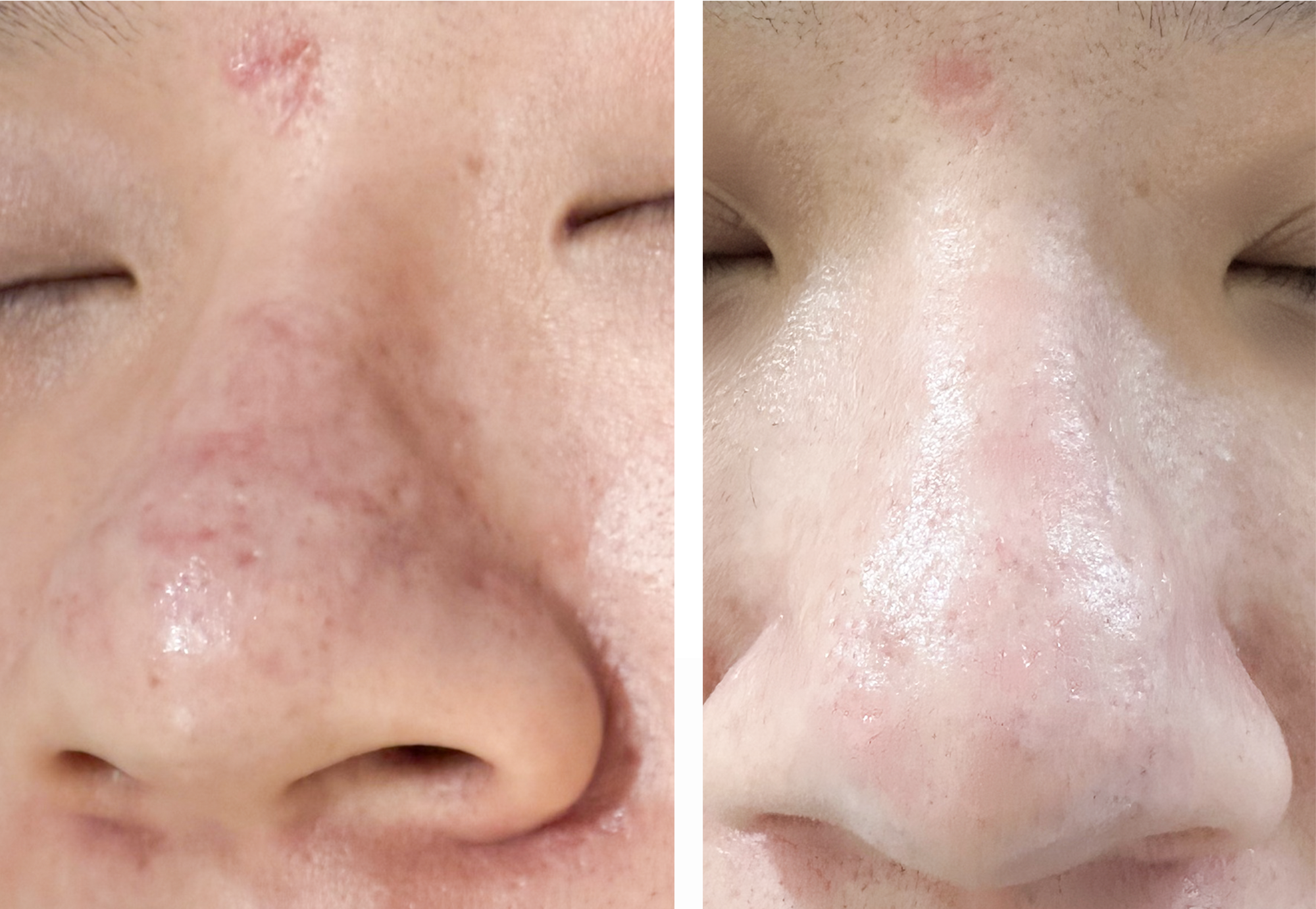 |
Hung's nasal acne scars are no longer fibrotic and show reduced redness after 6 treatment sessions. *Photo: Tam Anh General Hospital*
Dr. Thu explained that nasal acne scars typically develop due to the skin's high sebaceous gland density and prolonged structural damage from inflammatory acne. When scars persist, creating an uneven skin surface mixed with atrophic scars, patients should consult a Dermatology - Aesthetic Dermatology specialist. This ensures a proper examination, accurate scar type assessment, and appropriate treatment, thereby preventing incorrect interventions that could exacerbate the condition.
Proper skin care is essential after laser treatment. Patients should keep their skin clean, avoid touching, scratching, or picking scabs, and limit direct exposure to sun and dust. It is crucial to use appropriate sunscreen when outdoors. During the initial phase, patients should avoid irritating cosmetics and attend scheduled follow-up appointments so the doctor can monitor their response to treatment.
Minh Huong